March 2, 2026
Exposomics Measuring Chemical Drivers of Human Disease Panome Bio’s Exposomics platform enables comprehensive measurement of chemical exposures that drive human disease. Using integrated discovery (32,000+ compounds) and targeted profiling (235 priority chemicals), we detect and quantify exogenous exposures at trace levels. Demonstrated in Alzheimer’s disease, our workflow reveals disease-associated environmental signatures with high sensitivity and […]
March 2, 2026
Discover how targeted metabolomics enables more accurate evaluation of PRMT5 therapies, supports biomarker discovery, and drives translational breakthroughs in oncology in this webinar.
February 27, 2026
For 20 years, genomics has promised precision medicine. And it delivered. For rare diseases and select cancers. But for most chronic conditions?
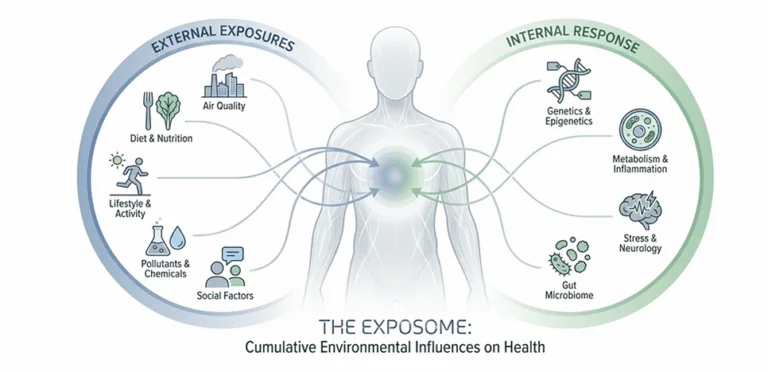
Genetics explains only a fraction of risk. Type 2 diabetes. Alzheimer’s disease. Autoimmune disorders. Metabolic syndrome. The missing piece isn’t hidden in undiscovered genes. It’s in the chemical world around us. Welcome to the […]

December 17, 2025
The Critical Challenge of Model Validation in Alzheimer’s Drug Development The pharmaceutical industry faces a persistent challenge in neurodegenerative disease research: ensuring that preclinical models accurately recapitulate the complex biochemical landscape of human disease. For Alzheimer’s disease (AD), where clinical trial failure rates exceed 99%, the stakes of model selection have never been higher. While […]
December 2, 2025
Beyond Plaques and Tangles: How Untargeted Metabolomics Detects Distinct Signatures in Alzheimer’s Disease Untargeted metabolomics captures systemic metabolic changes in neurodegenerative diseases, such as Alzheimer’s, identifying altered pathways and metabolites for research and therapy.

November 4, 2025
The Metabolic Frontier of Neuroscience: Lessons from Alzheimer’s Disease Alzheimer’s disease is a complex, devastating neurodegenerative disorder and the most common form of dementia, affecting millions globally. While decades of research have focused on the infamous amyloid plaques and tau tangles, a powerful new focus is emerging: metabolism. Metabolomics, the deep, comprehensive study of small […]
October 29, 2025
Advancing Animal Model Research with Multi-Omics Integration Discover how Panome Bio’s Next-Generation MetabolomicsTM and integrated multi-omics approaches enhance the translational value of animal model research. This application note demonstrates how comprehensive metabolic and molecular profiling enables deeper biological understanding, improving the accuracy and relevance of preclinical studies. Download to learn more about our data-driven insights […]

September 24, 2025
The Lipid Connection in Neurodegeneration While much of Alzheimer’s disease research has historically focused on protein aggregation (amyloid-beta plaques and tau tangles), a growing body of evidence points to fundamental disruptions in lipid metabolism as both driver and consequence of neurodegenerative processes. Among the various lipid classes implicated in Alzheimer’s pathology, sphingolipids have emerged as […]

September 16, 2025
Why Protein-Centric Alzheimer’s Research Has Fallen Short The pharmaceutical industry’s intensive focus on amyloid-beta and tau pathology in Alzheimer’s disease has yielded limited therapeutic success despite decades of investment and dozens of clinical trials. While these protein aggregates undeniably represent important pathological features of the disease, the repeated failure of compounds targeting amyloid production, aggregation, […]
September 6, 2024
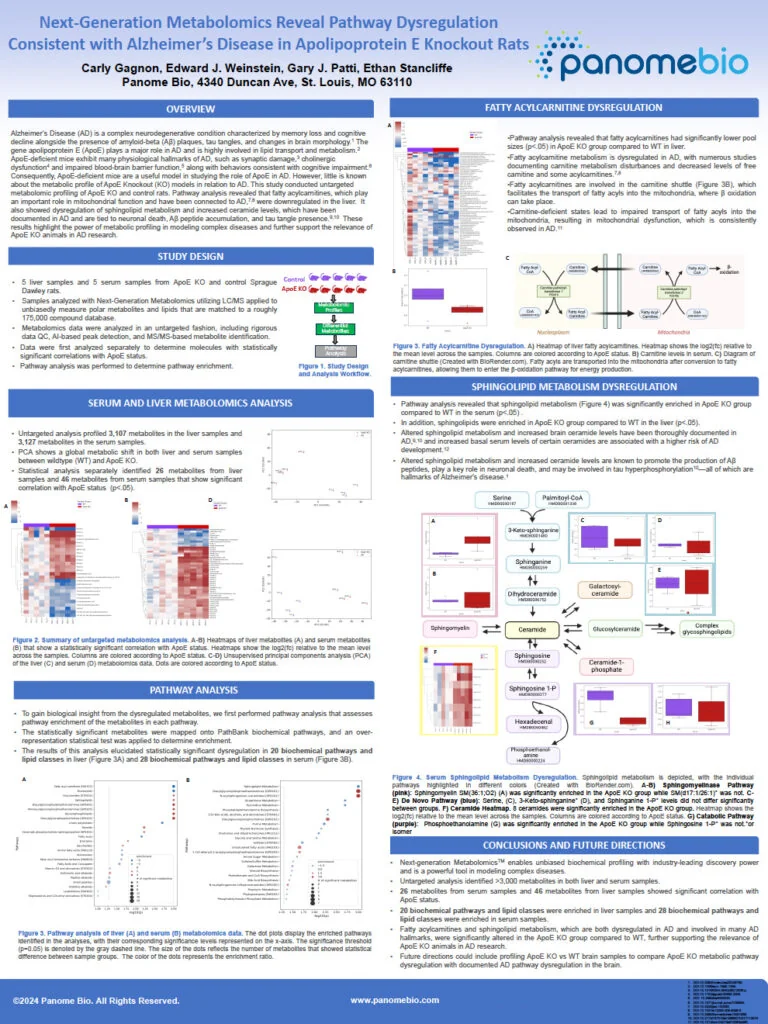
Next-Generation Metabolomics Reveal Pathway Dysregulation Consistent with Alzheimer’s Disease in Apolipoprotein E Knockout Rats Panome Bio’s Next-Generation Metabolomics® platform provides an unbiased and global view of metabolism. In this poster, the metabolic alterations caused by Alzheimer’s Disease are studied in ApoE Knockout rats.