Cancer is a complex disease, driven by the interplay of genes, proteins, metabolites and signaling networks. Understanding how these layers connect is essential for identifying vulnerabilities and therapeutic targets.
Single-omics analyses provide powerful knowledge into specific layers of cancer biology. However, complex drivers like KRAS operate across multiple layers. Panome Bio’s Integrated Multi-Omics Platform combines metabolism, with protein expression, phosphorylation, and gene regulation. Tens of thousands of data points are distilled into hundreds of high impact biomarkers, delivering a unified, functional view of cancer biology.
In a case study using Panome Bio’s Integrated Multi-Omics platform, HCT-116 colorectal cancer cells harboring the KRASG13D mutation were compared to a matched KRASG13D allele deletion. Integrating metabolomics, proteomics, phosphoproteomics, and transcriptomics, more than 30,000 data points were distilled into a focused network of fewer than 100 high-impact biomarkers, revealing how KRASG13D coordinates growth, metabolism, and survival. This integrated analysis provides a detailed molecular profile to guide precision oncology.
Omics Data to Guide Cancer Research and Targeting
| Single ‘Omics Layer | Key Molecular Shift | Practical Value |
|---|---|---|
| Metabolomics |
|
Metabolic Targets: Highlight metabolic weak points to guide therapies that disrupt the tumor’s energy supply using Panome Bio’s Next-Generation Metabolomics. |
| Phosphoproteomics |
|
Drug Development Guidance: Identify active signaling nodes to support precise kinase inhibitor strategies that interfere with tumor signaling. |
| Proteomics |
|
Functional Mechanisms: Show how KRAS deletion reshapes cellular machinery, illuminating tumor behavior and resistance patterns to inform more durable treatment. |
| Transcriptomics |
|
Gene-Level Mapping: Highlight disruptions in glucose utilization to direct therapies toward nutrient uptake and gene-level targets. |
Integrated Results: Mapping KRAS’s Core Network via Multi-Omics Integration
To understand the full molecular impact of KRASG13D allele deletion, an Integrated Multi-Omics analysis combining all four ‘omics datasets were performed. This approach provides a connected view of cellular regulation that single-omics methods can’t achieve.
Metabolomics Drives the Most Pronounced Changes
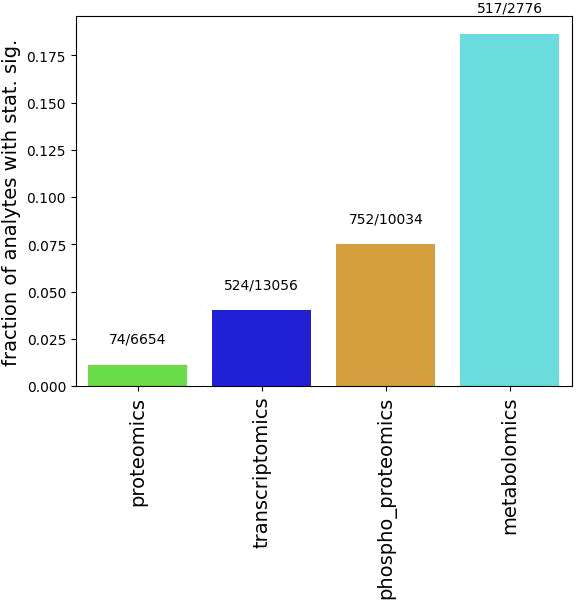
Metabolomics showed the strongest response to KRASG13D loss, with 17% of analytes altered, followed by 7.5% in phosphoproteomics, 5% in transcriptomics, and 1% in proteomics.
These broad metabolic shifts established the foundation for multi-omics integration, linking biochemical and signaling changes across molecular layers.
Network Integration Reveals 200+ New Pathways
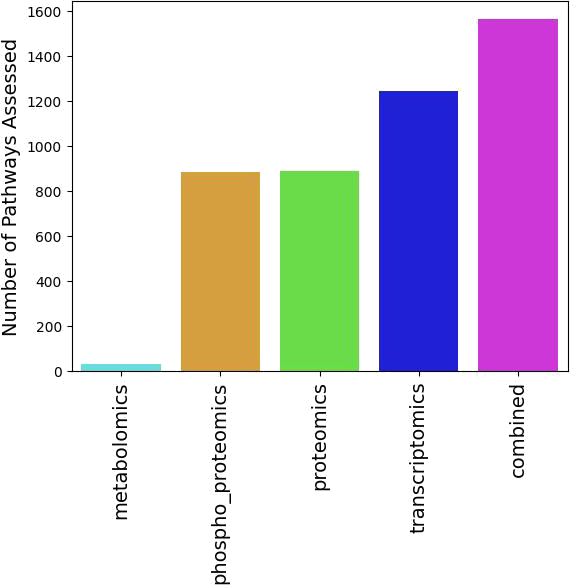
Integration of multiple omics layers exposed 20+ additional pathways beyond the 194 detected by joint pathway analysis. The result is a multi-layered molecular landscape that reveals relationships and mechanisms invisible to single-omics studies.
Multi-Omics Pathway Enrichment Reveals How KRASG13D Deletion Rewires Cancer
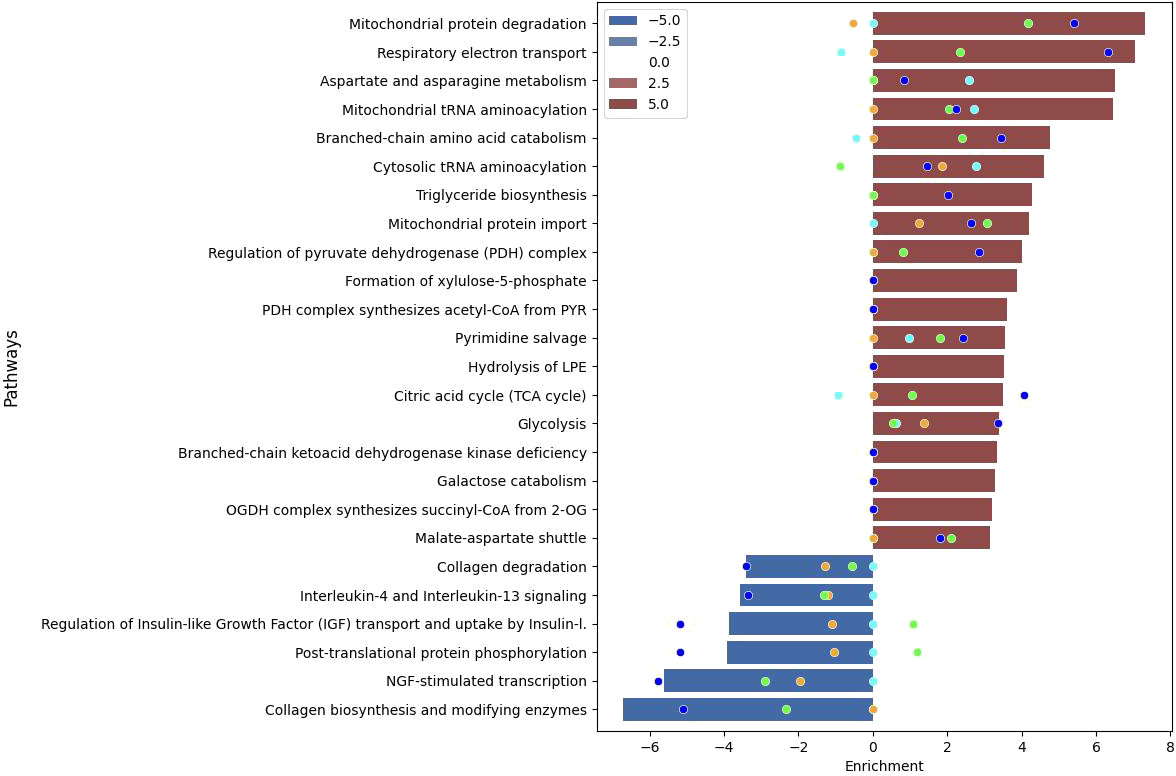
- Mitochondrial protein degradation is the most enriched pathway, driven by proteomic and transcriptomic changes.
- Aspartate and asparagine metabolism is upregulated, driven by metabolite and gene-level shifts.
- Multi-omics integration amplifies insights: combined pathway enrichment exceeds any single-omics layer.
- Metabolic pathways upregulated: respiratory electron transport, branched-chain amino acid catabolism, triglyceride biosynthesis.
- Growth and signaling pathways downregulated: collagen synthesis, transcriptional pathways, IGF transport, IL-4/IL-13 signaling.
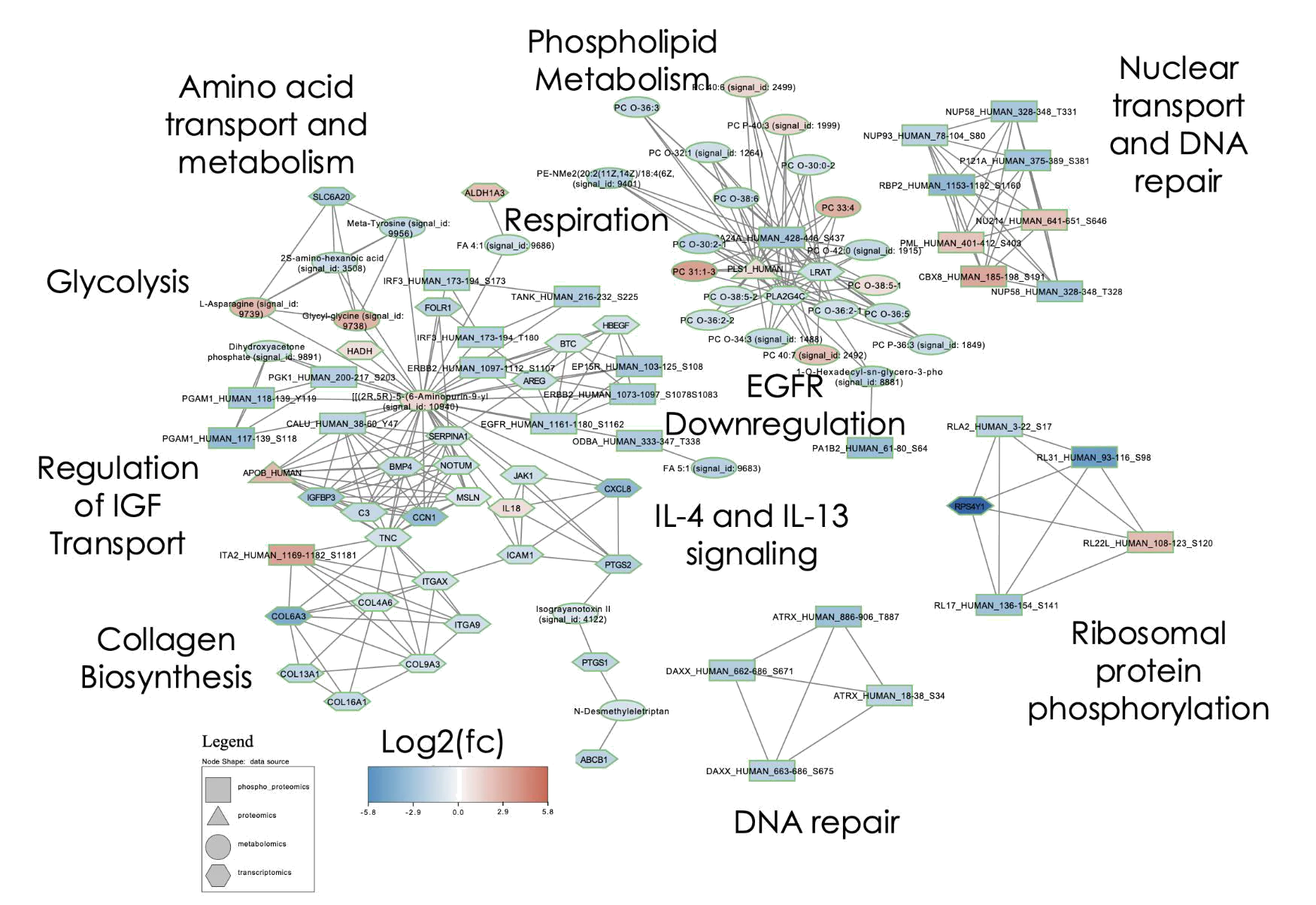
KRAS Biology Revealed Through Network Modules Uncovered
- >390 disrupted pathways and >1,000 analytes distilled into <100 key molecules.
- Five core modules: collagen biosynthesis, mitochondrial metabolism, phospholipid regulation, DNA repair, and cell cycle control.
- Integrated network links genes, proteins, phosphopeptides, and metabolites, exposing coordinated shifts invisible to single-omics.
- Provides a connected map of KRAS-driven biology for discovery and therapeutic insights.
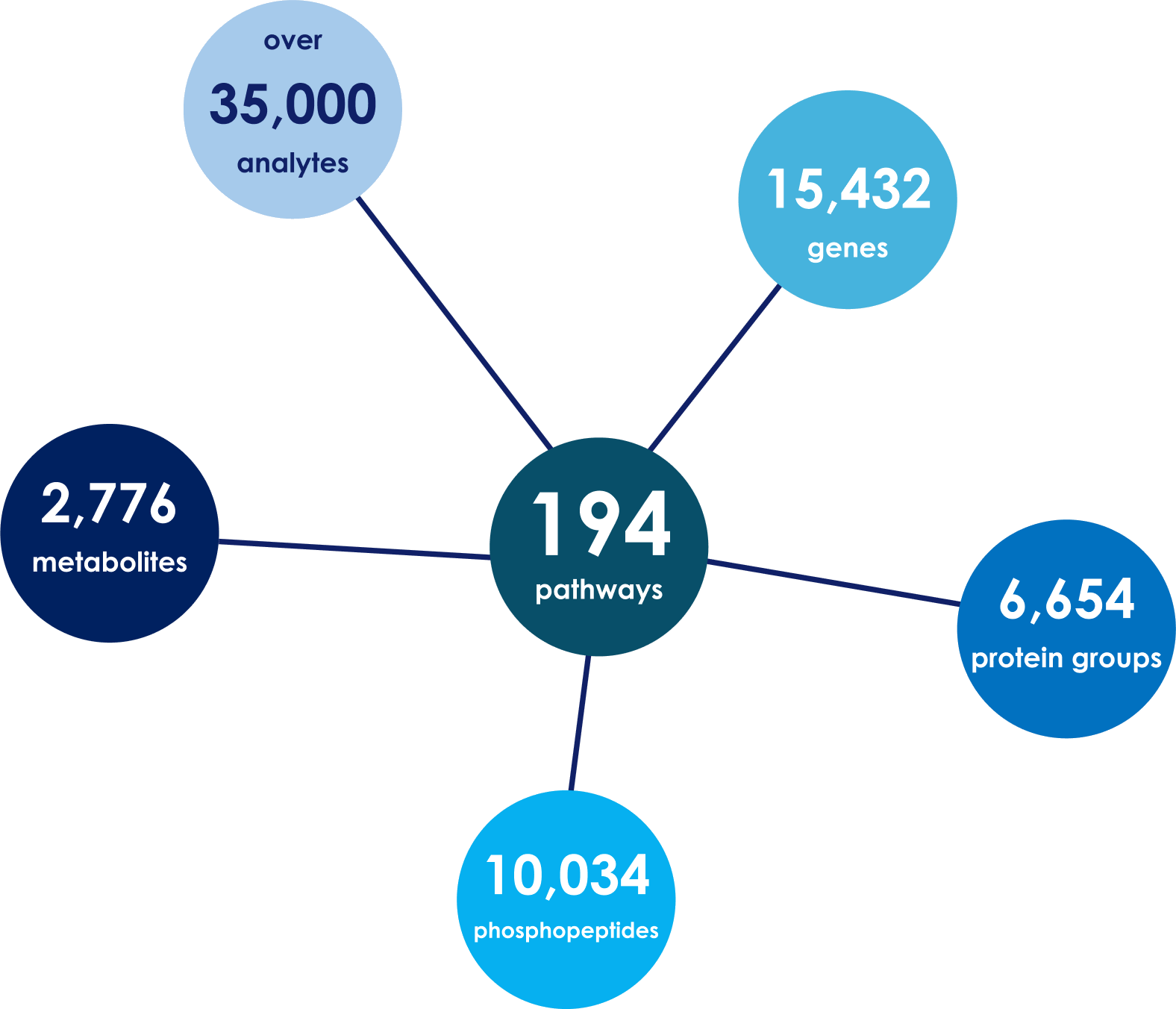
Panome Bio’s Integrated Multi-Omics profiled over 30,000 biomolecules to reveal a connected story of KRASG13D allele deleted cancer cells
- Comprehensive molecular rewiring: Metabolomics showed the largest changes, followed by phosphoproteomics, transcriptomics, and proteomics, highlighting KRAS’s role in metabolism and signaling.
- Pathway-level shifts: 194 dysregulated pathways were identified, along with additional molecular patterns that complement single-omics studies, including mitochondrial metabolism, amino acid catabolism, and growth signaling.
- Network connection: Central modules link collagen biosynthesis, glycolysis, and growth pathways, while amino acid transport and respiration increased.
- Biological guidance: Reveals how KRAS balances energy and proliferation, providing targets for precision oncology.
Why Multi-Omics Enhances Your Research
- Broad coverage: Measure metabolites, proteins, phosphopeptides, and transcripts in a single experiment.
- High resolution: Detect low-abundance molecules, structural variants, and subtle signaling changes.
- Integrated biology: Combine multiple molecular layers to uncover pathway and network relationship that complement single-omics findings.
- Research-ready data: Results are robust, reproducible and easily integrated into downstream studies.
A Multi-Omics Strategy to Uncover Signaling in Cancer
Dive into our application report combining Next-Generation Metabolomics, Discovery Proteomics and Transcriptomics
Comprehensive Multi-Omics Profiling of HCT-116 Cell after KRAS KD
Find out how you can make novel discoveries via Multi-Omics Integration
Multi-Omics Integration with Panome Bio
The future of research begins with a deeper understanding of your data. Panome Bio’s multi-omics workflow transforms complex datasets into clear results. We help researchers decode disease-driven metabolic changes, identify potential intervention points and drive ancer research forward.
Contact us to start your project.