
Alzheimer’s Disease is not driven by a single pathway. It involves coordinated changes across metabolism, proteins and cellular systems.
Most studies still measure these layers separately. This makes it difficult to fully understand how changes relate to each other.
Multi-Omics Connects the System
Multi-Omics integrates multiple omics layers to reveal how biological processes interact.
Panome Bio integrates:
- Next-Generation Metabolomics®
- Discovery Proteomics
- Transcriptomics
- Exposomics
This allows measurement of both molecular changes and how they relate across pathways and networks.
Study overview:
- 15 Alzheimer’s patient serum samples
- 15 age and sex matched healthy control serum samples
- Samples were analyzed by untargeted metabolomics + untargeted proteomics via LC/MS/MS
| Next-Generation Metabolomics | Discovery Proteomics |
|---|---|
| 6,115 metabolites profiled | 2,362 protein groups quantified |
| 1,062 significantly altered | 552 significantly altered |
| Increase in mitochondrial stress lipids | Reduced of ApoE and ApoA1 |
| Decrease in energy-related metabolites | Increased vascular and inflammatory markers |
| Reduction of bile acids and vitamins |
Why Multi-Omics Integration Matters:
- Protein changes can be linked to metabolic effects
- Pathways can be evaluated as systems
- Relationships between molecules become visible
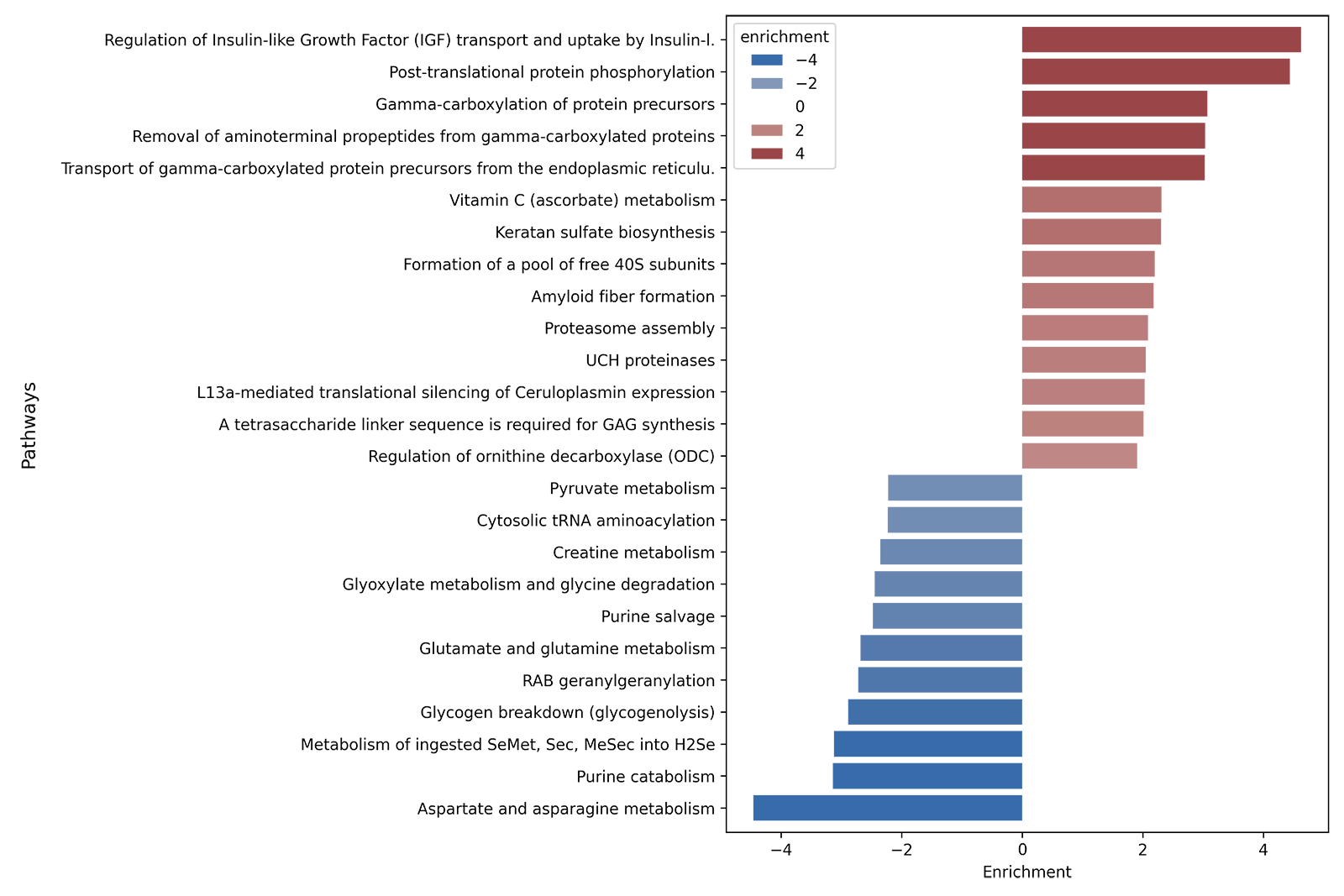
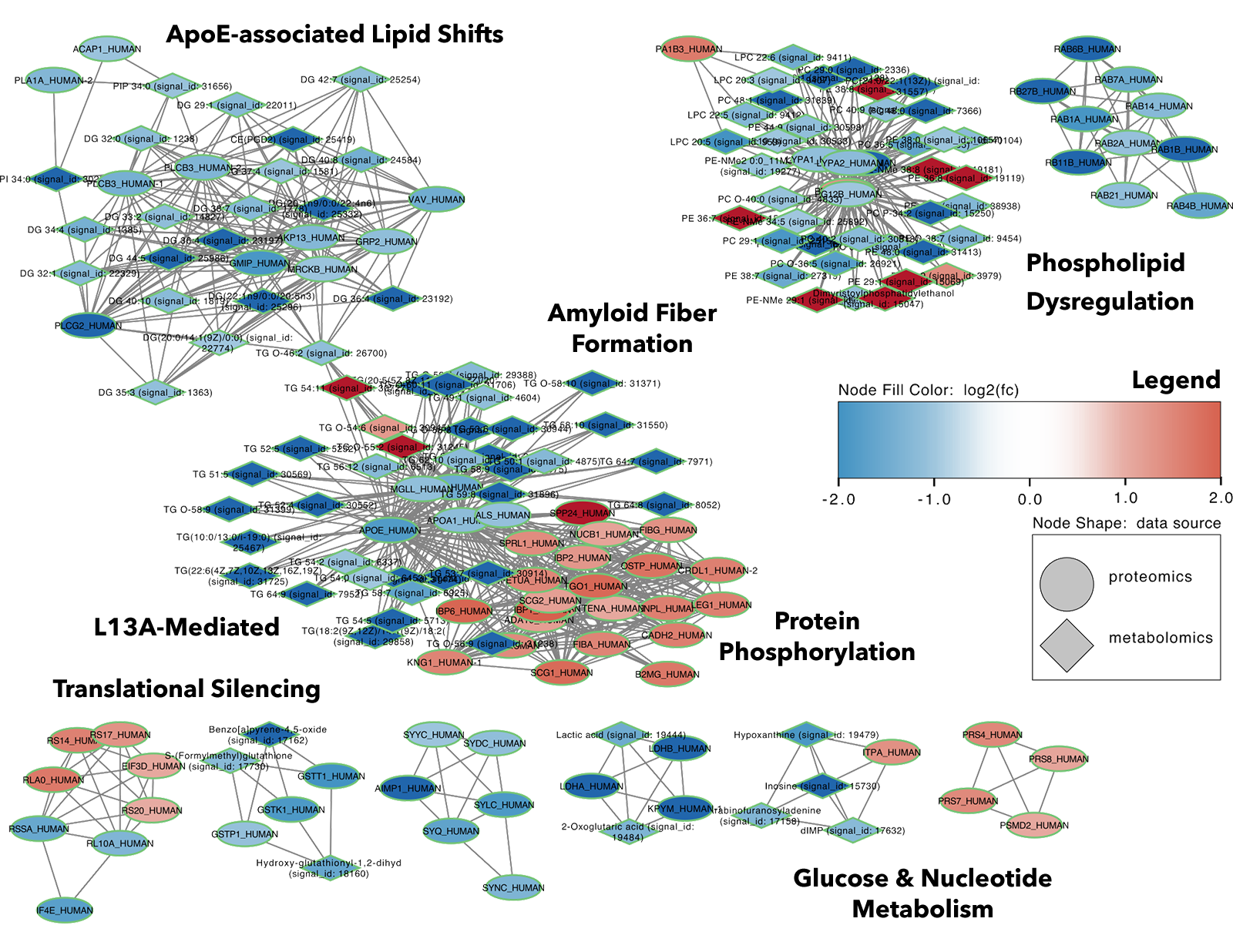
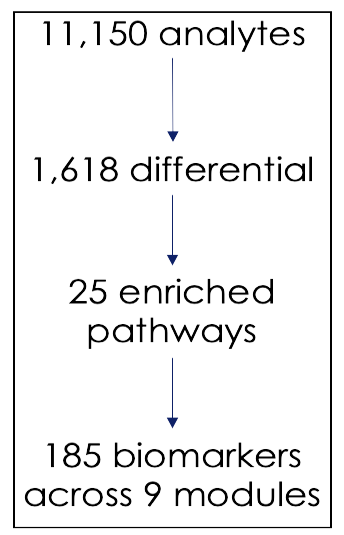
Integrated Network Analysis Links Alzheimer’s Biology into a Connected System:
- 102 metabolites
- 83 proteins
This reveals:
- Amyloid-related processes
- Energy metabolism pathways
- Lipid regulation system
A Global Molecular Signature of Disease
Clear separation between disease and control groups.
Rather than isolated signals, multi-omics shows coordinated changes across groups of molecules moving together.
Alzheimer’s is not subtle.
It reflects a system-wide disruption.
What’s Driving The Changes in Alzheimer’s Disease
The data points to a consistent pattern: a system under metabolic strain, with impaired lipid handling, reduced energy production, and declining vascular function.
Key observations:
- Reduced ApoE and ApoA1 affecting lipid transport
- Accumulation of cardiolipins and glycerolipids linked to mitochondrial stress
- Depletion of energy metabolites such as lactate and malate
- Increased vascular stress markers, including fibrinogen-related proteins
These changes are connected:
- Reduced ApoE limits lipid transport and amyloid clearance.
- Lipid imbalance places stress on mitochondria.
- Energy production declines.
- Vascular dysfunction contributes to further damage.
Alzheimer’s disease is complex, but the underlying patterns can be measured.
Individual approaches provide important, well-defined views of biology. When these layers are brought together, the relationships between them become clearer.
Multi-omics adds context by connecting measurements across biological layers, allowing changes to be interpreted as part of a system rather than in isolation.
Multi-Omics Reveals Alzheimer’s Disease Signatures
This study presents an integrated proteomics and metabolomics analysis of Alzheimer’s disease using serum samples.
Decoding Alzheimer’s Disease with Multi-Omics
By combining metabolomics and proteomics, this study examines how these changes relate within the same biological context.
Explore the Multi-Omics Alzheimer’s Blog
Decoding Alzheimer’s Disease with Multi-Omics
Multi-Omics Integration with Panome Bio
The future of research begins with a deeper understanding of your data. Panome Bio’s multi-omics workflow transforms complex datasets into clear results. We help researchers decode disease-driven metabolic changes, identify potential intervention points and drive ancer research forward.
Contact us to start your project.