
Pregnancy is shaped by more than biology alone. Every day, mothers are exposed to thousands of environmental chemicals through food, water, air, personal care products and the built environment. Many of these compounds can cross into the maternal–placental system, influencing placental biology, fetal development and long-term health outcomes.
Panome Bio’s exposomics platform enables researchers to move beyond traditional toxicology panels and investigate the full chemical landscape of pregnancy with both targeted precision and discovery-scale depth. From PFAS and pesticides to food additives and industrial chemicals, measure how chemical exposures interact with placental biology and contribute to disorders such as preeclampsia, maternal vascular malperfusion, fetal growth restriction and preterm birth.
Why the Placenta Matters
The placenta is one of the most biologically important and vulnerable organs in pregnancy.
It regulates:
- Nutrient exchange
- Hormonal signaling
- Immune communication
- Oxygen delivery
- Fetal protection
But the placenta is also highly responsive to environmental stressors. Chemical exposures including pesticides, PFAS, industrial contaminants and food additives may alter placental function through:
- Oxidative stress
- Endocrine disruption
- Impaired trophoblast invasion
- Vascular remodeling abnormalities
- DNA damage responses
- Hypoxia-associated injury
These disruptions are increasingly linked to adverse pregnancy outcomes, particularly preeclampsia.
Two Complementary Exposomics Approaches
Environmental chemicals are fundamentally different from endogenous metabolites. They are often present at extremely low concentrations, appear inconsistently across individuals and span a vast range of chemical structures. Panome Bio’s Discovery Exposomics™ and quantitative Targeted Exposomics™ solves this with purpose-built workflows that capture the exposures that really matter.
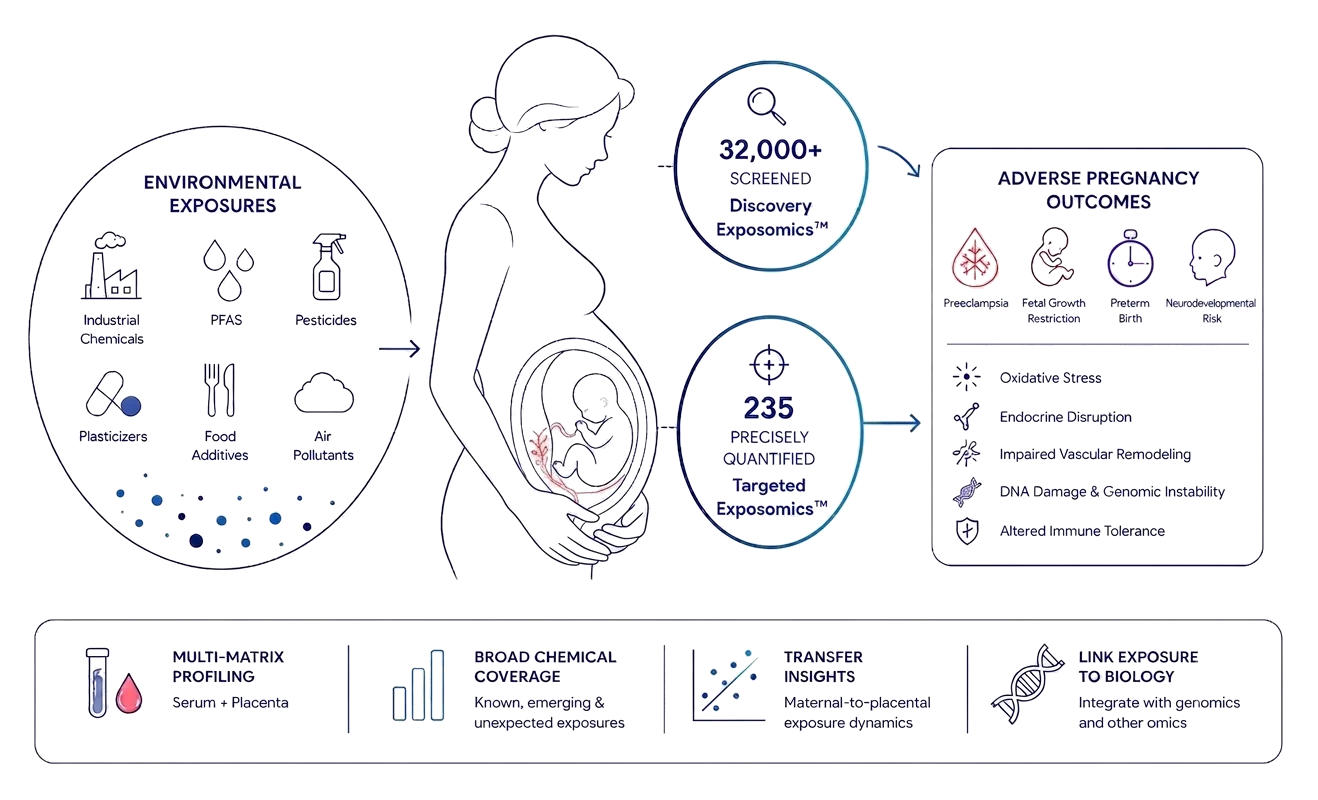
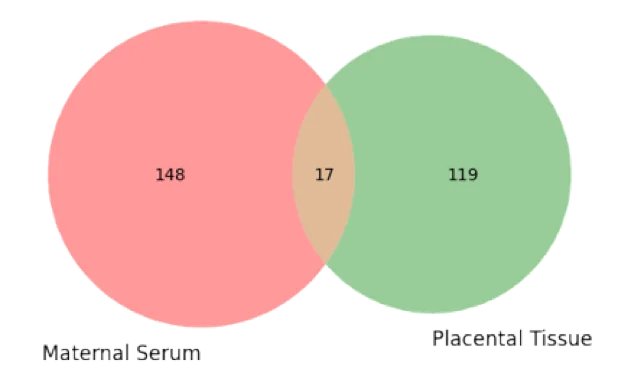
This dual-matrix design provides a powerful view into both circulating maternal exposures and tissue-level placental chemical burden:
Discovery Exposomics Findings
- Maternal Serum
- 3,078 total compounds detected
- 165 environmental chemical exposures identified
- Placental Tissue
- 2,406 total compounds detected
- 136 environmental chemical exposures identified
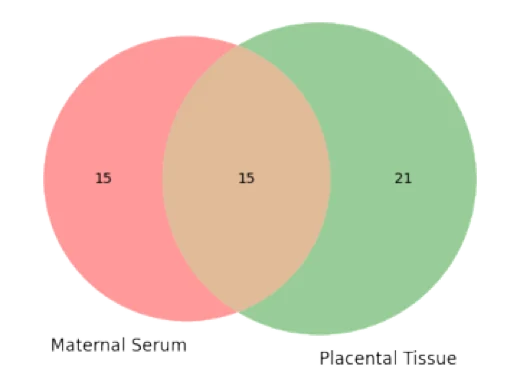
Targeted Exposomics Findings
- Quantified Environmental Chemicals
- 30 compounds quantified in maternal serum
- 36 compounds quantified in placental tissue
The Placenta Reflects Maternal Exposure Burden
Approximately half of quantified targeted chemical exposures were detectable in both maternal serum and placental tissue, demonstrating substantial overlap between maternal exposure burden and the placental chemical environment. These findings suggests the placentas’ role not only as a biological barrier, but also as a measurable archive of environmental interaction.
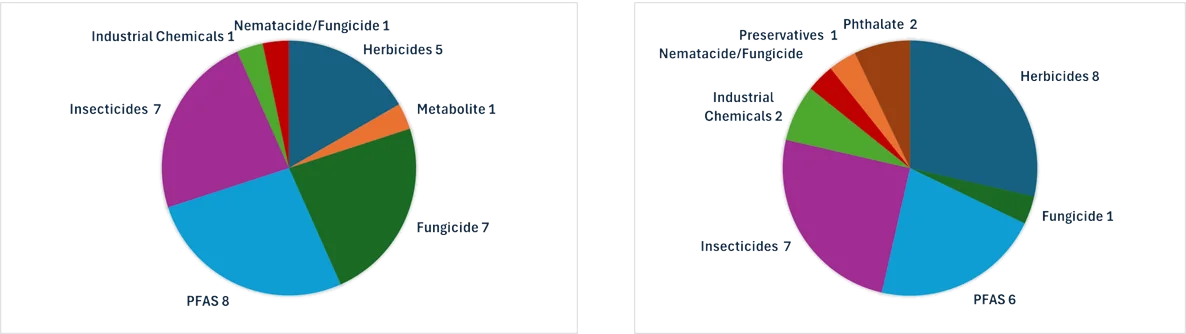
PFAS Demonstrate Maternal–Placental Transfer
Targeted Exposomics identified multiple PFAS species in both maternal serum (left-pie chart) and placental (right-pie chart) tissue.
Several compounds showed strong serum–placenta correlations, including:
- Perfluorooctanesulfonic acid (PFOS)
- Perfluorohexane sulfonic acid (PFHxS)
- Perfluorobutanesulfonic acid (PFBS)
These findings highlight how persistent chemical contaminants may transfer across the maternal–placental interface and accumulate within pregnancy-associated tissues.
Discovery Exposomics Expands the Chemical View
Beyond targeted toxicants, Discovery Exposomics detected thousands of additional small molecules across both maternal serum and placental tissue. These included:
- Food additives
- Consumer product ingredients
- Fragrance compounds
- Industrial chemicals
Previously uncharacterized environmental exposures.
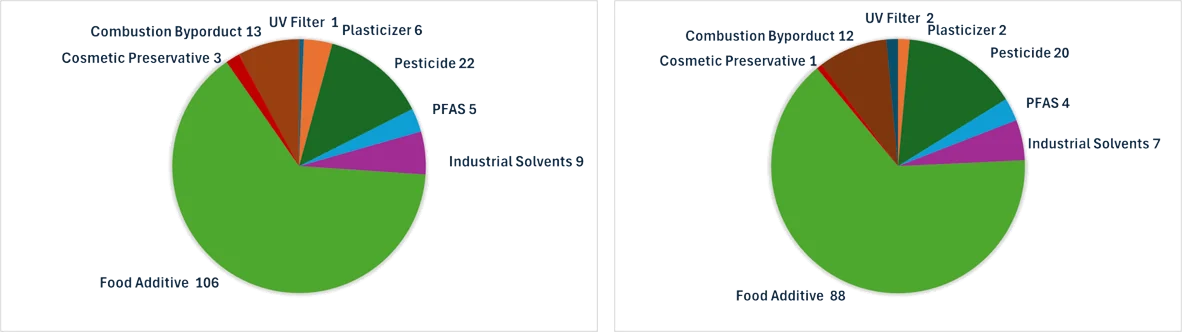
Food Additive Detected at Elevated Levels
Discovery Exposomics of maternal serum from adverse pregnancy outcome groups detected high levels of Food Additives both in maternal serum (left-pie chart) and placental (right-pie chart) tissue. Food Additives are compounds commonly used as a fragrance and flavor additive, representing a real-world environmental exposure signal.
The Future of Pregnancy Research Includes Chemical Exposure Analysis
Pregnancy is shaped by continuous interaction between maternal biology, placental function and the surrounding chemical environment. Exposomics provides researchers with the ability to measure these interactions at unprecedented scale and resolution. Panome Bio enables researchers to move beyond isolated biomarkers toward a systems-level understanding of chemical exposure influence in maternal–fetal health. Understanding pregnancy means understanding exposure.
Mapping the Maternal-Placental Exposome
Dive into our Application Note to explore how chemical profiling is reshaping our understanding of adverse pregnancy outcomes.
Blog: How Exposomics is Changing Adverse Pregnancy Research
Explore how exposomics is helping researchers study adverse pregnancy.
Measure the Missing Half of Human Health
Chemical exposure represent a critical, long-overlooked dimension of biology. Panome Bio provides a dedicated Exposomics analysis that enables comprehensive measurement of these compounds, turning previously unseen environmental influences into human health research.
Every project is unique. Panome Bio collaborates with researchers to design Exposomics workflows tailored to specific study goals, whether investigating environmental risk factors, conducting toxicology assessments or examining population-level exposure patterns across cohorts.
Measure what has always been there but never measured.