
Biological samples can contain multiple cell populations with distinct metabolic programs. When these populations are analyzed together, changes occurring in a specific cell type can be diluted by signals from the rest of the sample.
Panome Bio combined fluorescence-activated cell sorting (FACS) with Next-Generation Metabolomics® to compare metabolic changes in unsorted peripheral blood mononuclear cells (PBMCs) and isolated T and B cell populations from healthy and rheumatoid arthritis (RA) samples
Cell Sorting Reveals More RA-Associated Metabolic Changes in B Cells
Untargeted metabolomics identified substantially more RA-associated metabolic features after separating PBMCs into defined cell populations.
Across the analysis:
- 67 RA-associated metabolic features were identified in sorted B cells
- 12 features were identified in unsorted PBMCs
- 5 features were identified in sorted T cells
The number of RA-associated features detected in sorted B cells was approximately 5.6-fold higher than in unsorted PBMCs. These results demonstrate how analyzing a defined cell population can reveal metabolic changes that are less apparent in heterogeneous samples.
Cell Sorting Reveals Disease-Associated Metabolic Patterns
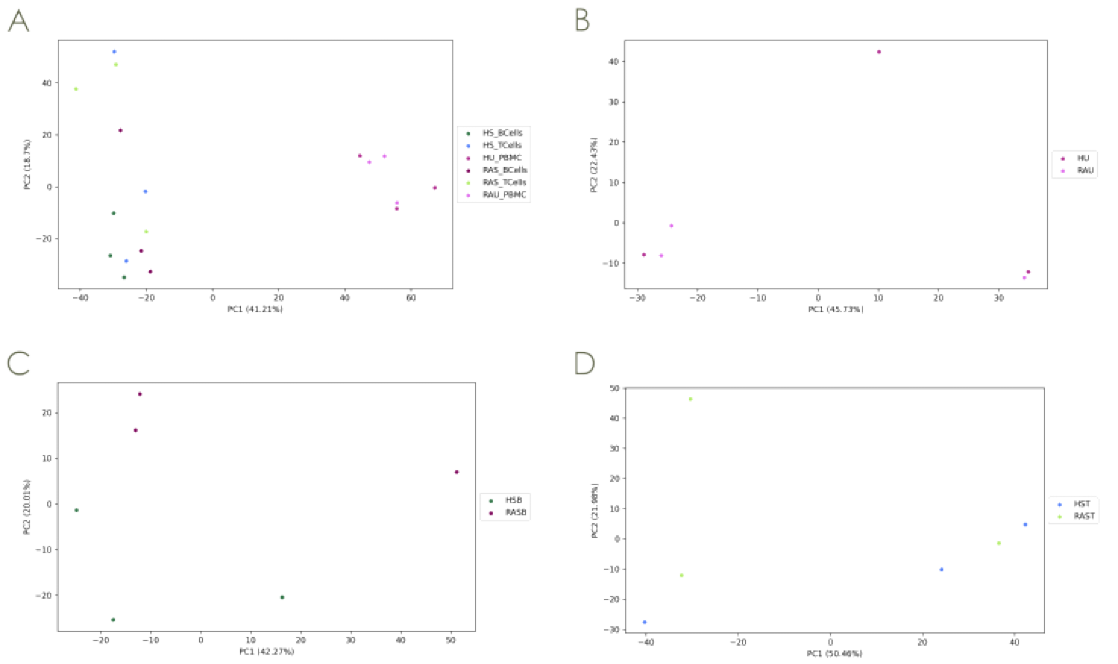
Unsupervised PCA showed clear separation of healthy and rheumatoid arthritis T and B cell populations from the unsorted PBMCs (Figure 3A). In contrast, healthy and rheumatoid arthritis groups showed limited separation within the unsorted PBMCs (Figure 3B), while sorted B cells displayed clearer separation by disease status (C). Sorted T cells showed less distinct separation (D). These results demonstrate that analyzing defined cell populations can reveal metabolic differences that may be masked in heterogeneous PBMC samples.
B Cell Metabolism Shows Glycerophospholipid Remodeling
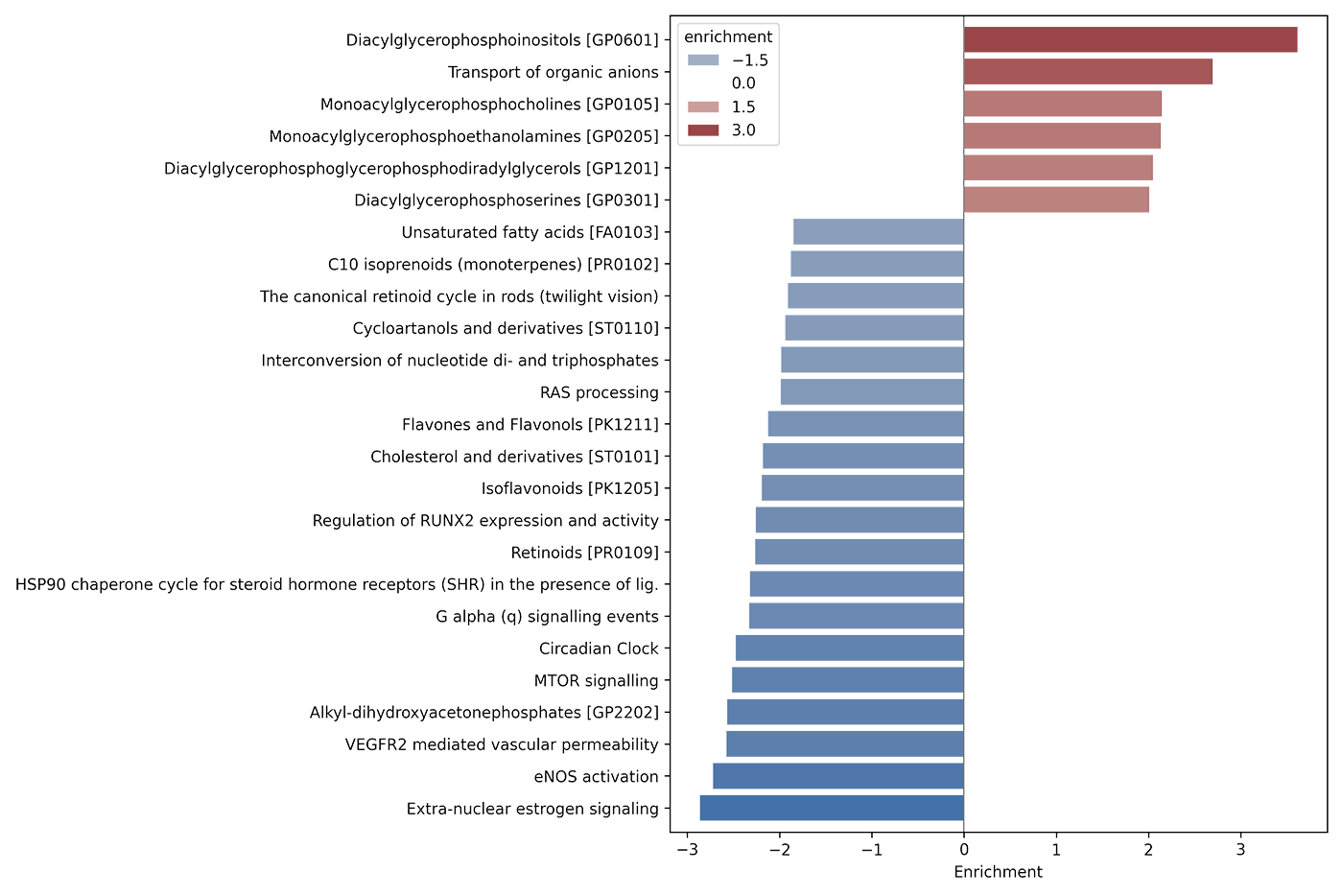
The metabolic changes identified in sorted B cells were enriched in pathways associated with glycerophospholipid remodeling.
Altered metabolites included members of:
- Glycerophosphoinositols
- Lysophosphatidylcholines (Lyso-PC)
- Lysophosphatidylethanolamines (Lyso-PE)
- Cardiolipins
- Phosphatidylserines
Together, these changes point to altered membrane lipid metabolism in B cells associated with RA.
Pathway Enrichment Analysis in Sorted B Cell Population.
The result demonstrates that sorting can change not only the number of disease-associated metabolites detected, but also the biological pathways that can be resolved.
Positive enrichment scores indicate pathways enriched in RA B cells (red), while negative scores (blue) indicate pathways depleted.
FACS Sorting Separates Cell-Specific Metabolic Signals
FACS sorting reduced cellular heterogeneity before metabolomic analysis, allowing population-specific metabolic differences to be examined directly.
In this study, the strongest RA-associated metabolic signal was observed in B cells rather than T cells or unsorted PBMCs, demonstrating the value of resolving mixed cell populations before downstream molecular profiling.
Applications of FACS + Omics Studies
Combining FACS with Omics can support studies where metabolic phenotypes may differ between cell populations, including:
- Immune cell metabolism
- Tumor cell populations
- Drug response profiling
- Cell therapy research
- Stem cell and differentiation studies
- Disease-associated cell states
- Cell-specific metabolic phenotyping
Panome Bio’s Cell Line Services provide FACS-based cell population isolation that can be integrated with downstream molecular profiling, including untargeted metabolomics.
Separating the cells first can make it possible to determine which population is changing and which metabolic pathways are involved.
Resolving Cell-Specific Metabolic Biology
Explore the Application Note for a better understanding of Panome Bio’s new Cell Service offering – FACS
Explore our Cell Line Services
Whether you need FACS, cell engineering, biobanking or cell treatment. , explore the service that fits your research.
Explore Cell Service with Panome Bio
Panome Bio’s Cell Line Services support cell-based research from population isolation and genetic modification to cell banking and controlled treatment.
Our services include FACS, Cell Engineering, Cell Biobanking and Cell Treatment, providing flexible solutions for generating, maintaining and studying defined cell populations across research applications.
Contact us to start your project.