
September 25, 2026
How Can Proteomics Track Therapeutic Response in Real Time? How can proteomics help researchers track how well a therapy is working in real time? In this episode of ChatGJP, Panome Bio CSO Gary J. Patti explores how protein biomarkers can provide a dynamic view of disease activity and therapeutic response. Using Alzheimer’s disease and the […]
September 22, 2026
How Does Proteomics Complement Genomics in Understanding Disease? How does proteomics complement genomics in understanding disease? While genomics provides information about an individual’s genetic makeup and potential disease risk, proteomics offers a closer look at what is actually happening inside cells. In this episode of ChatGJP, Gary J. Patti, CSO of Panome Bio, explains how […]

July 10, 2026
This data report demonstrates the capabilities of Panome Bio’s TissueBridge™ FFPE Proteomics, showcasing comprehensive protein profiling from formalin-fixed, paraffin-embedded (FFPE) tissue. The report includes protein identification, differential protein expression analysis, pathway enrichment and biological interpretation generated from archived tissue specimens. It highlights how TissueBridge™️ enables robust, reproducible proteomic analysis of FFPE samples.
June 2, 2026
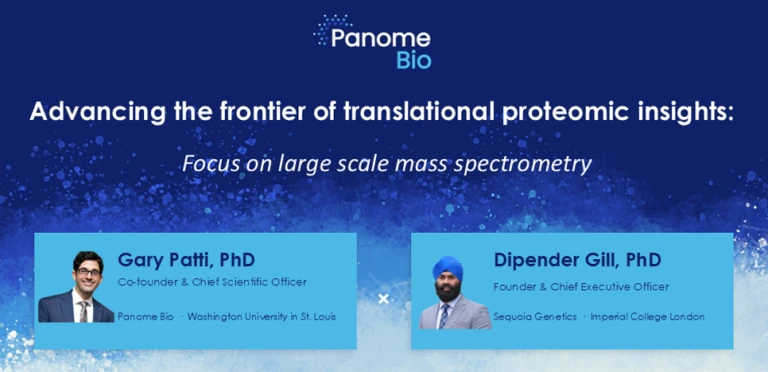
Transcript featuring Gary Patti (Panome Bio) and Dipender Gill (Sequoia Genetics) DIPENDER So Gary, great to get a chance to talk again. I know we’ve had numerous really stimulating conversations about proteomics, genetics, the intersection of science, and how these advancing technologies can be leveraged towards generating translational insights to benefit patients. I think we’re […]

April 30, 2026
Advancing the frontier of translational proteomic insights: Focus on large scale mass spectrometry A fireside conversation for biopharma, investors, and academics about maximizing translational insights from proteomic data by capitalizing on the emergence of large-scale technologies including mass spec and genetics data. Abstract: Despite decades of clinical trial investment, fewer than 10% of drugs reach […]

October 29, 2025
Explore Panome Bio’s in-depth proteomics data report profiling global protein expression changes in HCT-116 cells with KRAS knockout. This analysis highlights key signaling pathways and molecular alterations revealed through advanced discovery proteomics analysis, offering valuable insights into KRAS-driven cancer biology. Download the full report to examine detailed results and interpretation.
October 1, 2025
Antibody-drug conjugate (ADC) resistance represents one of the most formidable challenges in precision oncology, with clinical failures often attributed to our limited understanding of the dynamic molecular mechanisms underlying therapeutic escape. Panome Bio’s advanced phosphoproteomics research services provide unprecedented insight into resistance-associated signaling networks, enabling researchers to dissect the complex phosphorylation cascades that drive ADC […]
September 26, 2025
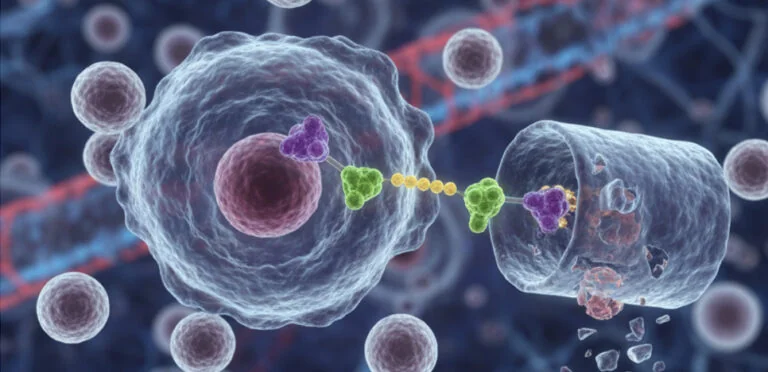
Proteolysis targeting chimeras (PROTACs) represent a revolutionary approach to targeted protein degradation, offering unprecedented opportunities to modulate previously “undruggable” targets in cancer and other diseases. As PROTAC research progresses from academic discovery to clinical translation, the complexity of understanding their mechanisms of action, selectivity profiles, and therapeutic effects has grown exponentially. Discovery proteomics, offered as […]
September 25, 2025
Antibody-drug conjugates (ADCs) represent a paradigm shift in targeted cancer therapy, combining the specificity of monoclonal antibodies with the cytotoxic potency of small molecule drugs through sophisticated linker chemistry. Despite remarkable clinical successes with agents like trastuzumab emtansine (Kadcyla) and brentuximab vedotin (Adcetris), ADC development remains challenged by complex optimization requirements spanning target selection, payload […]
September 13, 2025
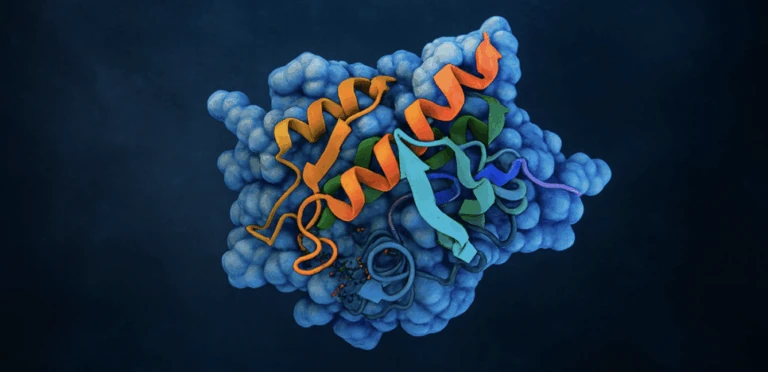
Your ELISA confirms the therapeutic enzyme is present. Your Western blot shows a band at the correct molecular weight. But here’s the critical question: is the enzyme actually functional? For mRNA-based enzyme replacement therapies targeting rare metabolic diseases, producing protein mass isn’t enough. Many enzymes require specific phosphorylation patterns for catalytic activity. Without direct measurement […]