November 24, 2025
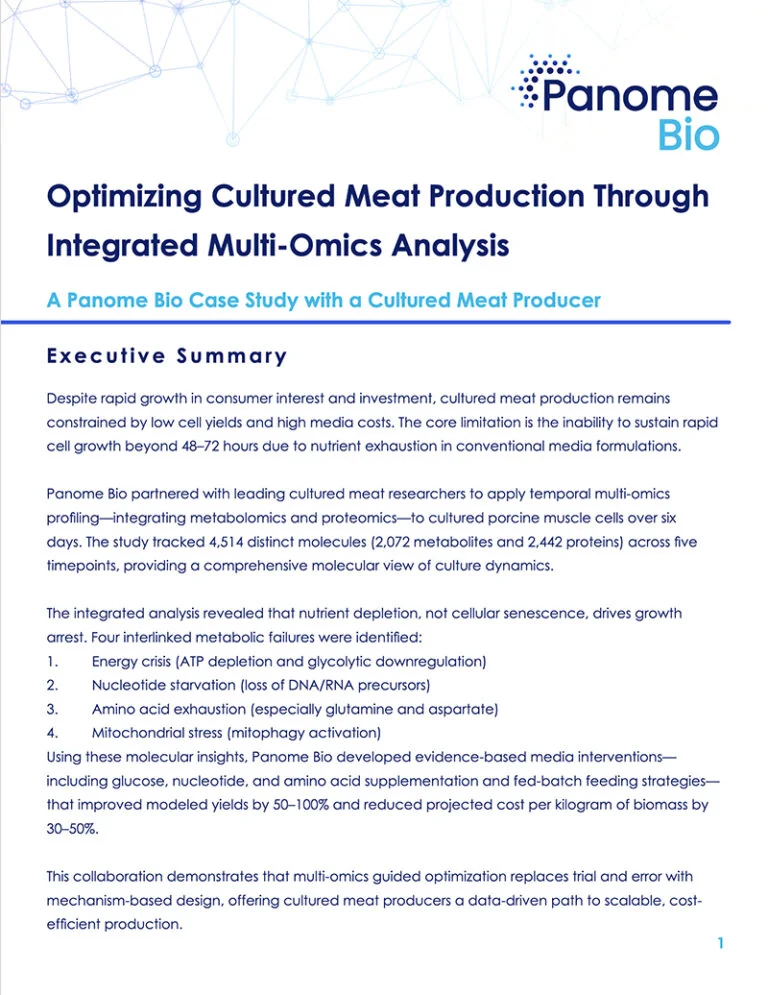
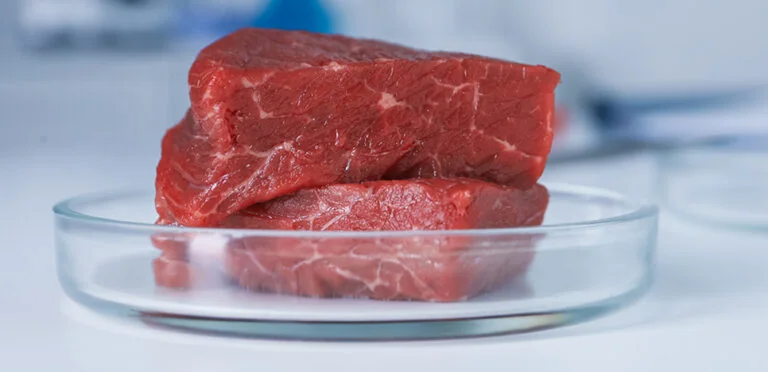
Optimizing Cultured Meat Production Through Integrated Multi-Omics Analysis Cultured meat developers face complex biological challenges that slow process optimization and scale-up. This application note demonstrates how integrated multi-omics analysis—combining metabolomics and proteomics—uncovers the metabolic drivers of growth arrest and nutrient limitation in muscle cell cultures. Discover how multi-omics transforms cultured meat R&D from trial-and-error experimentation […]
November 7, 2025
The Traditional Media Optimization Bottleneck If you’re developing cultured meat at scale, you know the frustration. Your cells grow well for the first 48-72 hours, then productivity crashes. You suspect the media formulation, but identifying the limiting nutrients feels like searching for a needle in a haystack. So, you do what everyone does: systematic trial-and-error […]

November 6, 2025
How Quality Infrastructure Impacts Scientific Impact The scientific landscape has shifted dramatically as reproducibility concerns have fundamentally changed how reviewers evaluate manuscripts, how funding agencies assess proposals, and how collaborators choose partners, creating an environment where infrastructure supporting research matters as much as science itself. Yet many researchers continue viewing quality systems primarily as regulatory […]

November 3, 2025
The comprehensive evaluation of natural product therapeutic efficacy requires sophisticated analytical approaches that extend beyond traditional single-endpoint assessments to encompass dynamic host response profiling through integrated metabolomics and proteomics methodologies. Modern pharmaceutical development demands detailed understanding of how natural products modulate host biological systems at both the metabolite and protein levels, providing mechanistic insights into […]
October 29, 2025
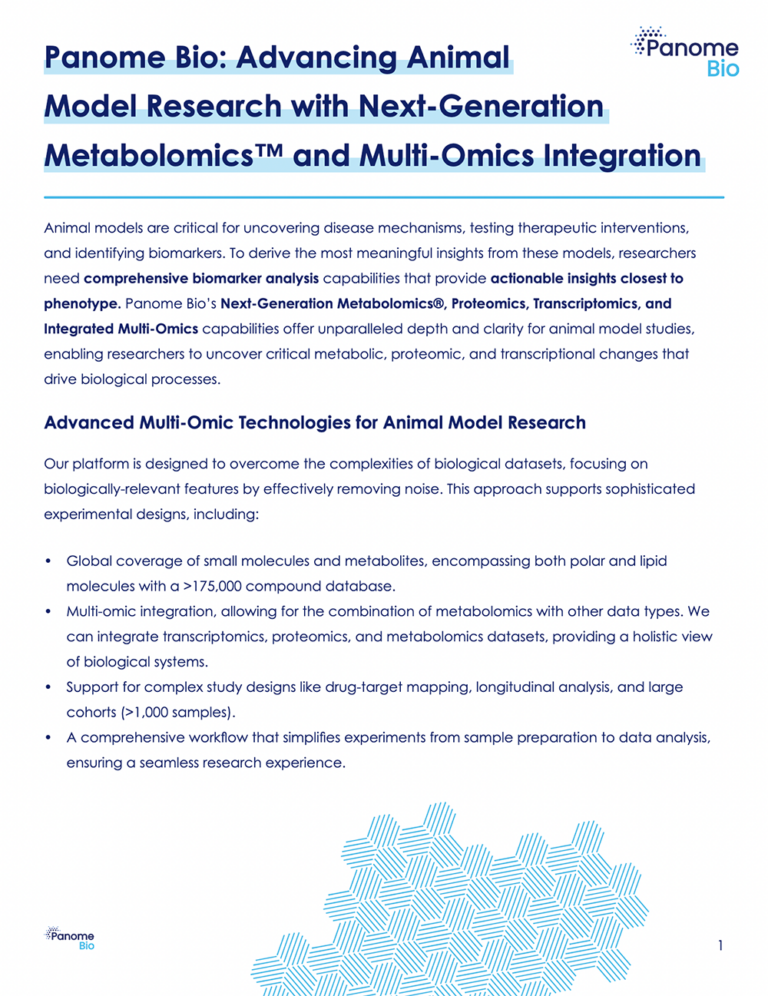
Advancing Animal Model Research with Multi-Omics Integration Discover how Panome Bio’s Next-Generation MetabolomicsTM and integrated multi-omics approaches enhance the translational value of animal model research. This application note demonstrates how comprehensive metabolic and molecular profiling enables deeper biological understanding, improving the accuracy and relevance of preclinical studies. Download to learn more about our data-driven insights […]
October 1, 2025
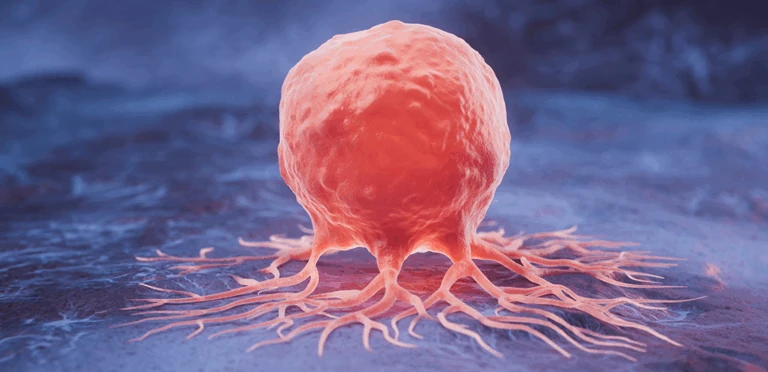
Why Cancer Vaccine Mechanism of Action Requires All Three ‘Omics Your IND submission for an mRNA cancer vaccine needs a mechanism of action section. You have data showing mRNA delivery, antigen expression, and tumor response. But can you demonstrate the complete mechanistic cascade from genetic instruction to immune activation to metabolic reprogramming? Regulatory agencies increasingly […]
September 29, 2025
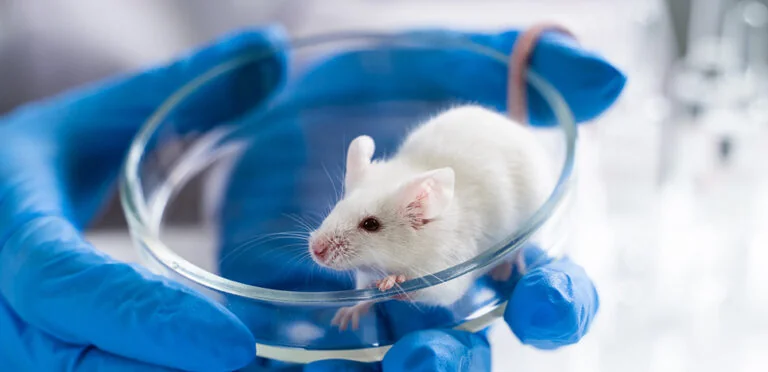
Animal models have long been the cornerstone of biomedical research. They provide scientists with an invaluable window into disease mechanisms, treatment responses, and the intricate biology that drives health and illness. Yet, as research questions grow more complex, traditional approaches often fall short of capturing the full picture. That’s where integrated multi-omics analysis steps in. […]
September 24, 2025
Understanding the Cascade of Molecular Events Following Protein Degradation Molecular glue degraders trigger a complex cascade of cellular responses. These responses unfold across multiple time scales and molecular layers. Initial protein degradation occurs within hours. The downstream consequences continue for days or weeks. During this time, cells adapt to the loss of key regulatory proteins. […]

September 24, 2025
Why Strategic Sample Management Matters The samples arriving at research laboratories today might tell stories that won’t be fully understood for months or even years, given the inherently gradual nature of scientific insight where hypotheses evolve, promising leads take unexpected turns, and meaningful patterns emerge only after sustained investigation. Yet many researchers commit a critical […]
September 24, 2025
Proteolysis Targeting Chimeras (PROTACs) have fundamentally transformed our approach to targeted therapeutics, offering a paradigm shift from traditional protein inhibition to selective protein degradation. These hetero-bifunctional molecules hijack the ubiquitin proteasome system to selectively add polyubiquitin chains onto a specific protein target to induce proteolytic degradation, enabling researchers to target previously “undruggable” proteins that lack […]