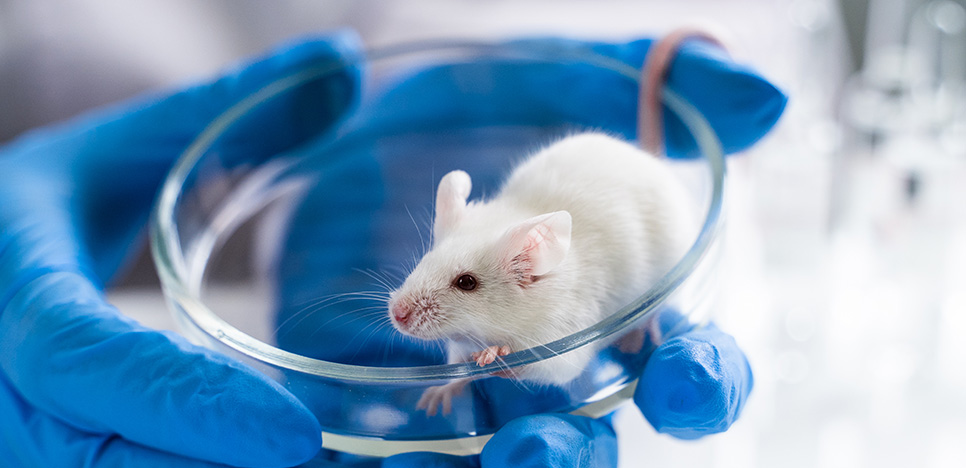
Animal models have long been the cornerstone of biomedical research. They provide scientists with an invaluable window into disease mechanisms, treatment responses, and the intricate biology that drives health and illness. Yet, as research questions grow more complex, traditional approaches often fall short of capturing the full picture. That’s where integrated multi-omics analysis steps in.
By integrating metabolomics, proteomics, and transcriptomics, researchers can move beyond isolated measurements and begin to see biological systems in their true complexity. Instead of asking only what genes are turned on or off, or what proteins are changing, multi-omics provides a layered view. This includes how molecular pathways interact, how changes cascade across tissues, and how those interactions ultimately shape phenotype.
From Data to Discovery
One of the greatest challenges in animal model research has been making sense of massive, often noisy datasets. Multi-omic approaches are designed to cut through that noise, highlighting the most biologically relevant signals. Whether the goal is to explore the effects of a genetic knockout, to understand how a therapy impacts disease progression, or to trace the rapid effects of dietary interventions, multi-omics provides the resolution needed to reveal connections that single-omic approaches might miss.
For example, integrating metabolomics with proteomics in complex disease models has shown how tumors respond differently in obese versus lean animals under immunotherapy. In another context, combining metabolic and protein-level insights has revealed how even short-term dietary changes can spark rapid, beneficial physiological shifts across multiple organs. These aren’t just isolated findings—they illustrate the power of seeing biology as a network rather than a collection of parts.
Expanding the Benefits of Multi-Omics
The promise of multi-omics is its ability to bring researchers closer to phenotype – the actual manifestation of biology – by capturing a more complete molecular story. Beyond deeper mechanistic insights, there are several broader benefits that are reshaping animal model research:
- Greater translatability to human studies: Animal models are often criticized for not fully reflecting human biology. Multi-omic studies help bridge that gap by identifying conserved molecular pathways across species. This allows researchers to better align preclinical findings with human disease biology, ultimately improving the predictive power of animal studies.
- Early biomarker discovery: By layering multiple data types, researchers can spot biomarker candidates earlier and with greater confidence. Instead of relying on one class of molecules, multi-omics highlights cross-validated signals – metabolites, proteins, and transcripts that move together – providing stronger evidence for their relevance.
- Mechanistic depth in treatment evaluation : Drugs and interventions rarely act through a single pathway. Multi-omics enables scientists to see not only whether a treatment works, but also how it works at multiple biological levels. This allows for a deeper understanding of side effects, off-target activity, and resistance mechanisms – critical for therapeutic development.
- Systems-level understanding of disease : Diseases are rarely caused by a single gene or metabolite. They emerge from networks of dysregulation. By integrating omics layers, researchers gain a systems-level map of disease progression – insights that can’t be captured with traditional approaches.
- Acceleration of discovery timelines : Because multi-omics captures more information in fewer experiments, it often accelerates the research process. Instead of running sequential studies (genomic first, then proteomic, then metabolic), multi-omics integrates these datasets upfront, reducing trial-and-error and helping researchers converge on meaningful findings faster.
The Importance of a Multi-Omic Approach
Animal model research is no longer limited to asking narrow questions about one pathway or one molecule. With multi-omics, the horizon broadens to systems-level understanding, where researchers can connect dots across entire molecular landscapes. This shift brings practical advantages for scientists and for the patients who will ultimately benefit:
- More reliable targets for drug development
- Stronger evidence for preclinical findings
- Improved ability to design human trials
The Future of Preclinical Discovery
As biomedical research pushes into new frontiers – precision medicine, immunotherapy, metabolic disease, and beyond – animal models remain an essential proving ground. Multi-omics transforms them from models of isolated pathways into living systems of insight.
The result? A deeper, faster, and more reliable path from preclinical research to clinical discovery.
Frequently Asked Questions
How can multi-omics analysis improve research on genetic knockout animal models?
Integrating metabolomics, proteomics, and transcriptomics data from a genetic knockout model reveals the full downstream biological consequences of removing a specific gene, going beyond the single pathway a researcher might have originally hypothesized to uncover unexpected, systems-level effects of the knockout.
Can multi-omics detect rapid physiological effects of short-term dietary changes in animal studies?
Yes. Multi-omics profiling can trace rapid effects of dietary interventions across multiple organs, capturing short-term physiological shifts that occur soon after a diet change, rather than only detecting changes that accumulate over a much longer study period.
How does multi-omics analysis help compare tumor response to immunotherapy in obese versus lean animal models?
Multi-omics profiling can evaluate how different metabolic states, such as obesity versus lean body composition, alter a tumor’s biological response to immunotherapy, revealing metabolic factors that influence treatment outcome beyond what a single-omics measurement would show.
What is Panome Bio’s integrated multi-omics offering for preclinical animal model research?
Panome Bio combines its metabolomics, proteomics, and transcriptomics technologies into a single integrated multi-omics analysis, providing a comprehensive systems biology view of an animal model that supports insights not achievable using any one omics technology in isolation.