
November 24, 2025
Two Targets, One Pathway: The Metabolomic Logic Behind MAT2A/PRMT5 Combination Therapies The next breakthrough in cancer treatment may come from attacking two targets within the same metabolic pathway. MAT2A and PRMT5 inhibitor combinations represent a new paradigm in precision oncology, using metabolic dependencies to create synthetic lethal interactions that spare normal cells while eliminating cancer […]
November 21, 2025
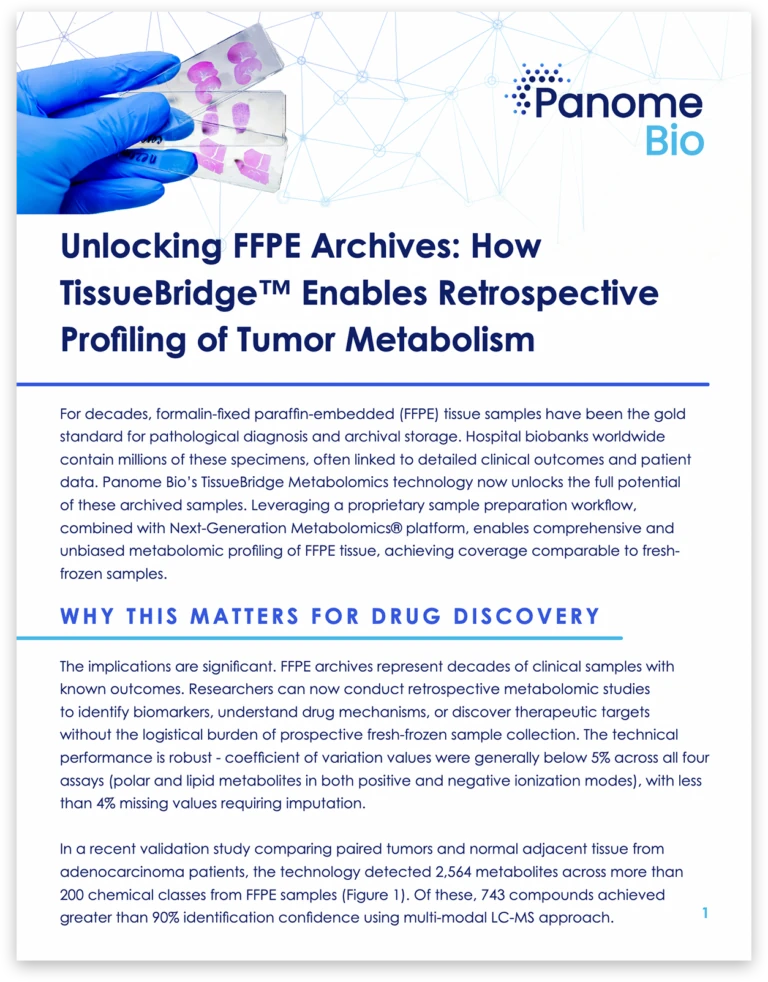
Unlocking FFPE Archives: How TissueBridge™️ Enables Retrospective Profiling of Tumor Metabolism Panome Bio’s TissueBridge technology unlocks the full metabolomic potential of FFPE tissue archives, enabling comprehensive, high-confidence profiling of tumor metabolism for biomarker discovery, translational research, and retrospective clinical studies.

November 7, 2025
Connecting the Two Halves of the RLT Puzzle Understanding how radioligand therapy (RLT) works in cell line-derived xenograft (CDX) models requires connecting two complementary perspectives: Where the treatment goes, and What happens inside tumor cells once it gets there. Preclinical contract research organizations (CROs) are highly effective at addressing the first part through PET and […]
November 6, 2025
Discover how targeted metabolomics enables more accurate evaluation of PRMT5 therapies, supports biomarker discovery, and drives translational breakthroughs in oncology in this webinar.

November 5, 2025
Radioligand therapy (RLT) has emerged as a transformative precision oncology approach with remarkable initial response rates. However, treatment resistance remains a critical challenge that can limit long-term therapeutic success. Imaging technologies—including PET, SPECT, MRI, and bioluminescence—provide essential monitoring of treatment response and disease progression, forming the backbone of RLT development. The integration of metabolomics from […]

November 4, 2025
The Metabolic Frontier of Neuroscience: Lessons from Alzheimer’s Disease Alzheimer’s disease is a complex, devastating neurodegenerative disorder and the most common form of dementia, affecting millions globally. While decades of research have focused on the infamous amyloid plaques and tau tangles, a powerful new focus is emerging: metabolism. Metabolomics, the deep, comprehensive study of small […]
October 30, 2025
Radioligand therapy (RLT) represents a paradigm shift in precision oncology, delivering targeted radiation directly to cancer cells while minimizing damage to healthy tissue. Cell line-derived xenograft (CDX) models serve as essential platforms for RLT development, providing reproducible systems to evaluate treatment efficacy and identify predictive biomarkers. While imaging technologies, including PET, SPECT, MRI, and bioluminescence, […]
September 30, 2025
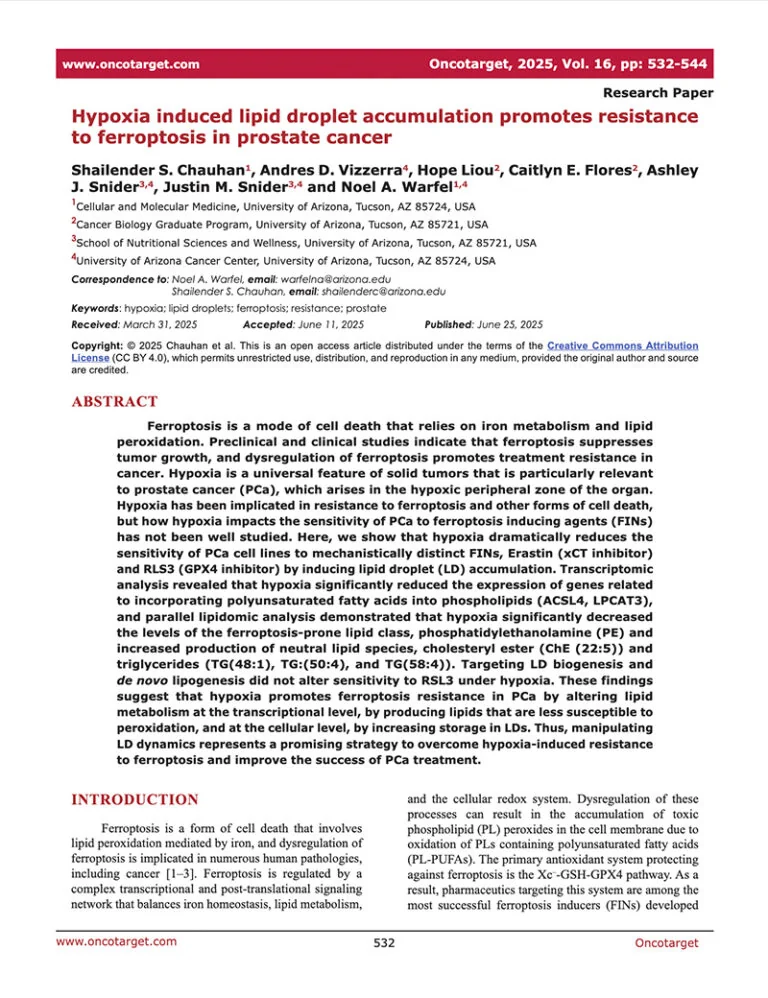
This study from researchers at the University of Arizona utilized Next-Generation Lipidomics from Panome Bio as part of a larger, multi-omic study to find that hypoxia promotes ferroptosis resistance in prostate cancer by altering lipid metabolism at the transcriptional level, by producing lipids that are less susceptible to peroxidation, and at the cellular level, by […]

September 25, 2025
The contemporary natural products market demands sophisticated analytical strategies that extend beyond traditional compound identification to encompass comprehensive competitive intelligence and systematic benchmarking methodologies. Modern pharmaceutical and biotechnology companies require detailed comparative analysis of natural product formulations to identify unique chemical signatures, assess relative bioactivity profiles, and understand competitive positioning within increasingly crowded therapeutic markets. […]

September 25, 2025
Why PRMT5 Clinical Trials Need Comprehensive Metabolomic Monitoring Current PRMT5 clinical trials are flying with incomplete instruments. While symmetric dimethylarginine (SDMA) has become the standard pharmacodynamic biomarker for monitoring PRMT5 inhibition, relying on this single metabolite provides only a narrow view of a complex biological network. Recent clinical setbacks and modest response rates suggest that […]