
October 27, 2026
How Can Metabolomics Detect Drug Toxicity Early? How much does our environment influence our health—and what could that mean for precision medicine? How can researchers identify drug toxicity before it becomes a clinical problem? Metabolomics may offer a way to detect potential safety risks earlier in drug development. In this episode of ChatGJP, Panome Bio […]
October 22, 2026
Can Metabolomics Explain Differences in Drug Response? How much does our environment influence our health—and what could that mean for precision medicine? Why does a drug work well for some patients but have little effect on others? Differences in underlying disease biology may hold important clues. In this episode of ChatGJP, Panome Bio CSO Gary […]
October 16, 2026
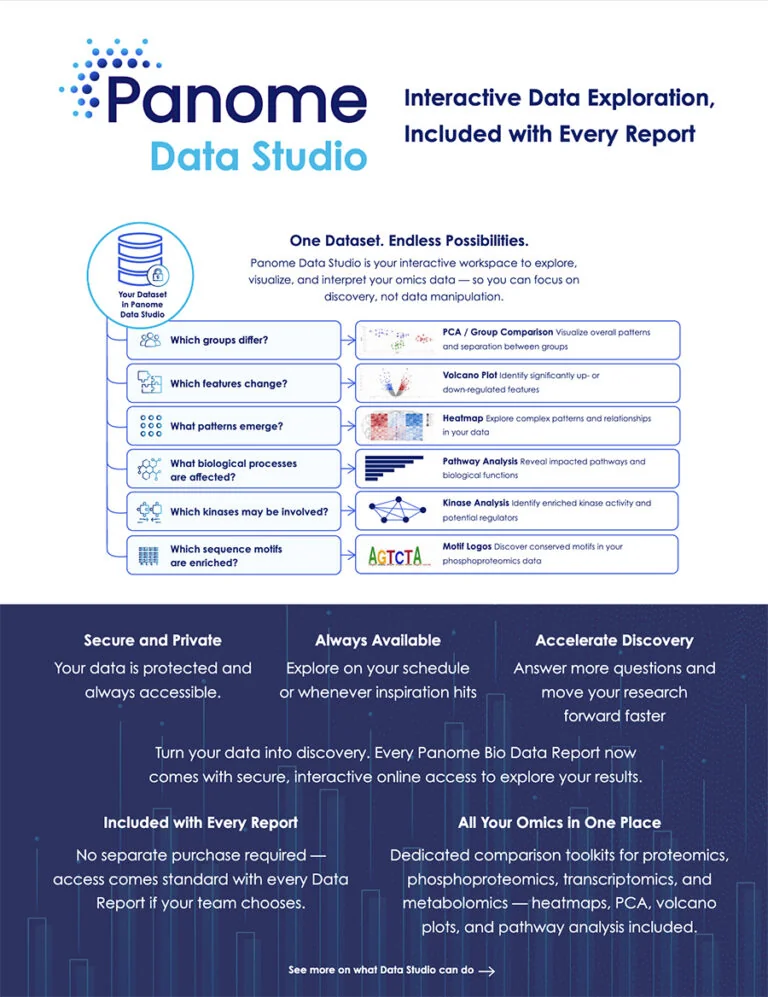
Panome Data Studio is an interactive online workspace that helps researchers explore, visualize, and interpret their omics data. Included at no additional cost with every new Data Report, Panome Data Studio offers tools for PCA and group comparisons, volcano plots, heatmaps, pathway analysis, and kinase analysis, with specialized motif analysis for phosphoproteomics data. Researchers can […]
September 22, 2026
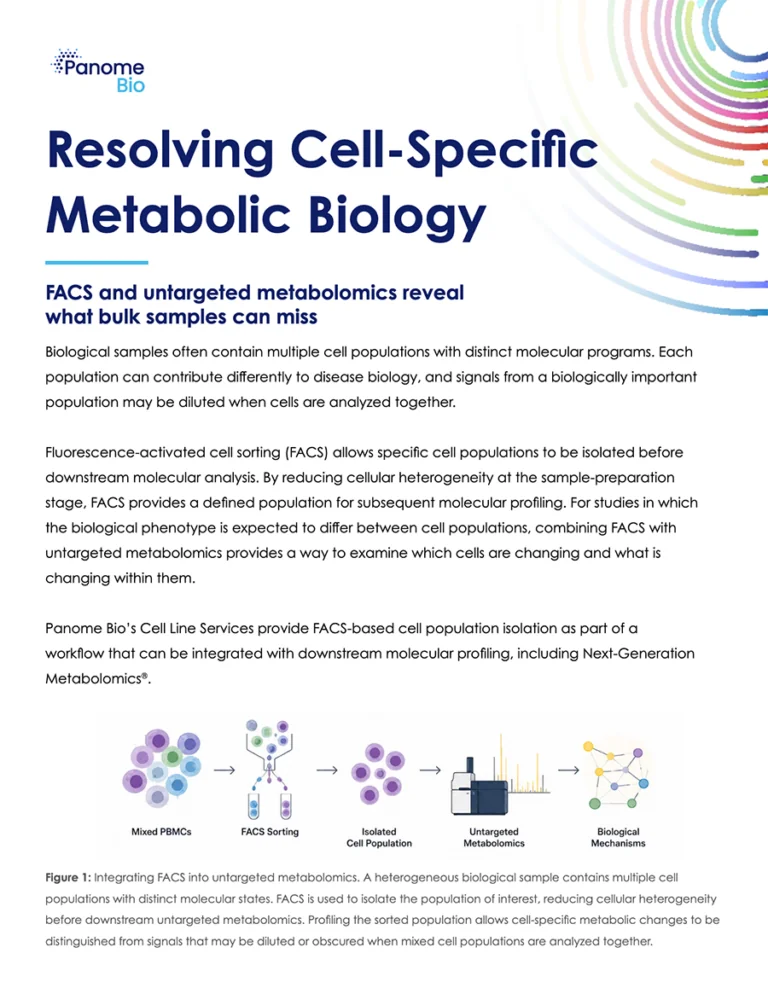
FACS – Cell Sorting Reveals Cell-Specific Metabolic Differences FACS cell sorting can separate defined cell populations before downstream molecular analysis. In this study, Panome Bio used FACS to isolate specific immune cell populations and applied metabolomics to characterize cell-specific metabolic differences. This application note includes additional results that improve clarity, while the underlying analysis and […]
September 9, 2026
What Can Metabolomics Reveal About Disease That Genomics Cannot? What can metabolomics reveal about disease that genomics might not be able to? While genomics provides critical information about an individual’s genetic makeup, it does not necessarily show what is happening within cells at the biochemical level. In this episode of ChatGJP, Gary J. Patti, CSO […]
August 18, 2026
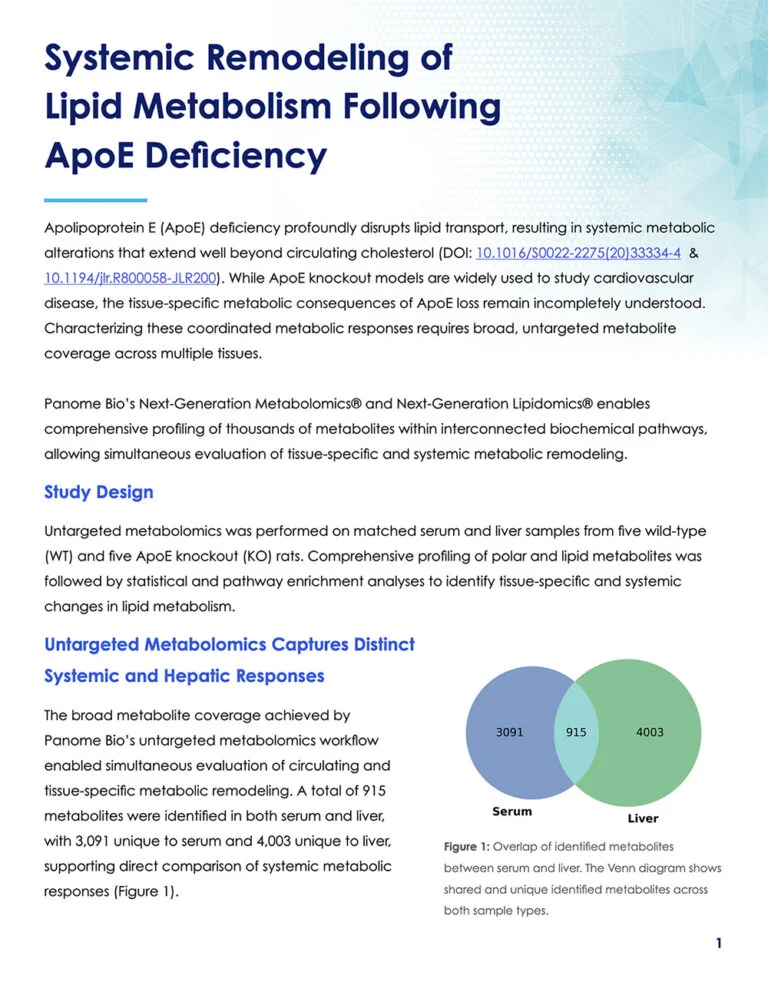
Metabolomic Profiling of ApoE Deficiency Reveals Altered Lipid Metabolism This application note profiles metabolic alterations associated with ApoE deficiency using matched serum and liver samples from ApoE knockout and wild-type rats. Untargeted metabolomics identified significantly altered metabolites associated with systemic lipid remodeling and disruptions in sphingolipid metabolism.
August 6, 2026
This data report profiles metabolic alterations associated with ApoE deficiency using matched serum and liver samples from ApoE knockout and wild-type rats. The study identifies significantly altered metabolites, revealing systemic lipid remodeling and disruptions in sphingolipid metabolism. The report includes metabolite identification, differential abundance analysis, pathway enrichment, and biological interpretation to characterize metabolic changes associated […]
July 8, 2026
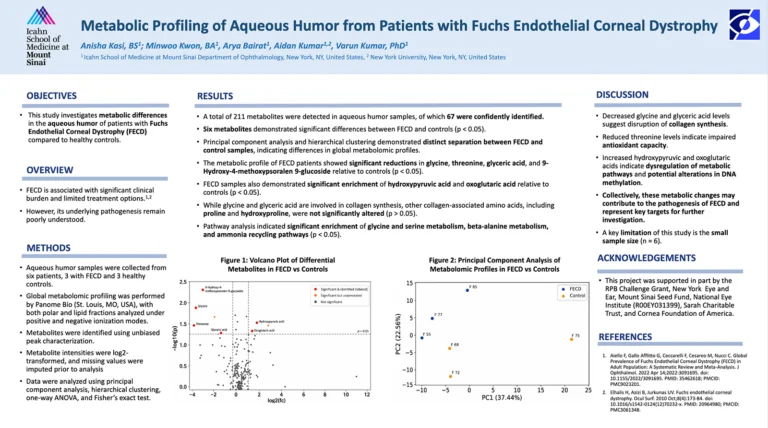
Metabolic Profiling of Fuchs Endothelial Corneal Dystrophy This poster, presented by researchers from the Icahn School of Medicine at Mount Sinai, showcases how Next-Generation Metabolomics can reveal metabolic alterations associated with Fuchs endothelial corneal dystrophy (FECD). Using aqueous humor samples analyzed by Panome Bio, the study investigates biochemical changes that may contribute to disease pathogenesis […]
July 8, 2026
Learn how untargeted metabolomics and lipidomics identify biomarkers that complement traditional methods for periodontitis diagnosis and oral health research.
May 22, 2026
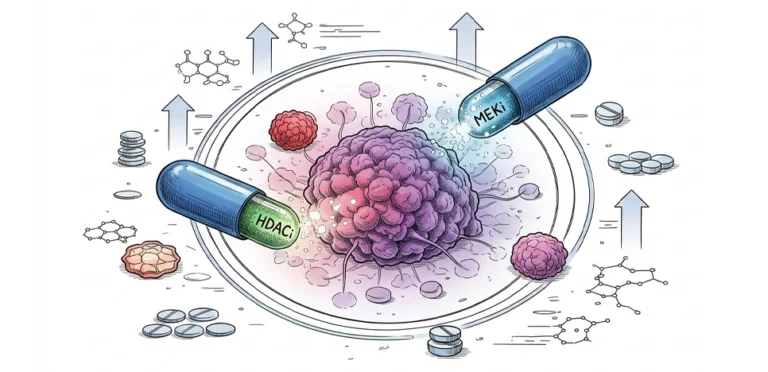
In the fight against cancer, single-agent treatments often hit a wall as tumors adapt and develop resistance. This is especially true for aggressive cancers like non-small-cell lung cancer (NSCLC) with KRAS and LKB1 mutations, a hard-to-treat subtype. These challenges are fueling a critical shift in oncology towards combination therapies that target cancer from multiple angles. […]