Blood sampling doesn’t have to be complicated. For decades, Dried Blood Spots (DBS) have offered a simple, scalable alternative to traditional blood plasma collection. However, the use of Dried Blood Spots in advanced untargeted metabolomics has been limited by concerns around stability and depth of data. Panome Bio is set to change that.
Why Dried Blood Spots?
Dried Blood Spot sampling is fast, minimally invasive, and requires just a drop of blood collected via finger prick onto a filter paper or a blood spot card of your choice. There are no tubes, no cold storage, and far less plastic waste involved. It’s already a go-to method in newborn screening, chronic disease monitoring, and pharmacokinetics. So why not also in clinical diagnostics, personalized medicine, early cancer detection or public health surveillance, wherever biological information is needed.
But could it reliably support untargeted metabolomics at the depth of today’s research demands? Panome Bio’s recent study proves it can.
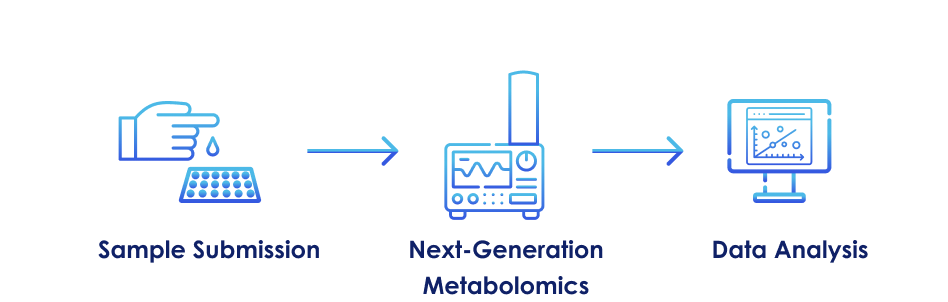
Using Next-Generation Metabolomics and utilizing liquid chromatography-tandem mass spectrometry (LC-MS/MS), DBS cards across three critical metrics were evaluated: Coverage, Stability and Concordance. Coverage refers to the number of metabolites detected in a sample type compared to a gold standard, like Plasma. Stability assesses how well metabolites are preserved in a sample over time and under specific conditions. This is crucial for DBS, as it’s often collected in remote settings and shipped without refrigeration. Concordance evaluates whether a less traditional sampling method, like DBS, accurately reflects biological changes observed in a standard sampling method, such as Plasma. This ensures that any biological insights gained from Dried Blood Spots are truly representative of what’s happening in the body.
The study demonstrated that DBS metabolomics, when analyzed with Panome Bio’s Next Generation Metabolomics platform, provides high-quality, reliable, and biologically meaningful data:
- Coverage: DBS captured ~94% of the metabolites detected in plasma, demonstrating strong biological relevance.
- Stability: Over 95% of metabolites remained stable after 96 hours at room temperature, showcasing the robustness of DBS for sample collection and transport.
- Concordance: Changes in metabolite levels between fasted and fed states were clearly observed in DBS, mirroring plasma results and underscoring the platforms sensitivity to dynamic physiological changes.
In short: DBS metabolomics works, and it works exceptionally well with Panome Bio’s Next Generation Metabolomics platform.
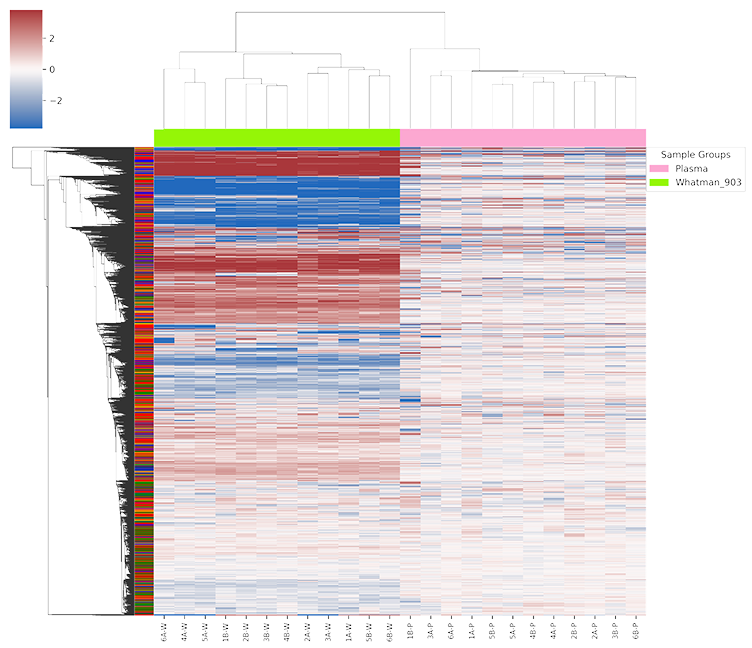
Figure 1: Heatmap of Case Study representing over 95% metabolite stability in DBS samples at 24- and 96-hours post-collection.
What This Means for You:
Panome Bio’s untargeted metabolomics unlocks powerful metabolic insights from Dried Blot Spot samples with minimal disruption to your workflow. Whether you’re running large cohort studies, field-based trials, or longitudinal research, DBS offers:
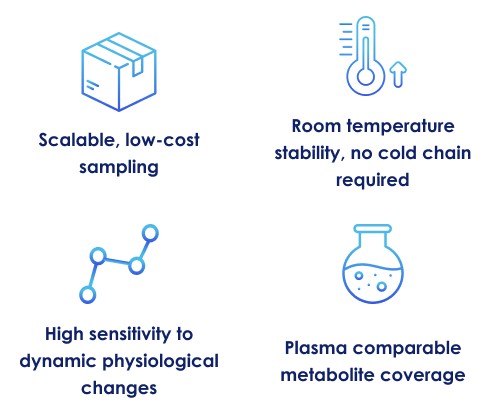
- Scalable, low-cost sampling
- Room temperature stability, no cold chain required
- High sensitivity to dynamic physiological changes
- Plasma comparable metabolite coverage
Read the full application reportLearn more about our DBS capabilities
Frequently Asked Questions
Can dried blood spot (DBS) samples be used for reliable untargeted metabolomics?
Yes. Panome Bio’s evaluation found that DBS samples support reliable next-generation untargeted metabolomics, capturing approximately 94% of the metabolites detected in matched plasma samples while offering a simpler, minimally invasive collection method.
How stable are metabolites in dried blood spots over time?
Over 95% of metabolites detected in dried blood spots remained stable after 96 hours at room temperature, meaning DBS samples don’t require cold-chain shipping or storage to preserve data quality — a major logistical advantage for field-based and remote studies.
Does DBS metabolomics data accurately reflect biological changes seen in plasma?
Yes. Metabolite changes between fasted and fed states that were clearly detectable in plasma were also clearly reflected in matched DBS samples, demonstrating strong concordance between the two sample types for tracking real physiological changes.
What are the practical advantages of DBS sampling for large studies?
DBS sampling requires only a finger-prick drop of blood on filter paper, with no tubes, cold storage, or centrifugation needed, and generates far less plastic waste than traditional blood draws — making it a scalable, low-cost option for large cohort studies, longitudinal research, and field-based sample collection.
How much metabolite coverage do dried blood spots capture compared to plasma?
DBS samples captured roughly 94% of the metabolites identified in matched plasma using Panome Bio’s next-generation metabolomics workflow, indicating that most of the biologically relevant metabolome remains accessible in dried blood spots.