Drug development is expensive, slow, and highly unpredictable. Despite major advances in genomics and precision medicine, nearly 90% of drug candidates still fail (Doi: 10.1016/j.apsb.2022.02.002) during clinical development, often because the selected target was not sufficiently validated early on.
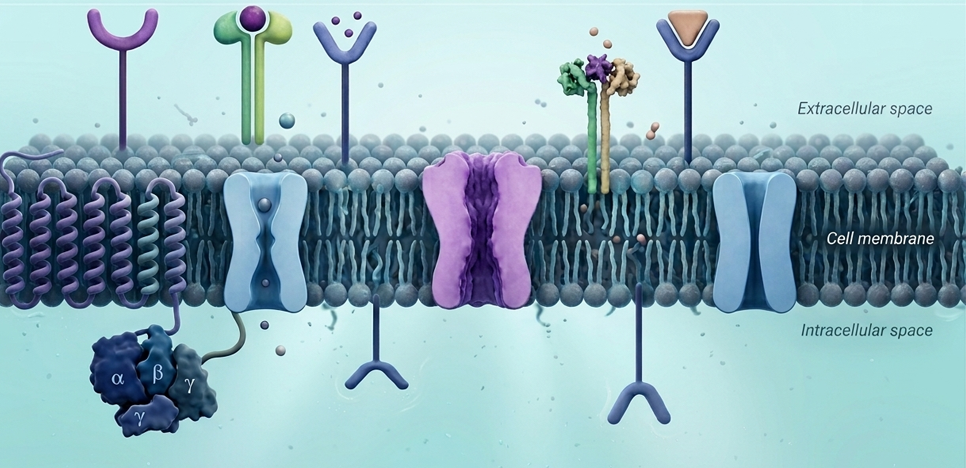
One of the biggest blind spots in drug discovery is the cell surface proteome: the collection of proteins exposed on the outer membrane of cells. These proteins control how cells communicate, respond to therapy, interact with the immune system, and adapt to disease. They also represent the majority of today’s successful drug targets. Yet much of the surfaceome remains unexplored.
Surface omics is helping researchers close that gap by enabling direct, unbiased measurement of proteins present at the cell surface under biologically relevant conditions.
Surface Proteins Make Strong Drug Targets
Cell surface proteins are uniquely attractive therapeutic targets because they are directly accessible to drugs, antibodies, and engineered immune cells. In fact, many approved therapies already target membrane proteins involved in signaling, transport, or immune recognition ( DOI: 10.1038/s41598-021-96217-7; Doi: 10.2174/1389450120666181204164721.). But identifying the right surface target is not always straightforward.
Genomic and transcriptomic approaches provide valuable insight into gene activity, but RNA abundance alone does not always reflect protein localization or surface accessibility. Surface proteomics and membrane lipidomics complement these approaches by directly measuring proteins present at the cell membrane.
This becomes especially important in areas like:
- antibody-drug conjugates (ADCs)
- CAR-T therapies
- immuno-oncology
- biomarker discovery
- precision medicine programs
How Surface Proteomics Works
Membrane proteins are notoriously difficult to analyze. They are often low in abundance, highly hydrophobic, and heavily modified, making them easy to miss with conventional proteomics workflows.
Modern surface proteomics workflows use specialized enrichment techniques, such as cell surface biotinylation, glycoprotein capture, and chemical labeling, to selectively isolate surface-exposed proteins before mass spectrometry analysis.
Combined with high-resolution LC-MS platforms, researchers can now quantify thousands of surface proteins simultaneously.
Instead of relying on assumptions from RNA expression alone, scientists can directly observe the functional protein landscape driving disease biology and therapeutic response.
Predicting Toxicity Earlier in Development
A major contributor to clinical attrition is on-target, off-tissue toxicity: when a therapeutic successfully binds its intended target, but that target is also present in healthy organs.
Surface proteomics helps de-risk these programs early by comparing target expressions across tumor and normal tissues. Quantitative tissue profiling can reveal whether a candidate target is truly tumor-selective or likely to create safety concerns later in development. This type of early validation is especially valuable for high-cost modalities like ADCs and cell therapies, where late-stage failures can become extraordinarily expensive.
Even modest improvements in early target selection can save significant development time, reduce attrition rates, and improve the probability of clinical success.
Finding Better Biomarkers for Precision Medicine
Surface proteomics also supports biomarker discovery and patient stratification strategies. Because surface proteins are accessible to imaging agents, antibodies, and liquid biopsy approaches, they make especially useful clinical biomarkers. Researchers can profile responder versus non-responder samples to identify surface signatures associated with therapeutic response, resistance, or disease progression.
This information can help:
- identify patients most likely to benefit from therapy
- support companion diagnostic development
- monitor treatment response over time
- detect resistance mechanisms earlier
As precision medicine continues to evolve, direct measurement of the surfaceome provides an additional layer of biological insight that transcriptomics alone cannot capture (Doi: 10.7717/peerj.270).
A More Complete View of Drug Biology
Surface proteomics is shifting drug discovery from a largely predictive process toward a more direct understanding of functional biology. By measuring actual protein abundance and localization at the cell surface, researchers can:
- validate targets earlier
- identify safer therapeutic opportunities
- uncover resistance pathways
- improve patient selection strategies
- and make more informed development decisions
As interest in targeted therapies, immunotherapies, and multi-omics integration continues to grow, surface proteomics is becoming an increasingly valuable tool across the drug development pipeline.
Frequently Asked Questions
How does surface proteomics complement genomic approaches to drug target discovery?
Genomic and transcriptomic data can suggest which genes are expressed, but they can’t confirm whether the corresponding protein is actually present and accessible on the cell surface. Surface proteomics provides direct, unbiased measurement of proteins physically present at the cell membrane, closing that gap between genetic potential and biological reality.
How much do clinical trial failures relate to poor drug target selection?
Nearly 90% of drug candidates still fail during clinical development, often due to insufficient target validation earlier in the discovery process — a statistic that underscores why direct, protein-level target confirmation matters before a program advances to costly clinical trials.
How does surface proteomics help avoid on-target, off-tissue toxicity?
By profiling target protein expression across multiple healthy tissues in addition to diseased tissue, surface proteomics helps researchers identify targets with minimal presence on tissues where drug binding could cause unintended toxicity, supporting safer target selection earlier in development.
Beyond ADCs and CAR-T, what other drug discovery applications use surface proteomics?
Surface proteomics supports a broad range of programs beyond antibody-drug conjugates and CAR-T therapies, including immuno-oncology target discovery, biomarker identification for patient stratification, and precision medicine programs where confirming actual surface protein presence improves target confidence.
What multi-omics services does Panome Bio combine with surface proteomics for target discovery?
Panome Bio integrates surface proteomics with its broader metabolomic, proteomic, and transcriptomic capabilities, providing combined systems-biology insight that supports target validation, biomarker discovery, and patient stratification within a single research partnership.