September 22, 2026
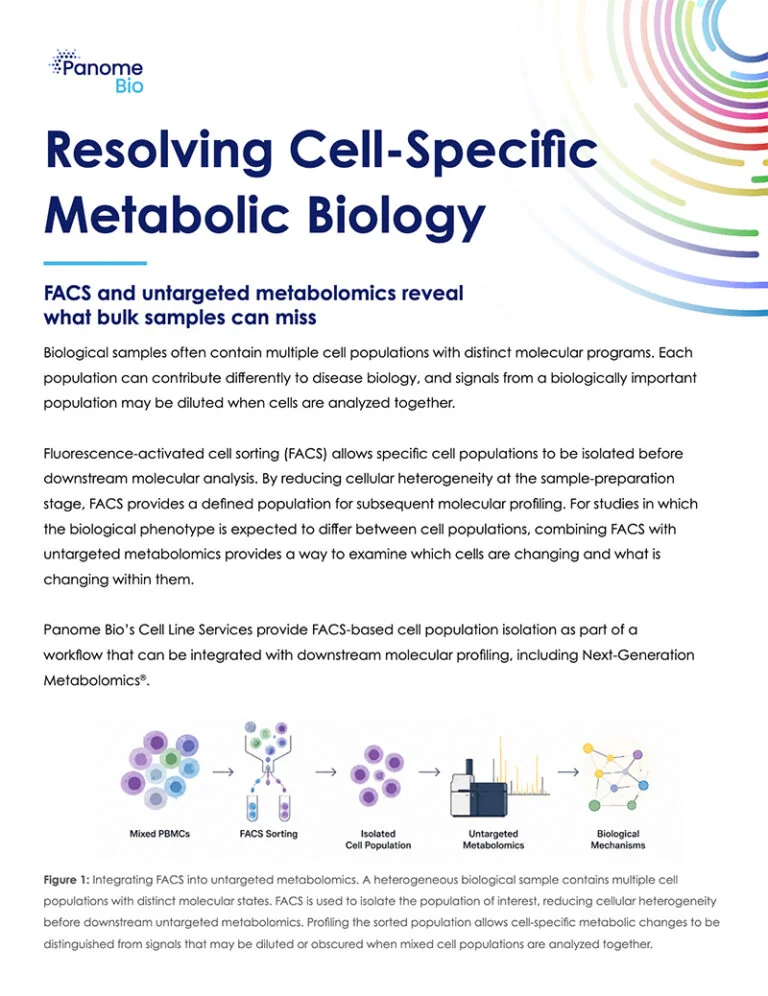
FACS – Cell Sorting Reveals Cell-Specific Metabolic Differences FACS cell sorting can separate defined cell populations before downstream molecular analysis. In this study, Panome Bio used FACS to isolate specific immune cell populations and applied metabolomics to characterize cell-specific metabolic differences.
August 25, 2026
Discovery Exposomics profiling of 30 serum samples identified 240 exposure chemicals, with 138 showing significant differences between Alzheimer’s disease and healthy control groups. The analysis revealed distinct exposure patterns and enrichment across chemical classes, highlighting differences in the broader chemical exposome associated with Alzheimer’s disease. Explore the enrichment profile below and discover the full findings […]
August 25, 2026
Targeted Exposomics profiling of 30 serum samples revealed distinct chemical exposure patterns associated with Alzheimer’s disease. Twenty-nine chemical exposures were detected, with several showing significant differences between Alzheimer’s disease and control groups. Explore the exposure profile below and discover the full findings in the data report. This data report has been redesigned for improved clarity. […]

August 4, 2026
Characterizing Chemical Exposures During Pregnancy Through Targeted and Discovery Exposomics™ Exposomics provides a comprehensive approach to characterize exogenous chemical exposures during pregnancy by profiling compounds in maternal and placental samples. In this adverse pregnancy study, Discovery Exposomics and Targeted Exposomics identified exposure profiles across maternal serum and placental tissue, revealing both shared and tissue-specific chemical […]
July 10, 2026
This data report demonstrates the capabilities of Panome Bio’s TissueBridge™ FFPE Proteomics, showcasing comprehensive protein profiling from formalin-fixed, paraffin-embedded (FFPE) tissue. The report includes protein identification, differential protein expression analysis, pathway enrichment and biological interpretation generated from archived tissue specimens. It highlights how TissueBridge™️ enables robust, reproducible proteomic analysis of FFPE samples.
July 8, 2026
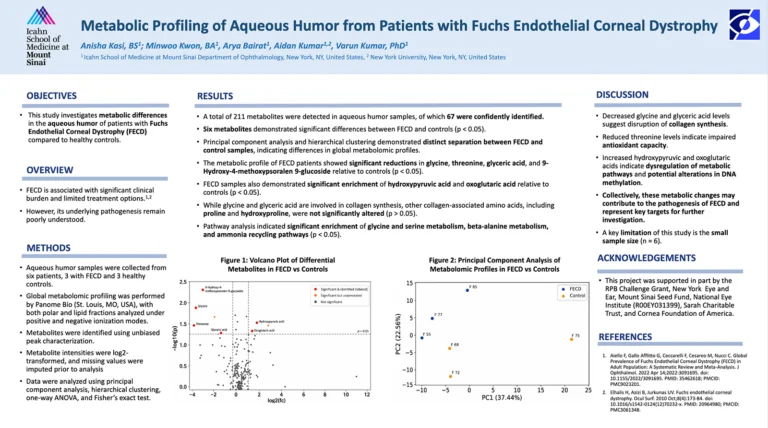
Metabolic Profiling of Fuchs Endothelial Corneal Dystrophy This poster, presented by researchers from the Icahn School of Medicine at Mount Sinai, showcases how Next-Generation Metabolomics can reveal metabolic alterations associated with Fuchs endothelial corneal dystrophy (FECD). Using aqueous humor samples analyzed by Panome Bio, the study investigates biochemical changes that may contribute to disease pathogenesis […]
July 8, 2026
Learn how untargeted metabolomics and lipidomics identify biomarkers that complement traditional methods for periodontitis diagnosis and oral health research.
June 15, 2026
This data report presents the complete Cell Surface Multi-Omics analysis of KRAS-knockdown and wild-type HCT-116 cells, including cell surface proteomics, membrane lipidomics, differential expression analysis and integrated protein–lipid interpretation from matched membrane fractions.
June 15, 2026
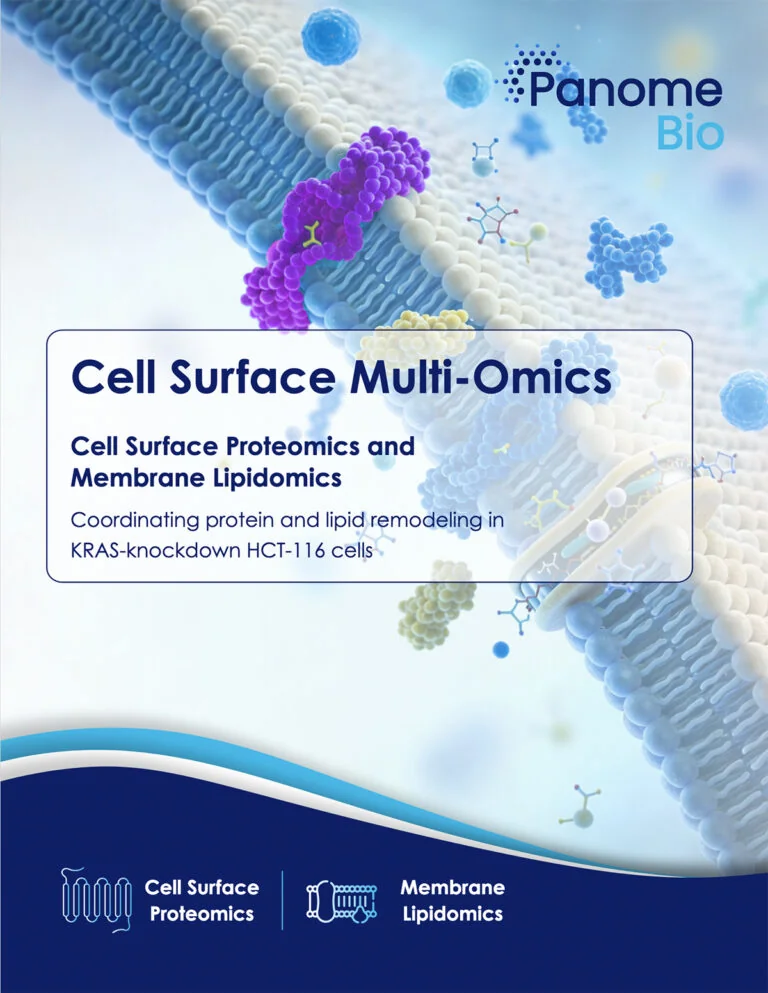
KRAS Knockdown Remodels Surface Proteins and Lipids Cell Surface Multi-Omics combines cell surface proteomics and membrane lipidomics from matched membrane fractions to characterize the protein and lipid architecture of the cell surface. In KRAS-knockdown HCT-116 cells, integrated profiling revealed coordinated remodeling of surface receptors, transport proteins, and membrane lipid classes associated with membrane organization and […]
May 22, 2026
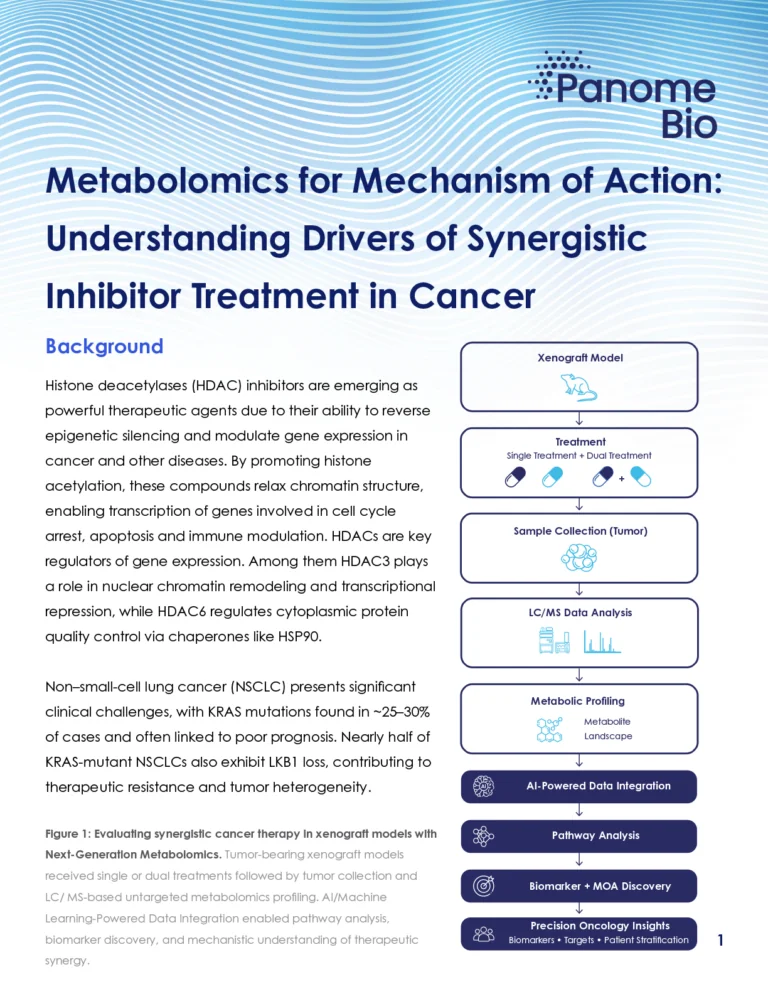
Metabolomics for Mechanism of Action in Synergistic Cancer Treatments Next-Generation Metabolomics can provide robust, biologically meaningful data for drug combination analysis. Learn more about treatment-induced metabolic reprogramming and targeted combination therapies in this case study. This application note has been redesigned with updated figures for improved clarity. The underlying analysis and conclusions remain the same.