November 24, 2025
How Metabolomic Biomarkers Could Save PRMT5 Drug Development The PRMT5 inhibitor field represents one of the most expensive lessons in modern oncology drug development. Despite massive investments – including Bristol Myers Squibb’s $4.8 billion acquisition of Mirati Therapeutics and BeiGene’s $150 million MAT2A deal – the clinical results have been modest at best. With more […]

November 24, 2025
Two Targets, One Pathway: The Metabolomic Logic Behind MAT2A/PRMT5 Combination Therapies The next breakthrough in cancer treatment may come from attacking two targets within the same metabolic pathway. MAT2A and PRMT5 inhibitor combinations represent a new paradigm in precision oncology, using metabolic dependencies to create synthetic lethal interactions that spare normal cells while eliminating cancer […]
November 21, 2025
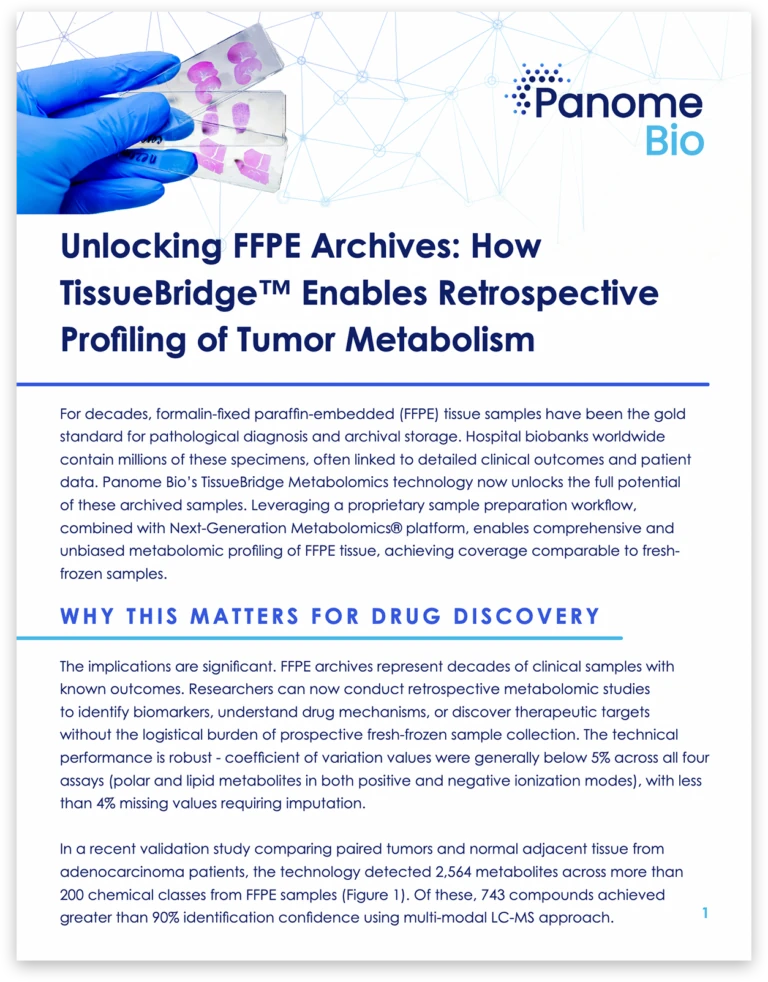
Unlocking FFPE Archives: How TissueBridge™️ Enables Retrospective Profiling of Tumor Metabolism Panome Bio’s TissueBridge technology unlocks the full metabolomic potential of FFPE tissue archives, enabling comprehensive, high-confidence profiling of tumor metabolism for biomarker discovery, translational research, and retrospective clinical studies.
November 6, 2025
Discover how targeted metabolomics enables more accurate evaluation of PRMT5 therapies, supports biomarker discovery, and drives translational breakthroughs in oncology in this webinar.

October 29, 2025
Explore Panome Bio’s in-depth proteomics data report profiling global protein expression changes in HCT-116 cells with KRAS knockout. This analysis highlights key signaling pathways and molecular alterations revealed through advanced discovery proteomics analysis, offering valuable insights into KRAS-driven cancer biology. Download the full report to examine detailed results and interpretation.
September 30, 2025
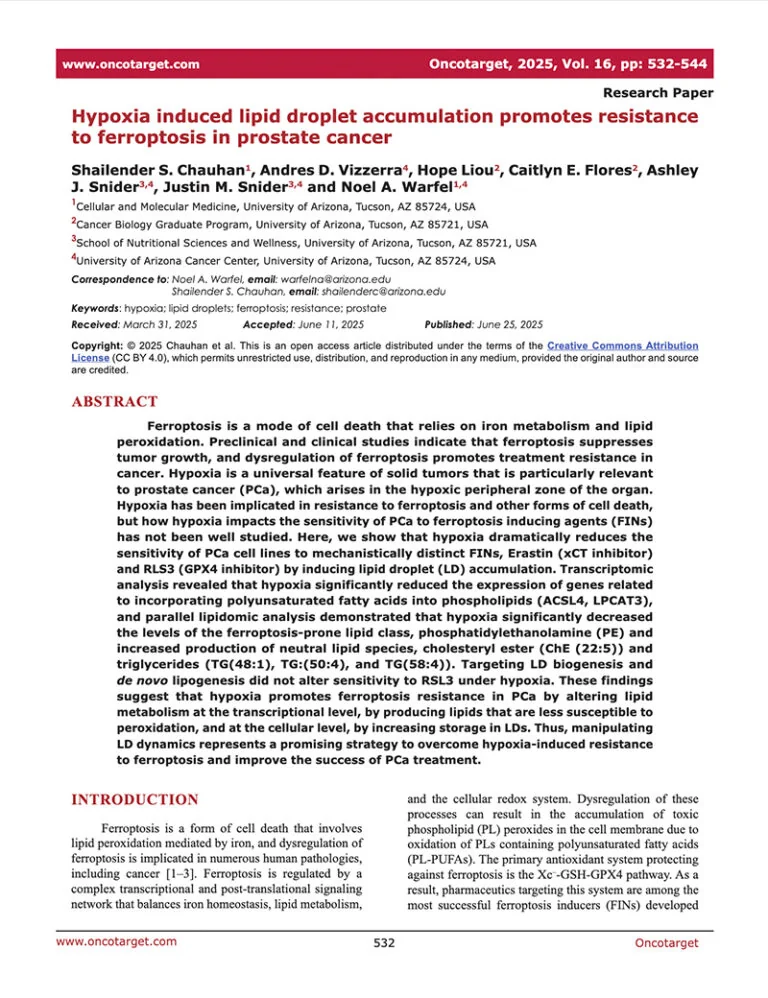
This study from researchers at the University of Arizona utilized Next-Generation Lipidomics from Panome Bio as part of a larger, multi-omic study to find that hypoxia promotes ferroptosis resistance in prostate cancer by altering lipid metabolism at the transcriptional level, by producing lipids that are less susceptible to peroxidation, and at the cellular level, by […]

September 25, 2025
Why PRMT5 Clinical Trials Need Comprehensive Metabolomic Monitoring Current PRMT5 clinical trials are flying with incomplete instruments. While symmetric dimethylarginine (SDMA) has become the standard pharmacodynamic biomarker for monitoring PRMT5 inhibition, relying on this single metabolite provides only a narrow view of a complex biological network. Recent clinical setbacks and modest response rates suggest that […]

September 22, 2025
In translational research today, multi-omics is no longer a concept — it’s an expectation. Genomics and transcriptomics reveal what could happen; proteomics shows what is happening at the protein level; and metabolomics offers the most immediate snapshot of cellular activity. Together, these layers create a richer understanding of disease mechanisms, therapeutic response, and patient stratification. […]
September 22, 2025
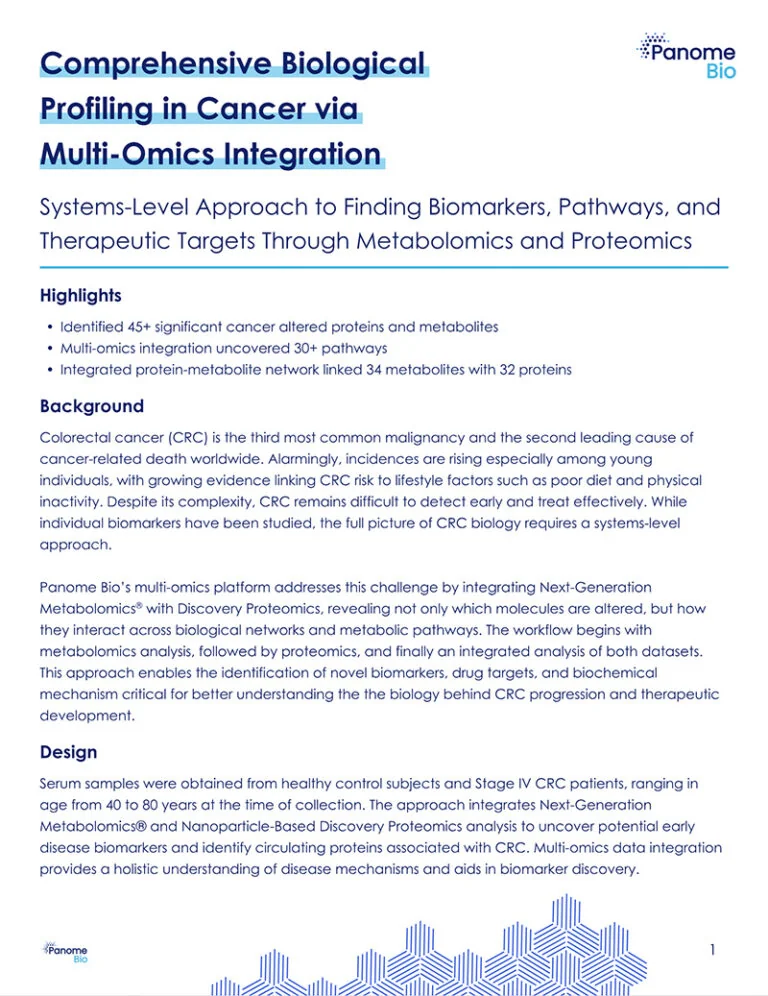
Comprehensive Biological Profiling in Cancer via Multi-Omics Integration Colorectal cancer is on the rise and remains difficult to detect and treat. Panome Bio’s multi-omics platform combines metabolomics and proteomics to reveal how molecules interact across metabolic pathways and biological networks. This approach uncovers novel biomarkers and therapeutic targets, offering a deeper understanding of cancer biology […]

September 21, 2025
Measuring the Unmeasurable The most critical metabolites in PRMT5 research are also the most challenging to measure accurately. S-adenosylmethionine (SAM) and methylthioadenosine (MTA) are essential for understanding PRMT5 biology, but their inherent chemical instability has created an analytical bottleneck that’s limiting drug development progress. These highly reactive molecules spontaneously degrade during sample processing, creating artifacts […]