November 16, 2026
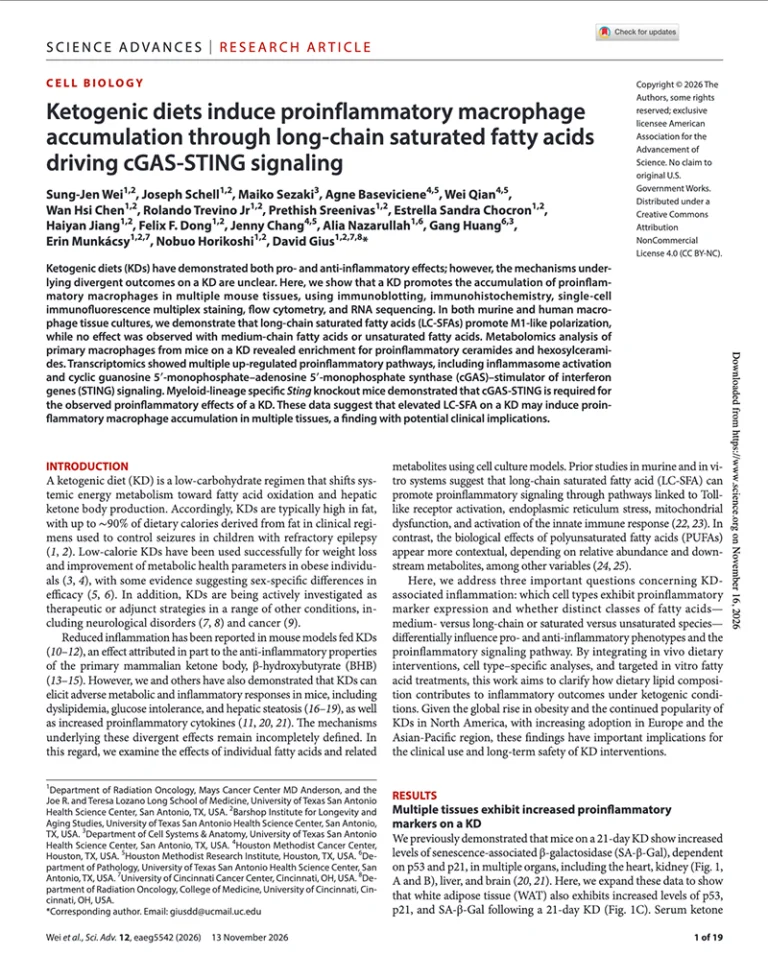
This study by Wei et al., published in Science Advances, investigates how different fatty acid compositions in ketogenic diets influence inflammatory responses and macrophage activity. Researchers demonstrate that long-chain saturated fatty acids promote proinflammatory macrophage polarization and accumulation across multiple tissues, involving activation of the cGAS-STING signaling pathway. Using an integrated approach combining global metabolomics, […]
August 18, 2026
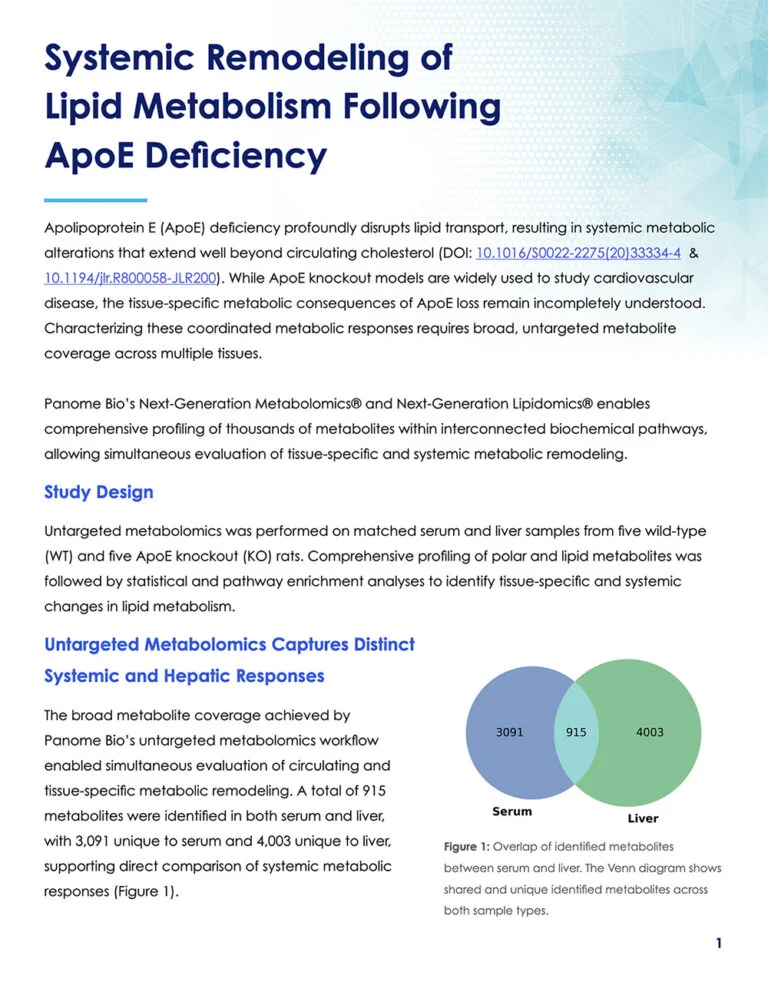
Metabolomic Profiling of ApoE Deficiency Reveals Altered Lipid Metabolism This application note profiles metabolic alterations associated with ApoE deficiency using matched serum and liver samples from ApoE knockout and wild-type rats. Untargeted metabolomics identified significantly altered metabolites associated with systemic lipid remodeling and disruptions in sphingolipid metabolism.
August 6, 2026
This data report profiles metabolic alterations associated with ApoE deficiency using matched serum and liver samples from ApoE knockout and wild-type rats. The study identifies significantly altered metabolites, revealing systemic lipid remodeling and disruptions in sphingolipid metabolism. The report includes metabolite identification, differential abundance analysis, pathway enrichment, and biological interpretation to characterize metabolic changes associated […]
February 26, 2026
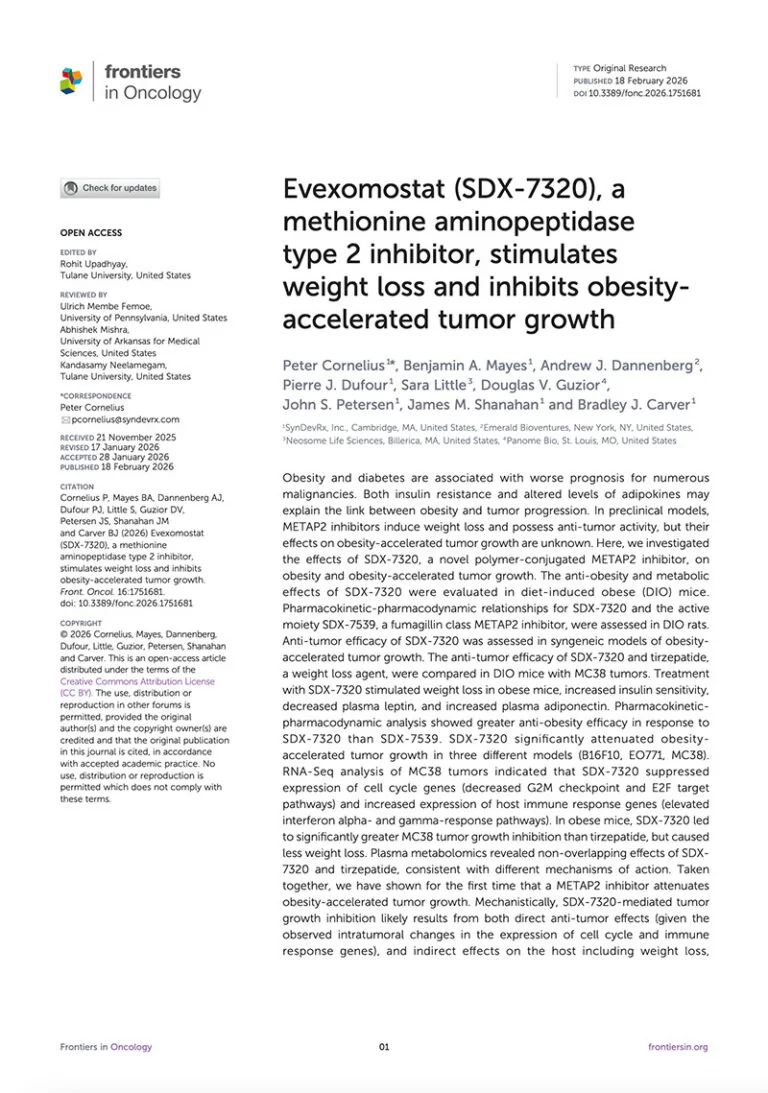
This publication from SynDevRx examines the dual anti-obesity and anti-tumor effects of Evexomostat (SDX-7320), a METAP2 inhibitor evaluated in diet-induced obese mouse and rat models. Using Next-Generation Metabolomics from Panome Bio, the study reveals distinct metabolic signatures that differentiate SDX-7320 from traditional weight-loss agents, aligning with its observed suppression of obesity-accelerated tumor growth. Integrated metabolic […]
October 29, 2025
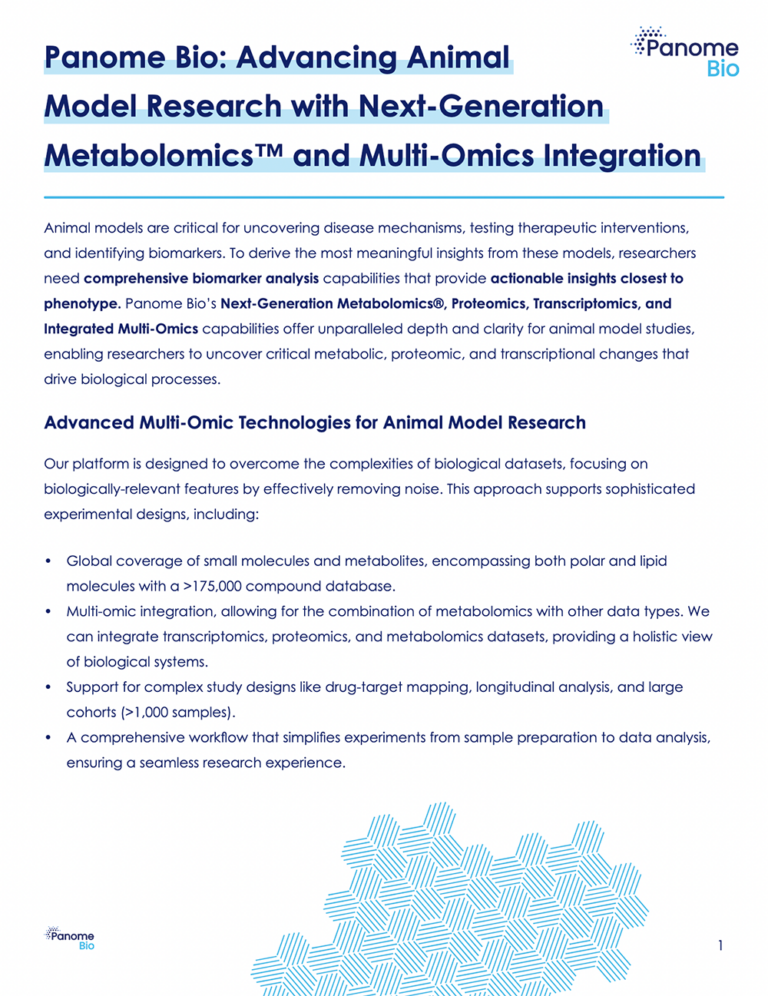
Advancing Animal Model Research with Multi-Omics Integration Discover how Panome Bio’s Next-Generation MetabolomicsTM and integrated multi-omics approaches enhance the translational value of animal model research. This application note demonstrates how comprehensive metabolic and molecular profiling enables deeper biological understanding, improving the accuracy and relevance of preclinical studies. Download to learn more about our data-driven insights […]
September 18, 2025
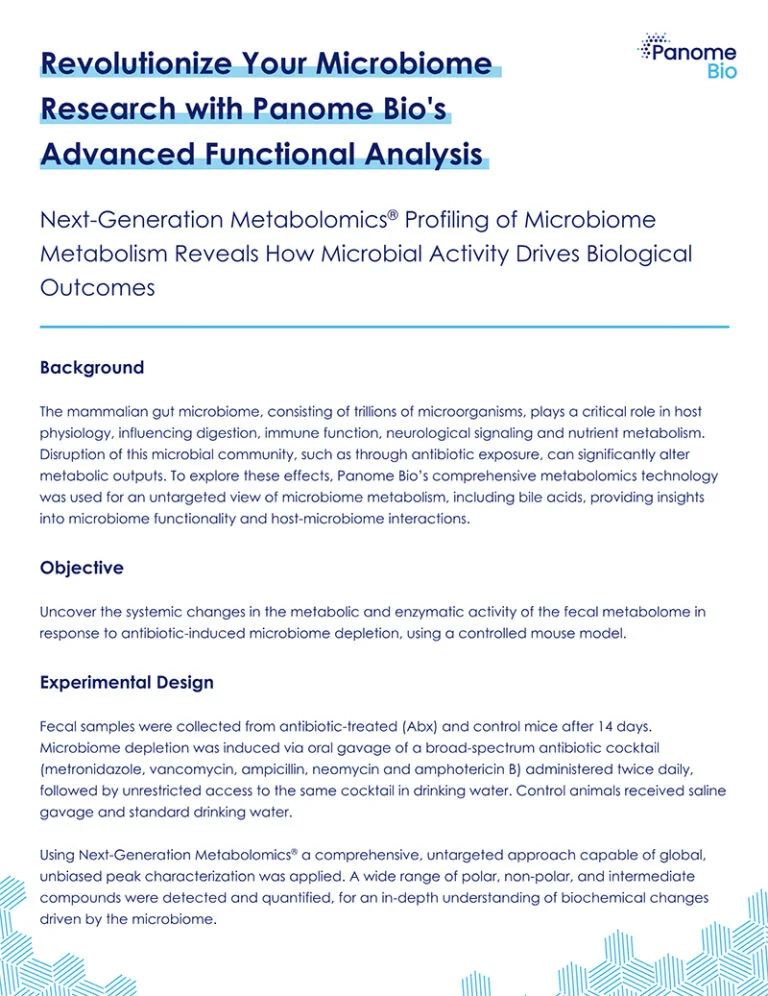
Revolutionize Microbiome Research with Functional Analysis The gut microbiome, a community of microorganism, influences host digestion, immunity, neural signaling and metabolism. Discover how Next-Generation Metabolomics reveals microbiome functions and host interactions, by analyzing a wide range of metabolic products.
June 24, 2025
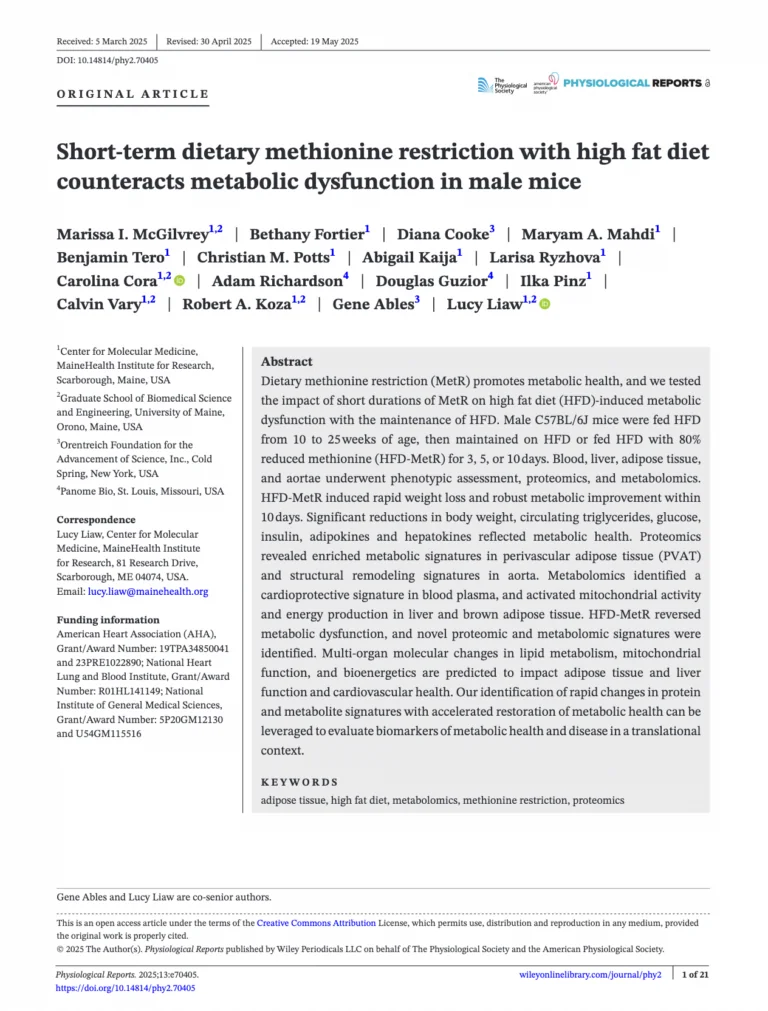
This study from researchers at MaineHealth utilized Next-Generation Metabolomics to identify a cardioprotective signature in mouse blood plasma, and activated mitochondrial activity and energy production in liver and brown adipose tissue.. Read the article now to find out how Panome Bio is helping researchers better understand the underlying biological mechanisms of metabolic dysfunction.
January 23, 2025
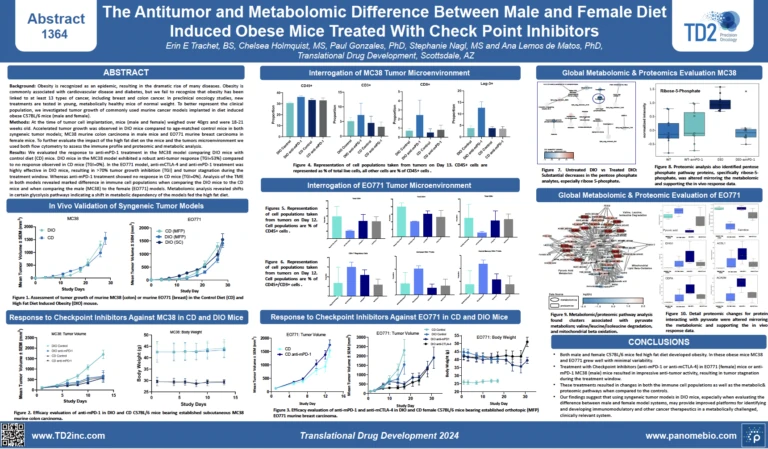
Sex-Based Metabolomic Differences in Checkpoint Inhibitor Response This poster from our partners at TD2 (Translational Drug Development) highlights significant differences in tumor growth inhibition and treatment responses between obese and control diet-fed mice. Dive into the data, including flow cytometry, proteomics, and metabolomics analyses, to uncover the role of obesity in shaping the tumor microenvironment […]
January 22, 2025
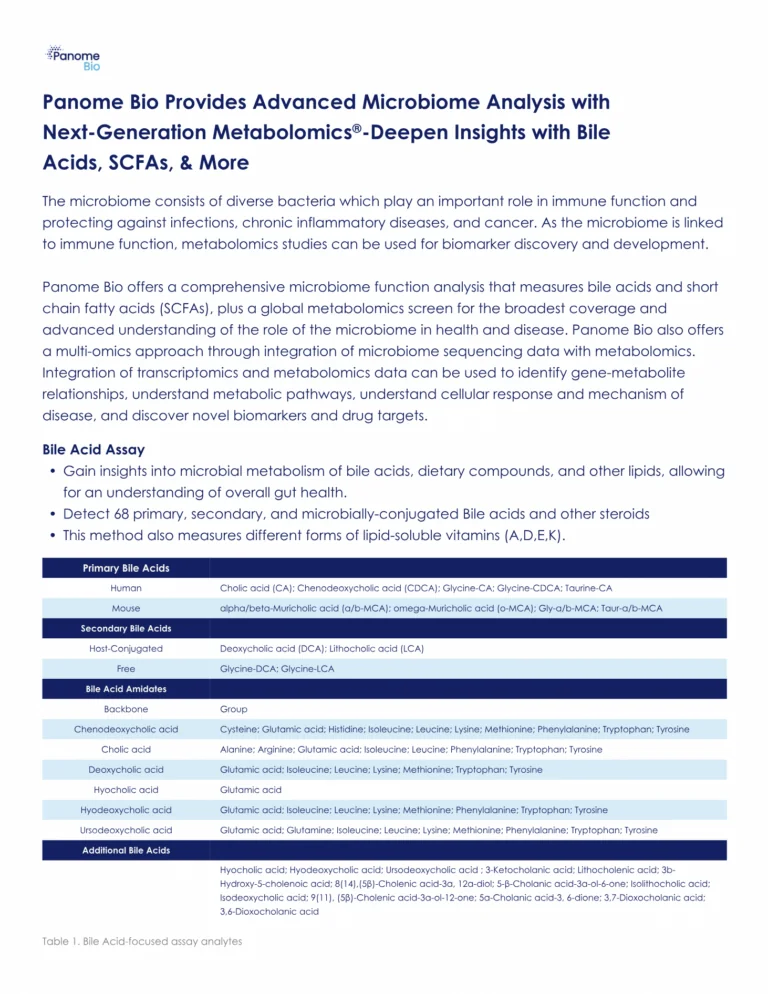
Panome Bio Provides Advanced Microbiome Analysis with Next-Generation Metabolomics – Deepen Insights with Bile Acids, SCFAs, & More This application note provides a high level look at how Panome Bio’s Microbiome Function Analysis suite of services provides the broadest coverage and advanced understanding of the role of the microbiome in health and disease.
January 17, 2025
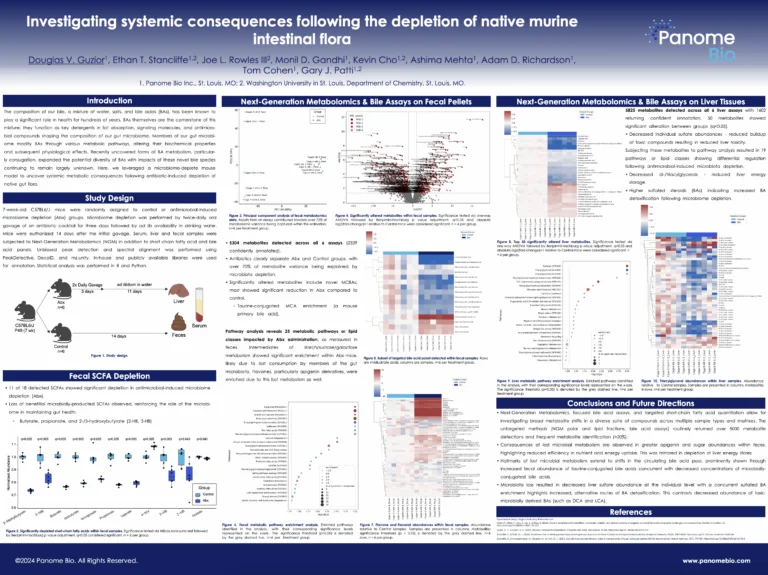
Investigating systemic consequences following the depletion of native murine intestinal flora Panome Bio’s Microbiome Function Analysis was utilized to assess the systemic consequences of antibiotic-induced depletion of gut flora in mice. A three-armed approach to metabolomic analysis provides the most comprehensive coverage of small molecules in the microbiome.