September 24, 2025
Why Strategic Sample Management Matters The samples arriving at research laboratories today might tell stories that won’t be fully understood for months or even years, given the inherently gradual nature of scientific insight where hypotheses evolve, promising leads take unexpected turns, and meaningful patterns emerge only after sustained investigation. Yet many researchers commit a critical […]
September 24, 2025
Proteolysis Targeting Chimeras (PROTACs) have fundamentally transformed our approach to targeted therapeutics, offering a paradigm shift from traditional protein inhibition to selective protein degradation. These hetero-bifunctional molecules hijack the ubiquitin proteasome system to selectively add polyubiquitin chains onto a specific protein target to induce proteolytic degradation, enabling researchers to target previously “undruggable” proteins that lack […]
September 22, 2025
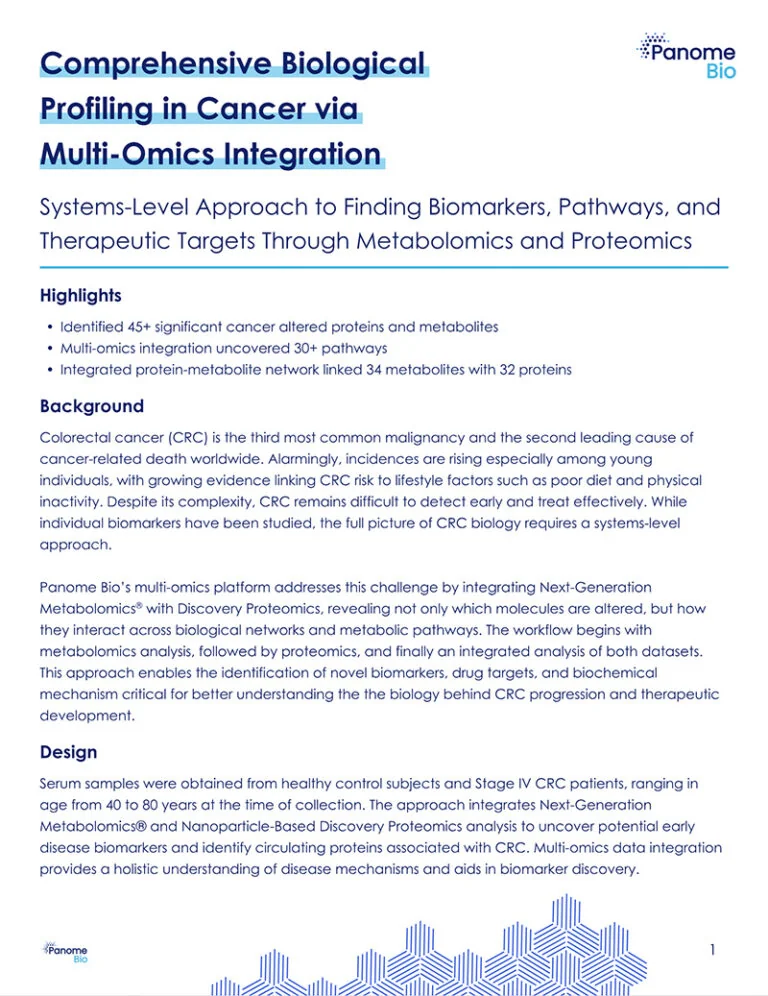
Comprehensive Biological Profiling in Cancer via Multi-Omics Integration Colorectal cancer is on the rise and remains difficult to detect and treat. Panome Bio’s multi-omics platform combines metabolomics and proteomics to reveal how molecules interact across metabolic pathways and biological networks. This approach uncovers novel biomarkers and therapeutic targets, offering a deeper understanding of cancer biology […]
September 21, 2025
Proteolysis-targeting chimeras (PROTACs) have emerged as a transformative approach in drug discovery, offering event-driven protein degradation mechanisms that overcome limitations of traditional occupancy-driven inhibitors. While conventional small-molecule PROTACs have demonstrated clinical efficacy, novel conjugation strategies are expanding the therapeutic potential of targeted protein degradation. This blog examines three innovative PROTAC modalities: aptamer-PROTAC conjugates (APCs), antibody-PROTAC […]
September 19, 2025
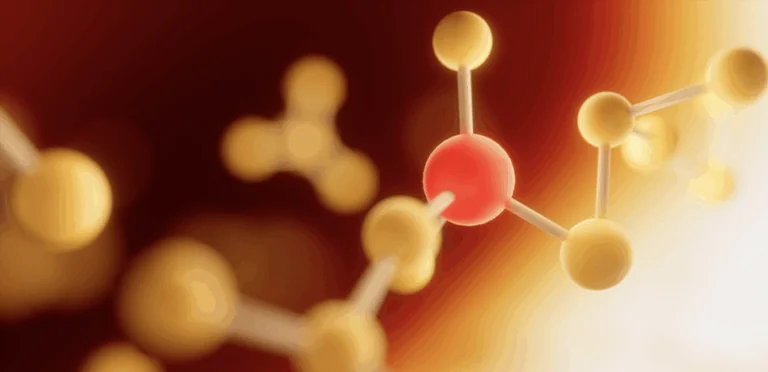
The LNP Formulation Dilemma: How Multi-Omics Reveals Which Lipids Actually Work Your lipid nanoparticle formulation screen includes twenty candidates. Each varies in ionizable lipid structure, PEG-lipid ratio, or helper lipid composition. Standard metrics show they all deliver mRNA and produce some protein. So, which one moves forward to GLP toxicology studies? This decision costs millions […]
September 16, 2025
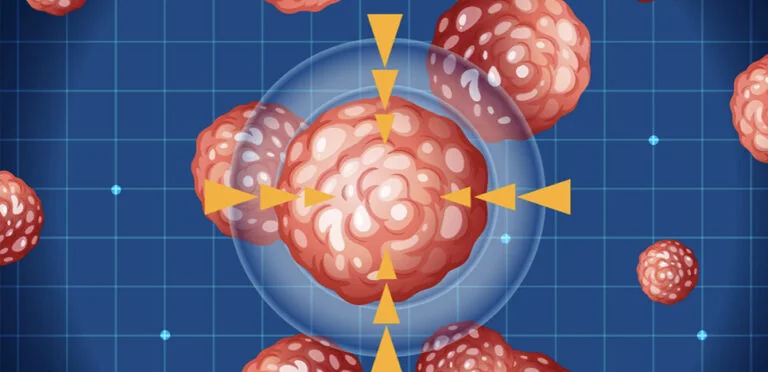
One of the most challenging aspects of radioligand therapy (RLT) development is understanding why initially responsive tumors eventually develop resistance to treatment. While imaging can show when treatments stop working, it cannot reveal the underlying molecular mechanisms driving this adaptation. This is where comprehensive omics profiling becomes invaluable. Companies like Panome Bio are providing the […]
September 8, 2025
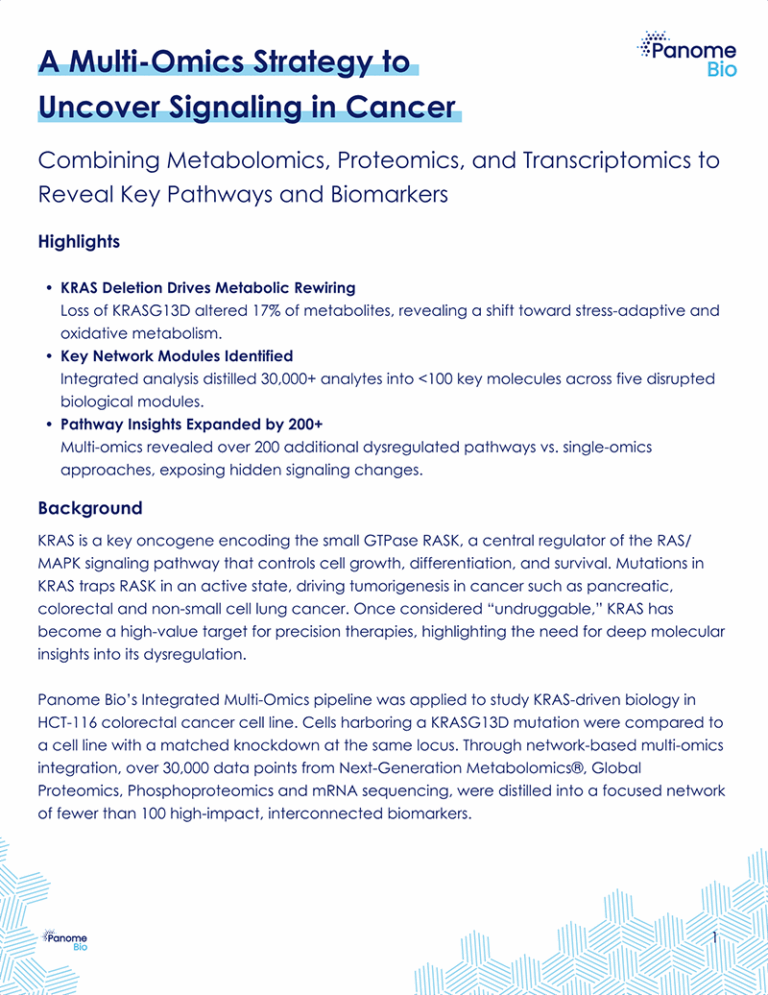
Combining Metabolomics, Proteomics and Transcriptomics to Reveal Key Pathways and Biomarkers Explore how reduced KRAS activity reshapes gene expression and pathway activity in HCT-116 cells. In this application note, Panome Bio combines next-generation metabolomics, global proteomics, phosphoproteomics and mRNA sequencing data into a multi-omics framework to deliver in-depth biochemical pathway analyses for potential therapeutic targeting.

August 22, 2025
Why Quality Systems Matter More Than You Think When you’re deeply immersed in assay development or screening potential biomarkers, regulatory compliance might understandably feel like an afterthought, given that your primary focus necessarily gravitates toward the science itself – optimizing protocols, systematically troubleshooting technical issues, and generating meaningful data that advances your understanding. But here’s […]
June 24, 2025
This sample data report features an integrated analysis of untargeted metabolomics and proteomics datasets. Learn how Panome Bio provides cultured meat researchers with novel insights into their cell culture systems.
May 27, 2025
This sample data report characterizes global changes in gene expression and pathway activity due to reduced KRAS activity in HCT-116 cells. Learn how Panome Bio utilizes mRNA Sequencing, Next-Generation Metabolomics, Global Proteomics, and Phosphoproteomics data to provide in-depth biochemical pathway analysis for potential therapeutic targeting.