

For decades, Formalin-Fixed Paraffin-Embedded (FFPE) tissue has been the standard for preserving clinical samples. From cancer biopsies to organ tissue, this method is used across hospitals and research centers worldwide to store biological material for long-term use and histological analysis. FFPE tissue’s unmatched stability and compatibility with microscopy makes it a valuable resource for retrospective studies, especially in oncology, where tumor samples collected over years can be reanalyzed for latest information.
While genomics and proteomics workflows have been adapted to manage FFPE samples, untargeted metabolomics has been out of reach until now, with Tissue Bridge Metabolomics.
A Breakthrough Workflow for FFPE Metabolomics
Panome Bio has expanded its Next-Generation Metabolomics platform to include TissueBridge™ FFPE metabolomics services, opening the vast potential of stored tissues for metabolomic discovery. Through a methodical development and validation process, Panome Bio created a robust workflow that allows the extraction of high-confidence metabolic profiles from even decades-old, archived material.

The FFPE and matched samples referenced were sourced from Audubon Bioscience.
Using optimized sample preparation protocols and advanced data analysis methods, TissueBridge metabolomics enabled analysis of human FFPE samples, consisting of adenocarcinoma tumor and normal adjacent tissue (NAT) sections with untargeted metabolomics.
Despite the challenges of working with FFPE material, the results were striking:
- 2,564 metabolites were detected across all FFPE samples.
- 200 metabolites were significantly altered in tumor tissue compared to NAT.
These findings were further illustrated in a volcano plot and heatmap, where the top 50 most significantly altered metabolites clearly separate tumor from NAT profiles.
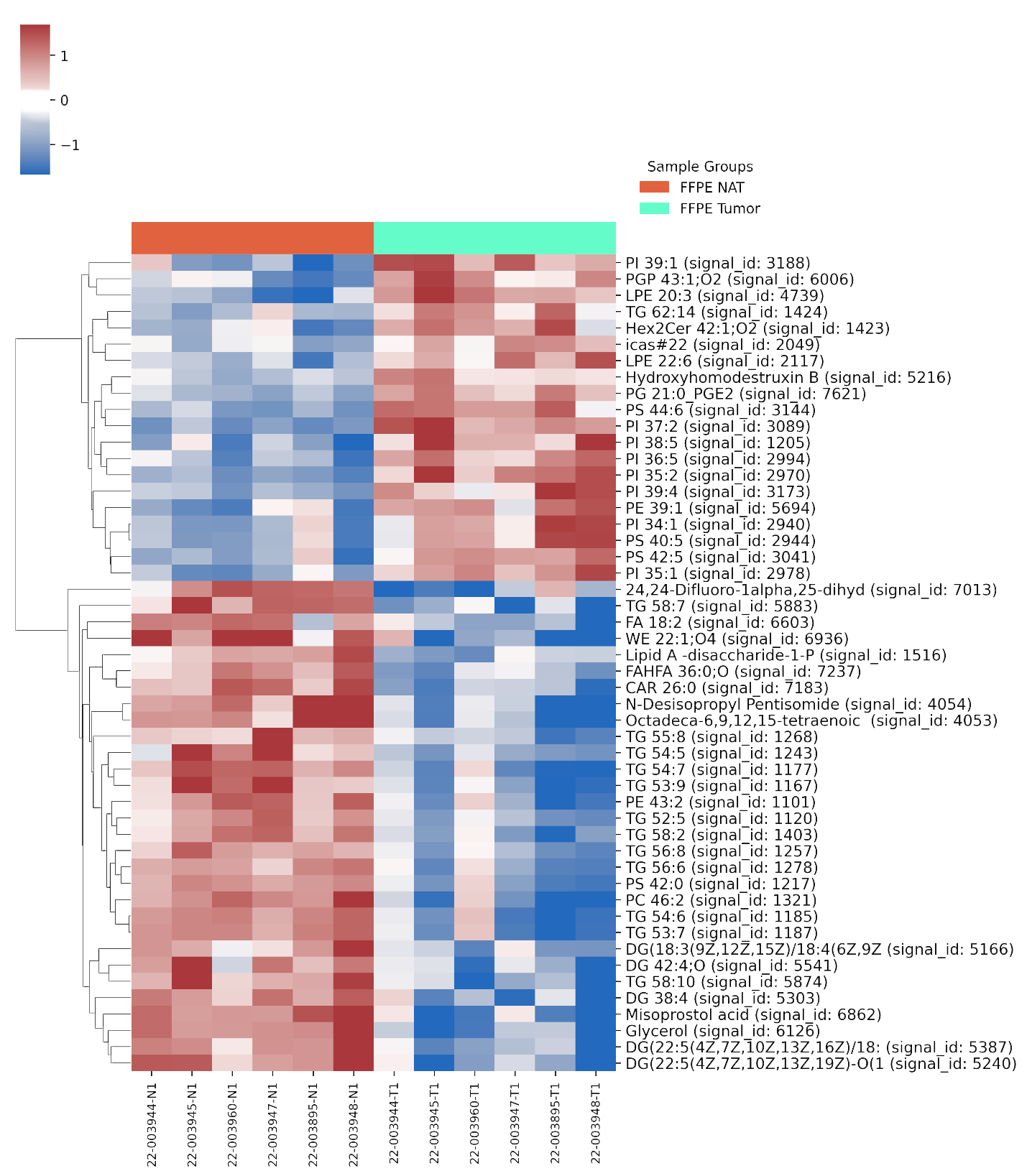
Figure 1: The Heatmap shows distinct patterns of metabolite abundance within the tumor, with up- (in red) or downregulated (in blue) metabolites.
In addition, pathway enrichment analysis uncovered 39 metabolic pathways with statistically significant differences between the two tissue types. Notably, lipid-related pathways such as triacylglycerols and diacylglycerophosphoinositols were among the most differentially enriched in tumor tissue, highlighting the altered lipid metabolism that is often a hallmark of cancer.
Validating FFPE Results with Fresh-Frozen Samples
To ensure that the metabolic signatures from the FFPE samples were not artifacts of the sample preservation process, Panome Bio compared results against matched fresh frozen tumor and NAT samples from the same cohort. This validation step demonstrates that TissueBridge metabolomics preserves biological accuracy while expanding access to archived tissues. As expected, the number of metabolites detected in fresh frozen samples were higher, reflecting the less degraded state of fresh frozen tissue. Yet, the most critical finding was that the same key metabolite trends were observed in both FFPE and fresh frozen samples. For example, two of the most significantly altered metabolites (Figure 2), PS O-38:6 and FOH 37:4;O3, exhibited nearly identical tumor vs. NAT differences across both sample types. This consistency strongly supports the biological validity of the FFPE findings and can drive biomarker discovery in FFPE tissue.
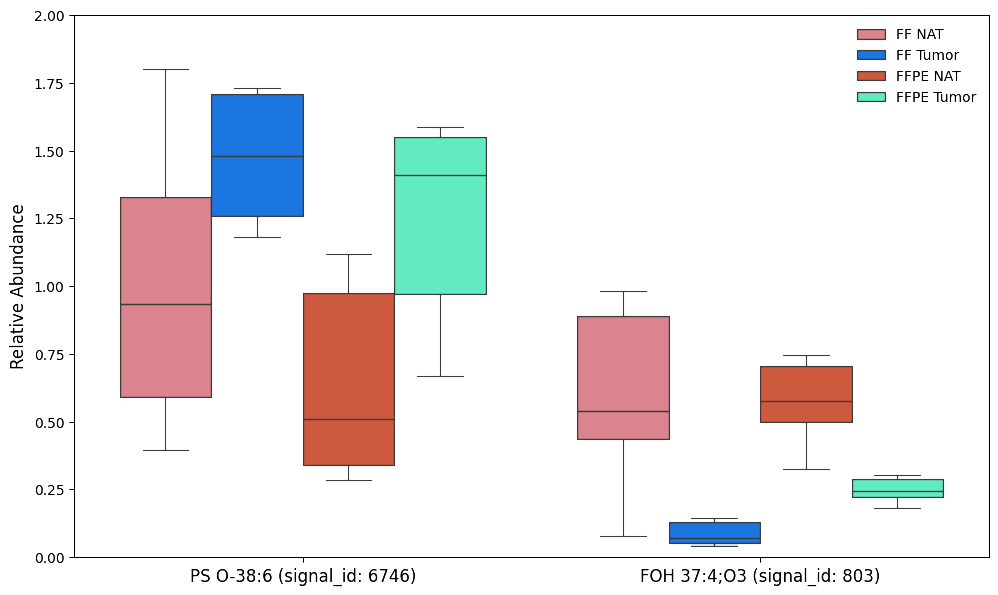
Figure 2: Validation of FFPE concordance compared to fresh frozen (FF) tumor concordance using boxplot visualization of the most significantly altered metabolites.
A New Era for Retrospective Metabolomics
This breakthrough method, powerded by TissueBridge metabolomics, marks a transformative step for metabolomics research. By enabling high-confidence, high-resolution metabolic profiling of FFPE samples, Panome Bio has opened an enormous and previously untapped resource for biomedical discovery.
Researchers can now:
- Access decades of archived clinical material for metabolomic analysis.
- Reduce dependence on costly fresh-frozen tissue collection and storage.
- Perform retrospective studies with greater molecular depth and relevance.
Whether the focus is on cancer, neurodegenerative disease, autoimmune conditions, or metabolic disorders, metabolomics provides a powerful lens for identifying novel biomarkers and therapeutic targets. With Panome Bio’s validated FFPE workflow, these information’s are now within reach, helping scientists find more answers.
Panome Bio is proud to partner with Audubon Bioscience, a premier biobanking company. Audubon Bioscience provides a broad range of FFPE tissues, both normal and disease, suitable for a wide range of research purposes, including TissueBridge FFPE Metabolomics.
Learn more about TissueBridge metabolomicsRead the full data reportLearn more about Audubon Bioscience
Frequently Asked Questions
Can metabolomics be performed on FFPE (formalin-fixed paraffin-embedded) tissue?
Yes. Panome Bio’s TissueBridge platform demonstrated that untargeted metabolomics — previously considered impossible on FFPE samples — can reliably detect metabolites in formalin-fixed, paraffin-embedded tissue, unlocking decades of archived clinical samples for retrospective metabolic research.
How many metabolites were detected in the FFPE metabolomics study?
The study detected 2,564 metabolites across all FFPE samples analyzed, with 200 metabolites significantly altered between tumor and normal adjacent tissue, and identified 39 statistically significant metabolic pathways, particularly lipid-related pathways associated with cancer metabolism.
How does FFPE metabolomics data compare to fresh-frozen tissue results?
When validated against matched fresh-frozen samples, the FFPE metabolomics results showed nearly identical tumor-versus-normal-adjacent-tissue differences for key metabolites, confirming that the biological signal captured from FFPE tissue is consistent with the gold-standard fresh-frozen approach.
Why does FFPE metabolomics matter for cancer and disease research?
FFPE is the standard tissue preservation method used in hospitals and research centers worldwide, so enabling metabolomics on FFPE samples gives researchers access to vast archives of clinical material — without needing costly, logistically demanding fresh-frozen collection — for retrospective biomarker discovery in cancer, neurodegenerative disease, and other conditions.
What is TissueBridge?
TissueBridge is Panome Bio’s platform for extracting reliable, quantitative metabolomic data from FFPE tissue sections, combining optimized sample preparation with advanced data analysis to reveal metabolic information that was previously locked away in archived clinical samples.