
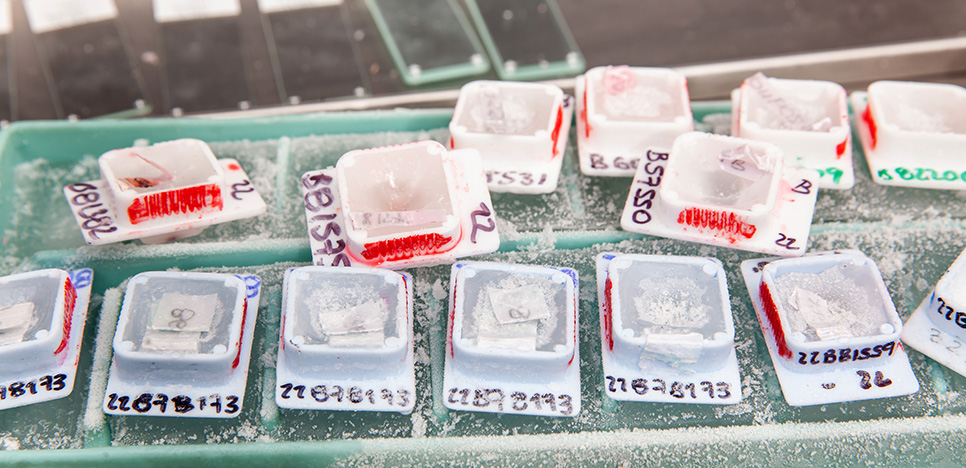
Biobanks play a central role in advancing biomedical research. They preserve tissues, connect researchers with patient samples, and maintain the integrity of archives that support discovery and development across the life sciences. Yet despite this importance, biobanks face increasing pressure to demonstrate their relevance in a rapidly evolving research ecosystem. Researchers and funders are asking for more than sample access; they want data that accelerates discovery. At the same time, biobanks need new ways to sustain operations and diversify their revenue streams.
The newest service from Panome Bio, TissueBridge™ Metabolomics – Metabolomics analysis of FFPE samples – offers a unique way to address these needs.
Although FFPE archives are abundant, their use has historically been limited to histology, genomics, and, more recently, proteomics. For many years, the idea of generating metabolomic information from these tissues was impractical. Now, advances in sample preparation and analysis from Panome Bio have made it possible to extract reliable metabolic profiles directly from FFPE material. This creates a new opportunity for biobanks to transform how they position themselves and what they provide for their customers.
By partnering with analytical providers, biobanks can move beyond being simple custodians of tissues. Instead, they can offer “sample plus data” packages that increase the attractiveness of their collections to pharmaceutical and biotechnology companies. Researchers are no longer just looking for access to blocks; they want actionable insights. Adding metabolomics makes FFPE archives more useful, more valuable, and more aligned with the direction of translational science.
The benefits of TissueBridge Metabolomics for biobanks are significant. Offering metabolomics increases visibility and positions a biobank as a forward-looking partner in a competitive landscape. It also opens the door to new revenue opportunities by creating higher-value products that extend beyond traditional sample distribution fees. Just as importantly, collaborations around metabolomics can result in publications, case studies, and enhanced recognition in the scientific community, raising the profile of both the biobank and its partners.
Consider, for example, a biobank that holds thousands of oncology FFPE blocks linked to long-term patient outcomes. Traditionally, the biobank could distribute tissue for histology or sequencing studies. With metabolomics, however, the same archive can be used to generate metabolic signatures associated with recurrence or therapeutic response. Instead of offering only material, the biobank provides insight — creating a higher level of value for clients and positioning itself as an active contributor to discovery.
FFPE metabolomics thus provides a pathway for biorepositories to expand their offerings, strengthen industry partnerships, and generate both scientific and commercial impact. By moving beyond sample storage and into data generation, biobanks can redefine their role in the research ecosystem and place themselves at the center of discovery.
At Panome Bio, we are actively seeking biobank partners to co-develop offerings that maximize the value of FFPE archives. With TissueBridge Metabolomics, we can together turn biorepositories into not just providers of samples, but engines of insight.
Learn more about TissueBridge metabolomicsRead the full data reportLearn more about FFPE
Frequently Asked Questions
How can FFPE metabolomics help a biobank generate new revenue beyond standard sample fees?
By pairing archived FFPE tissue with newly generated metabolomic data, a biobank can offer “sample plus data” packages that go beyond simple specimen distribution, creating new revenue streams and a more competitive value proposition for pharmaceutical and biotech partners.
How does FFPE metabolomics change a biobank’s role from sample custodian to data provider?
Enabling metabolomic analysis on archived FFPE tissue transforms a biobank’s core offering from simply storing and distributing physical specimens into actively generating metabolic signatures linked to documented clinical outcomes — positioning the biobank as a data partner rather than only a sample repository.
How can FFPE metabolomics strengthen a biobank’s industry partnerships?
Biobanks that can offer metabolic data alongside their tissue archives are better positioned to co-develop higher-value offerings with pharmaceutical and biotech partners, strengthening existing relationships and creating a more compelling case for new collaborations.
Can FFPE metabolomics support a biobank’s scientific visibility and reputation?
Yes. Generating novel metabolic data from archived tissue can support new publications and case studies attributed to a biobank’s collection, enhancing its scientific recognition and visibility within the research community.
What role does Panome Bio play in helping biobanks adopt FFPE metabolomics?
Panome Bio positions itself as an active collaboration partner for biobanks, working directly with biobank operators to co-develop metabolomics-enabled offerings on their existing FFPE archives rather than functioning as a simple one-off testing vendor.