
Lipid metabolism is regulated through coordinated biochemical processes that span multiple tissues. Understanding these changes requires broad metabolite coverage capable of capturing both tissue-specific responses and shared metabolic signatures. Panome Bio’s Next-Generation Metabolomics® and Next-Generation Lipidomics® enables comprehensive profiling of thousands of metabolites across interconnected pathways, providing a systems-level view of lipid biology in serum, tissues and other biological matrices.
Why Study Lipid Metabolism with Untargeted Metabolomics and Lipidomics?
Changes in lipid metabolism often extend beyond individual metabolites, involving coordinated remodeling across entire lipid classes and biochemical pathways.
Next-Generation Metabolomics and Lipidomics allows researchers to:
- Characterize thousands of metabolites in a single analysis
- Compare metabolic remodeling across multiple tissues
- Identify coordinated pathway-level changes
- Discover shared and tissue-specific metabolic signatures
- Support biomarker discovery and mechanistic research
Featured Study: ApoE Deficiency
Using matched serum and liver samples from ApoE knockout and wild-type rats, untargeted metabolomics revealed extensive metabolic remodeling across both biological matrices.
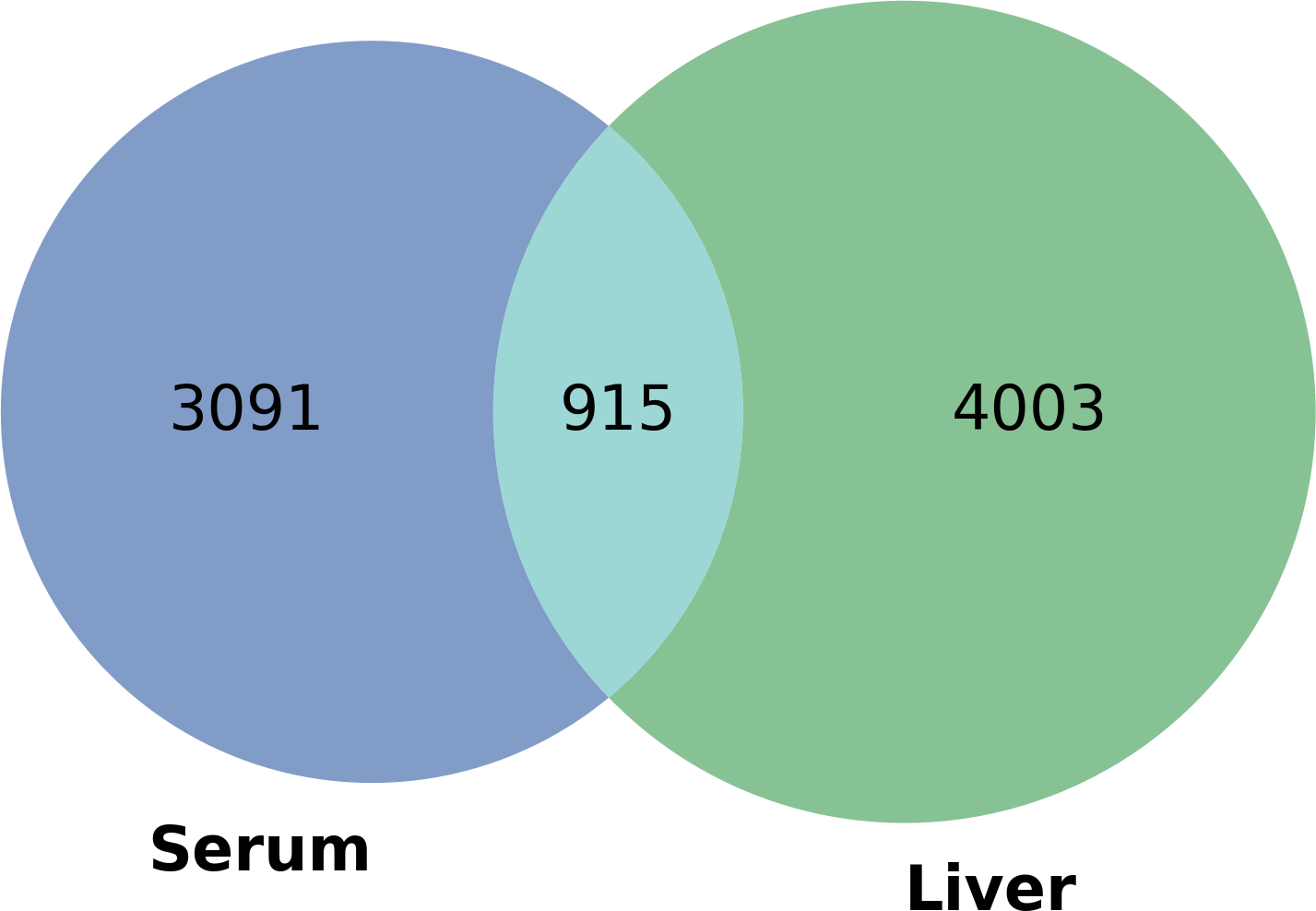
More Than 7,000 Tissue-Specific Metabolites Detected
Comprehensive metabolite coverage identified:
- 915 metabolites shared between serum and liver
- 3,091 serum-specific metabolites
- 4,003 liver-specific metabolites
This broad coverage enabled direct comparison of tissue-specific and systemic metabolic responses.
Distinct Patterns of Lipid Remodeling Across Serum and Liver
Pathway enrichment analysis revealed complementary metabolic responses to ApoE deficiency across the two biological matrices. In serum (left enrichment analysis), coordinated increases in triacylglycerols, diacylglycerols, ceramides, acylceramides, and sphingomyelins indicated a shift toward lipid storage.
In contrast, the liver (right enrichment analysis) exhibited enrichment of glycerophospholipids, including phosphatidylethanolamines and phosphatidylcholines, alongside reduced oxylipin metabolism, consistent with remodeling of membrane lipids and altered inflammatory lipid signaling.
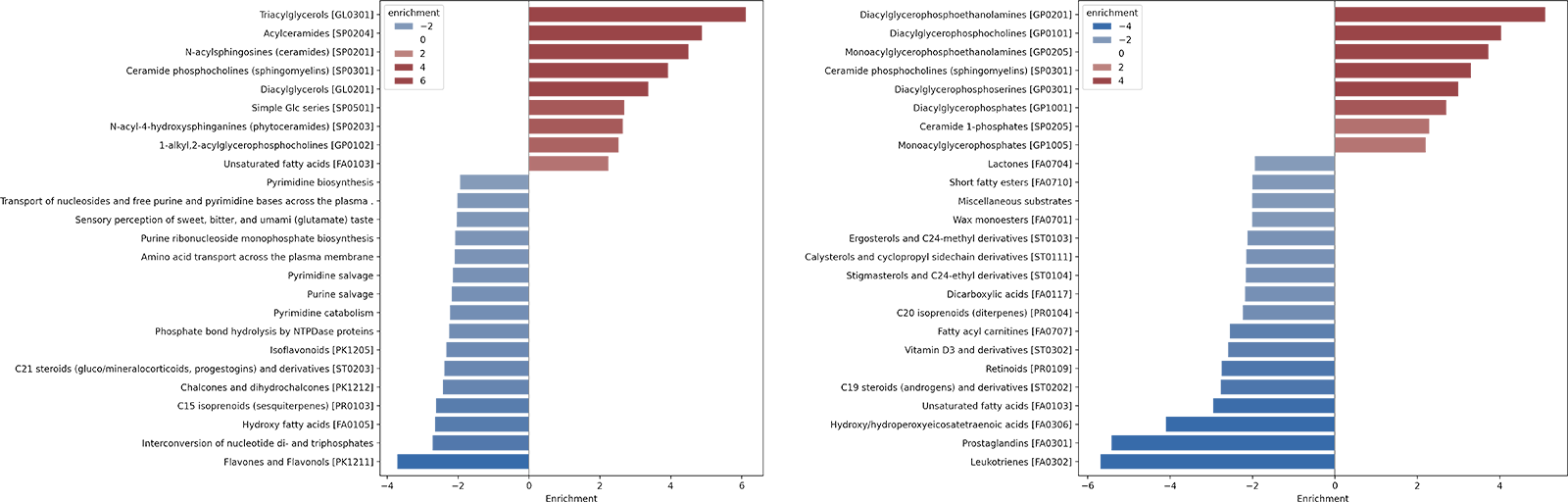
ApoE deficiency induces distinct lipid remodeling across serum and liver
These findings demonstrate how cross-tissue metabolomics can distinguish tissue-specific metabolic adaptations while providing a broader understanding of systemic lipid remodeling following ApoE deficiency.
Cross-Tissue Analysis Revealed Shared Biological Responses
Comparing serum and liver identified coordinated remodeling across shared lipid classes, alongside distinct tissue-specific metabolic adaptations.
Among thousands of detected metabolites, sphingosine 1-phosphate (S1P) was the only individual metabolite significantly altered in both tissues, highlighting a conserved systemic response to ApoE deficiency.
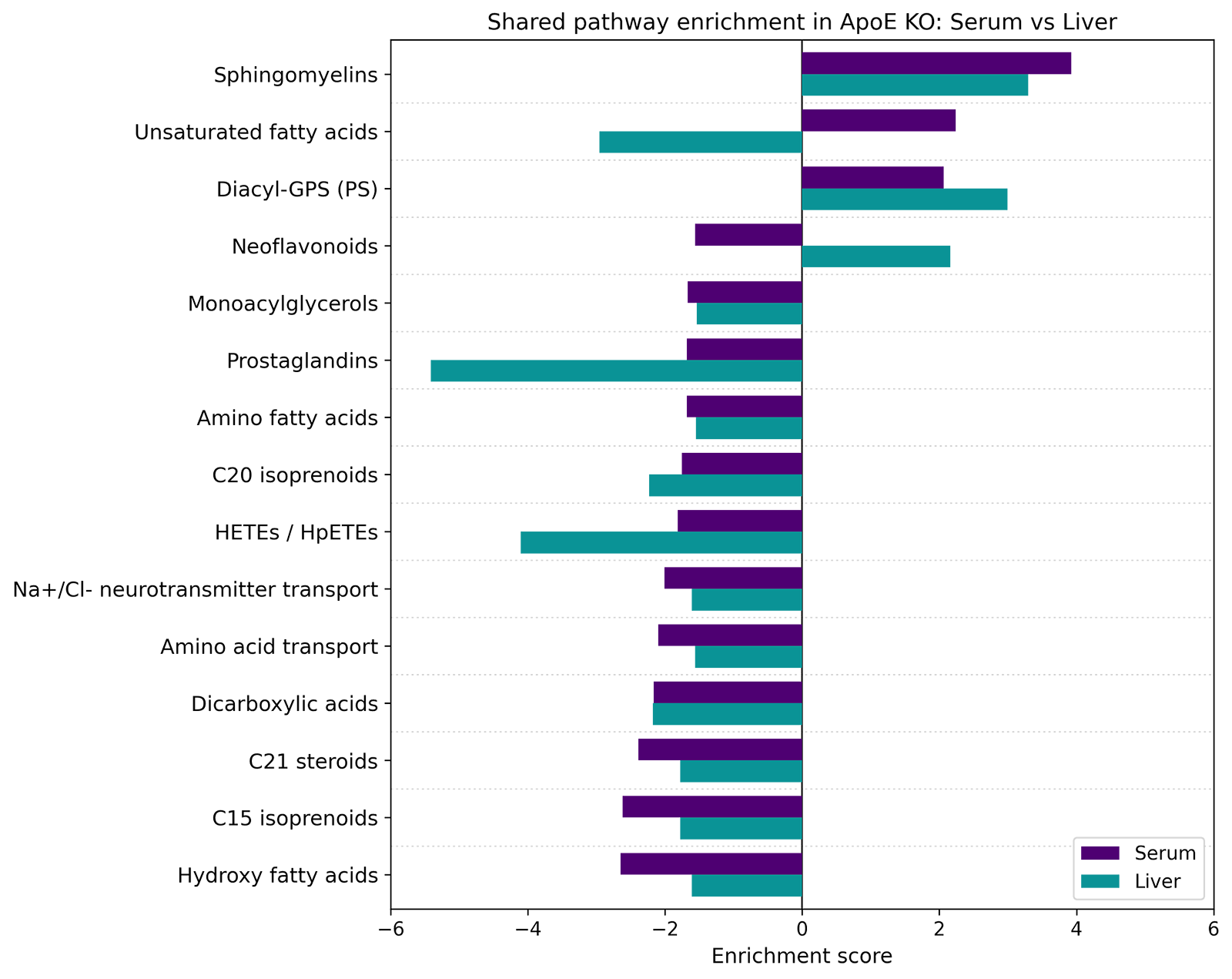
Shared Lipid Remodeling Reveals a Conserved Systemic Response
While serum and liver exhibited distinct metabolic adaptions, cross-tissue pathway analysis also identified coordinated changes across 15 shared lipid classes, demonstrating that ApoE deficiency drives conserved metabolic remodeling beyond individual tissues.
Discover the Biology Behind Lipid Remodeling
Broad metabolite coverage combined with pathway-level analysis enables researchers to move beyond individual metabolites and investigate coordinated biological responses across tissues.
Metabolomics Profiling of ApoE KO and WT Rats in Serum and Liver
Dive into the Data Report to explore how untargeted metabolomics detects distinct signatures in serum and liver of Apo KO rats in detail.
ApoE Deficiency Metabolomics
Explore the Application Note to get an overview of systemic remodeling of lipid metabolism following ApoE deficiency.
Don’t limit discovery to small libraries.
Analyze your samples with Panome Bio’s Next-Generation Metabolomics using MassID. Evaluate thousands of detected signals against a broad metabolite database, with confidence scores that support downstream analysis.
Start your project now.