
Humans are continuously exposed to thousands of environmental chemicals through air, water, food, consumer products and built environments. These exposures shape biology over time, influencing disease risk, progression and variability. Yet most of them remain invisible to standard analytical approaches.
Panome Bio’s Exposomics platform makes it possible to detect and quantify environmental chemicals at scale, revealing exposure patterns that have historically gone unmeasured.
What is Exposomics?
Exposomics is the study of the exposome. The totality of environmental chemical exposures influencing biology from conception through later life. Unlike the genome, the exposome is dynamic and modifiable, making it an essential piece of the puzzle for understanding disease risk, progression and variability. The changes over time reflects where people live, work and interact with their environment.
Examples of High-Interest Chemicals
Chemicals commonly investigated in Exposomics studies include, but are not limited to:
- Pesticides, herbicides, and fungicides
- PFAS and other persistent chemicals
- Plasticizers, flame retardants, and industrial solvents
- Food additives and pharmaceutical residues
These represent only a subset of the thousands of chemicals that can be detected and measured. Individuals are exposed to complex chemical mixtures that interact with biological systems in ways genetics alone cannot explain.
Why Chemical Exposures Were So Hard to See Until Now
Environmental chemicals are fundamentally different from endogenous metabolites. They are often present at extremely low concentrations, appear inconsistently across individuals and span a vast range of chemical structures. Panome Bio’s Discovery Exposomics™ and Targeted Exposomics™ solves this with purpose-built workflows that capture the exposures that really matter.
A Platform Built for Exposure Science
Panome Bio has developed a purpose-built Exposomics platform, with two complementary workflows, designed specifically for chemical detection. From sample preparation to data analysis, every step is optimized to preserve trace-level exposures and separate them from biological background.
| Discovery Exposomics | Targeted Exposomics |
|---|---|
| Broad screening across the chemical landscape | Precise measurement of high-priority chemicals |
| Screening against 32,000+ environmental compounds | Absolute quantification of 235 priority compounds |
| Relative quantification for exposure discovery | Picogram-per-milliliter sensitivity |
| Detection of unexpected and emerging contaminants | Coverage includes PFAS, pesticides, phthalates, and industrial chemicals |
| Reports exogenous chemicals only, filtering endogenous metabolites | Designed for biomonitoring, dose-response studies, and regulatory applications |
Case Study: Chemical Exposures in Alzheimer’s Disease
Serum samples from individuals with Alzheimer’s disease and age-matched healthy controls were analyzed using Panome Bio’s Exposomics workflows.
Discovery Exposomics
- Over 1,100 chemicals detected
- 139 compounds differed between disease and control groups
- Clear separation between healthy and Alzheimer’s samples based on exposure patterns
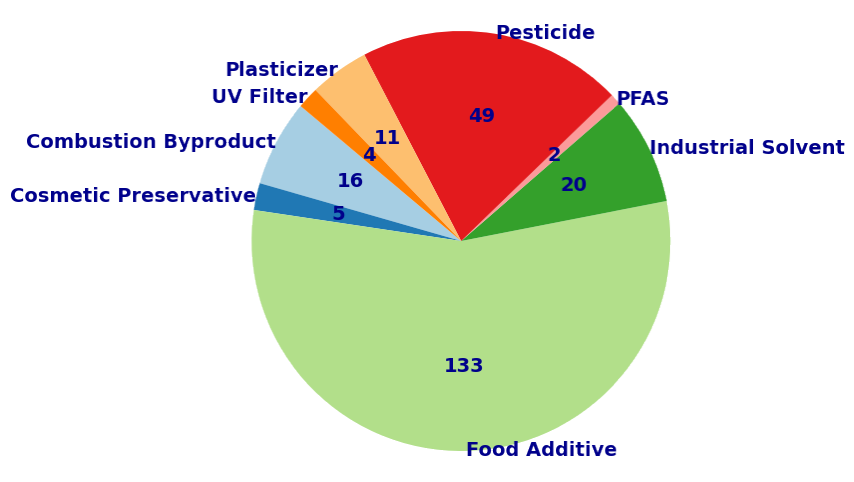
- Enrichment of cosmetic preservatives
- Reduced combustion-related byproducts
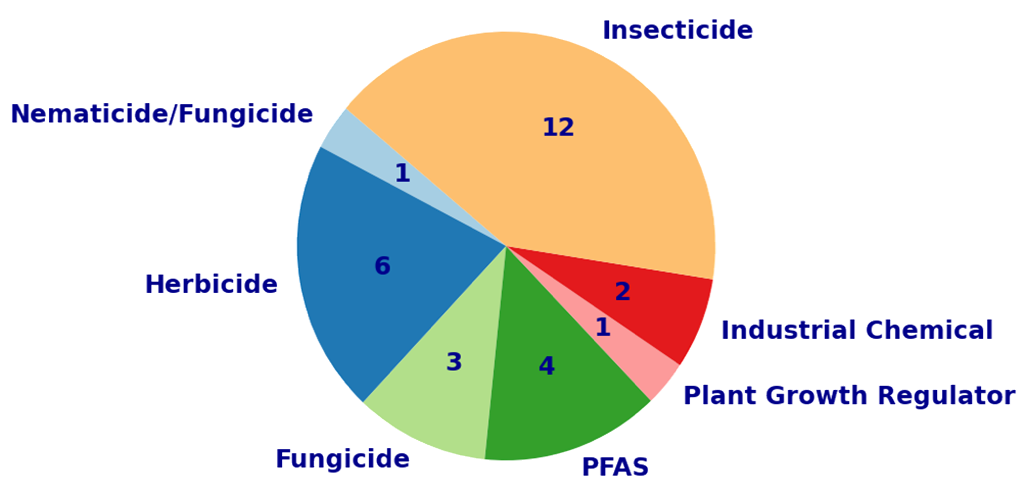
- PFAS and fungicides elevated in Alzheimer’s disease
- Certain insecticides reduced, likely reflecting environmental and lifestyle differences
Targeted Exposomics
- 29 of 235 targeted chemicals detected
- Exposure profiles alone distinguished disease status
Key Chemical Differences in Alzheimer’s Disease with Targeted Exposomics
Azoxystrobin (fungicide): Elevated in Alzheimer’s disease, linked to mitochondrial dysfunction and neurodegenerative pathways.
PFOS (PFAS): Increased levels consistent with prior evidence of neuroinflammation and Alzheimer’s-related.
Methamidophos (insecticide): Reduced in Alzheimer’s disease, likely reflecting differences in environmental contact rather than a disease-biology.
These findings demonstrate how Targeted Exposomics distinguishes disease-associated chemicals from environmental context, helping researchers prioritize compounds for follow-up studies, validation and longitudinal exposure analysis.

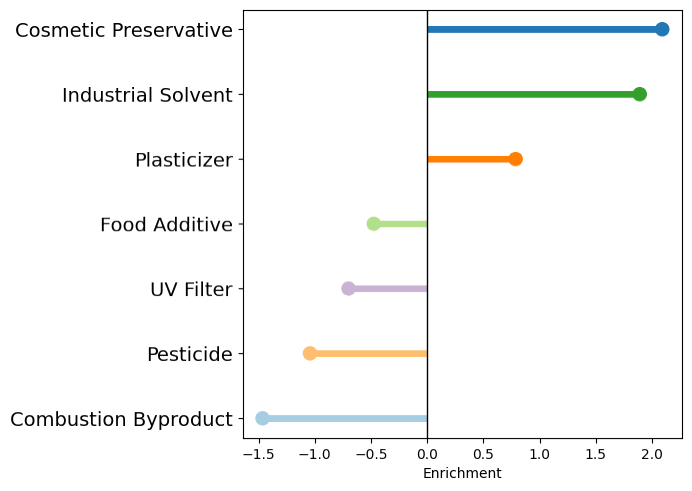
Discovery Exposomics Reveals Broader Exposure Patterns in Alzheimer’s Disease
Enriched: cosmetic preservatives; industrial solvents and plasticizers
Reduced: combustion-related byproducts; food additives; UV filters; pesticides
These class-level patterns highlight how Discovery Exposomics captures broader environmental signatures, revealing exposure trends that extend beyond individual chemicals.
Chemical profiles were sufficient to differentiate disease status, highlighting the biological relevance of exposure patterns.
Connecting Environment to Biology
Panome Bio’s Exposomics platform is designed to operate within a broader muti-omics framework. By combining Exposomics with Next-Generation Metabolomics®, Discovery Proteomics, and Transcriptomics, chemical exposures can be directly linked to molecular pathways and biological processes affected downstream.
This integrated approach allows exposure patterns to be studied alongside biological response.
What Researchers Can Study with Exposomics:
Panome Bio’s Exposomics workflows support research across a wide range of applications, including:
- Neurodegeneration and cognitive decline
- Cancer risk and early detection
- Metabolic and endocrine disorders
- Autoimmune disease triggers
- Pediatric and developmental health
- Infertility and reproductive biology
- Drug response variability
- Occupational and environmental health
- Consumer product safety
- Birth cohort and longitudinal studies
- Many more
Measure Chemical Exposures and Their Impact on Human Health with Panome Bio’s Exposomics
Dive into our Exposomics data including more highlights from the case study
Discovery Chemical Exposure Profiling in Alzheimer’s Disease
Learn more about how Discovery Exposomics can support novel findings.
Targeted Chemical Exposure Profiling in Alzheimer’s Disease
Discover how Quantitative Exposomics can transform Disease research.
Measure the Missing Half of Human Health
Environmental chemicals represent a critical, long-overlooked dimension of biology. Panome Bio provides a dedicated Exposomics analysis that enables comprehensive measurement of these compounds, turning previously unseen environmental influences into human health research.
Every project is unique. Panome Bio collaborates with researchers to design Exposomics workflows tailored to specific study goals, whether investigating environmental risk factors, conducting toxicology assessments or examining population-level exposure patterns across cohorts.
Measure what has always been there but never measured.