
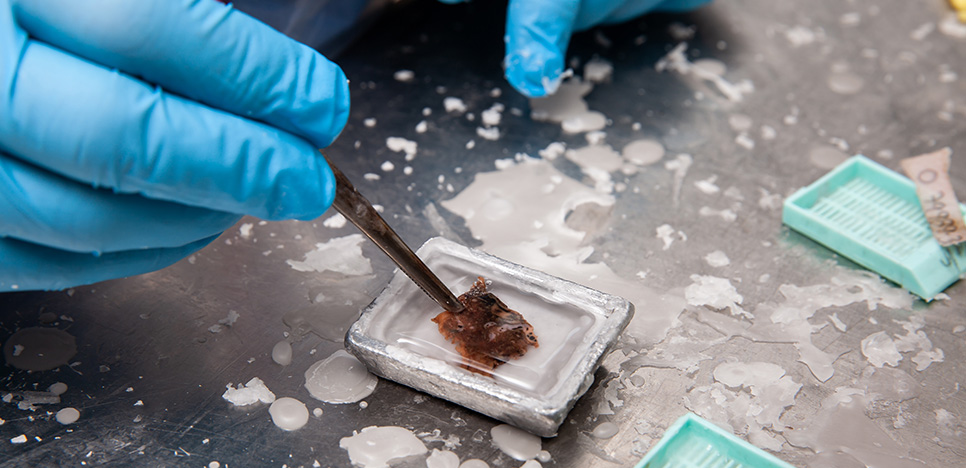
Formalin-Fixed, Paraffin-Embedded (FFPE) tissues represent one of the largest and most valuable archives of patient samples in the world. Millions of blocks are stored in hospitals, research centers, and biobanks, many of them tied to rich clinical histories and outcomes. For decades, these samples have been essential for histology and, more recently, genomics and proteomics. Yet metabolomics has remained largely out of reach.
A Turning Point: Advanced Workflows for FFPE Metabolomics
Historically, the complex chemistry of FFPE tissue made metabolomic analysis difficult: formalin fixation stabilizes biomolecules through cross-linking, while paraffin embedding protects tissue morphology but limits solvent accessibility.
Yet these same characteristics that once posed a challenge also make FFPE an incredibly valuable resource. Each preserved sample captures a precise molecular snapshot at the time of collection — representing a vast, largely untapped archive of biological and clinical information.
The metabolome of FFPE tissues is now accessible with TissueBridge™ FFPE Metabolomics. Advances in extraction chemistry and sample preparation are rewriting what’s possible with archived tissue. By tailoring our Next-Generation Metabolomics® workflow to the unique chemical environment of FFPE, our scientists have developed protocols that recover a broad spectrum of metabolites while preserving their integrity.
Complementing these innovations are refinements in mass spectrometry and data processing. High-resolution instruments, optimized ionization methods, and intelligent peak detection algorithms allow us to differentiate true biological signals from background noise, even when sample amounts are limited. Together, these improvements give FFPE samples a new level of analytical clarity — one that meets the rigorous standards expected in modern metabolomics.
Unlocking New Research Possibilities
The ability to extract meaningful metabolic data from FFPE tissues is opening doors across biomedical research:
- Retrospective biomarker discovery: Link metabolic phenotypes to long-term clinical outcomes using archived samples from past studies or trials.
- Multi-omics integration: Combine metabolomic data with genomics, transcriptomics, and proteomics to build a fuller picture of disease biology.
- Rare and precious cohorts: Access insights from samples that cannot be recollected, such as rare disease specimens or historical biopsies.
- Translational research: Assess treatment response, resistance mechanisms, and patient stratification using existing FFPE blocks from clinical programs.
Imagine a clinical trial that concluded a decade ago. Genomic and proteomic analyses may already have been performed, but metabolic signatures were invisible. With TissueBridge FFPE Metabolomics, those same samples can be revisited — uncovering pathways linked to drug response, toxicity, or disease progression without recruiting a single new patient.
A Commitment to Quality and Reproducibility
At Panome Bio, we recognize that FFPE samples are often irreplaceable. That’s why we’ve invested heavily in validating every step of our FFPE metabolomics workflow — from sample preparation to data interpretation. Rigorous quality controls, reproducibility checks, and robust informatics ensure confidence in every dataset we deliver.
By transforming an archival resource into a source of dynamic biological insight, TissueBridge FFPE Metabolomics empowers researchers to maximize the value of samples they already have. The technical barriers that once limited FFPE metabolomics are falling quickly, making it possible to illuminate metabolism within one of the most abundant and information-rich sample types available.
Whether you’re working in basic biology, translational research, or therapeutic development, Panome Bio’s TissueBridge FFPE metabolomics service bridges the gap between preserved tissue and actionable discovery — helping you see the biology that’s been waiting inside your collections all along.
Learn more about TissueBridge metabolomicsRead the full data reportLearn more about FFPE