
Integrate Metabolomics, Proteomics, Transcriptomics & More
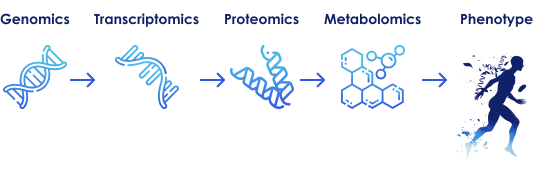
Panome Bio offers integrated multi-omics analysis through a proprietary bioinformatics pipeline that interweaves ‘omics profiles into a singular dataset for higher-level analysis.
Integrated multi-omics analysis offers the following benefits to your research:
- Enhance mechanistic insight and understanding of disease through broader and deeper biochemical pathway coverage.
- Magnify biomarker discovery through the evaluation of more molecules in one sample.
- Maximize potential by integrating multiple ‘omic datasets with data-driven and literature-guided approaches.
- In addition to generating data through our Next-Generation Metabolomics or proteomics workflows, Panome Bio can also accept existing data sets of genomics, transcriptomics, proteomics and metabolomics for integrated multi-omics analysis.
Frequently Asked Questions
What is integrated multi-omics analysis?
Integrated multi-omics analysis combines multiple types of biological data — such as genomics, transcriptomics, proteomics, and metabolomics — into a single dataset using a proprietary bioinformatics pipeline for higher-level analysis.
Can Panome Bio integrate data I’ve already generated?
Yes. In addition to generating new data through Next-Generation Metabolomics or proteomics workflows, Panome Bio can accept existing genomics, transcriptomics, proteomics, and metabolomics datasets for integration.
How does multi-omics integration improve biomarker discovery?
Combining multiple omics layers evaluates more molecules within the same sample, magnifying the ability to detect biomarkers that a single-omics approach might miss.
What research benefits from integrated multi-omics analysis?
Integrated multi-omics broadens and deepens biochemical pathway coverage, offering stronger mechanistic insight into disease and supporting data-driven and literature-guided research approaches.